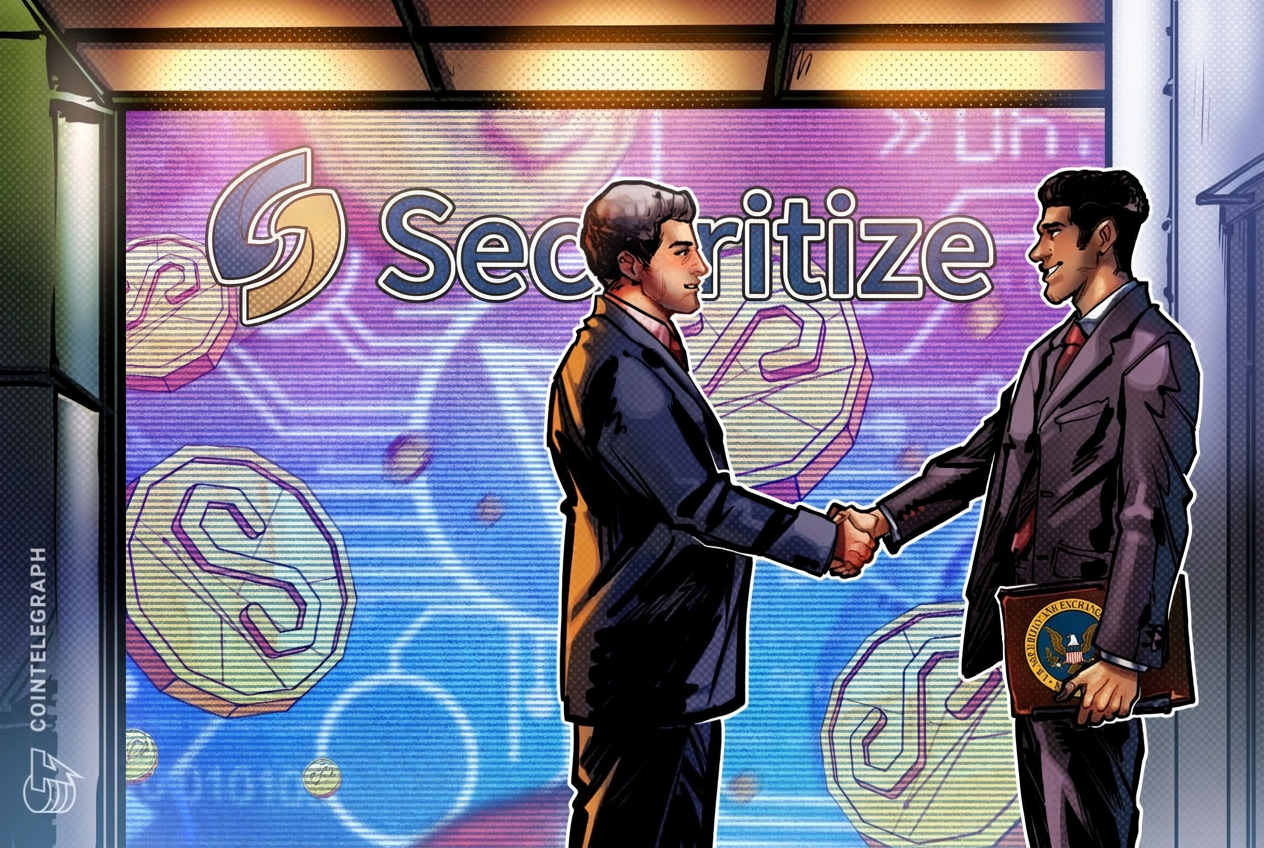
Securitize, a firm that has spent years grinding away at the infrastructure for tokenizing real-world assets, just took a significant step. Their subsidiary, Securitize Capital, is now a registered investment adviser with the SEC. It sounds like bureaucratic paperwork, and in some ways it is, but for those of us building in this space, it represents a pivot. We are moving past the era where a company just provides the tech. Now, they are becoming the institution itself.
The infrastructure play gets a brain
For a long time, the pitch for tokenization was simple: take a hard asset, put it on a blockchain, and make it easier to trade. Securitize was a leader in that narrow vertical. They provided the plumbing. But plumbing only gets you so far if people don't know how to navigate the house. By becoming a registered investment adviser, or RIA, Securitize can now offer actual investment advice and manage portfolios rather than just providing the digitized shell for assets.
From a founder's perspective, this is a defensive and offensive move. Defensively, it protects them from the regulatory hammer that has been swinging wildly at anything remotely resembling an unregistered security or shadow bank. Offensively, it allows them to capture the full lifecycle of an institutional client. They aren't just selling a platform anymore; they are selling a fiduciary relationship.
Why this matters for builders
If you are building an AI-driven trading platform or a decentralized finance protocol, you might think an SEC filing by a centralized entity doesn't matter to you. You would be wrong. This is the blueprint for how real capital enters the ecosystem. Institutions do not want to piece together four different vendors to handle compliance, custody, advisory, and execution. They want one door to walk through.
We are seeing the end of the modular experiment for institutional crypto. While the retail world loves the legos of DeFi, the people moving hundreds of millions of dollars want a wrapped experience. Securitize is signaling that to survive as a middleware provider, you eventually have to become the top-layer service provider too. If you're building a startup right now, you need to ask if your product is a feature or a firm. Securitize decided they wanted to be the firm.
The reality of the RIA status
Let's be skeptical for a second. Being an RIA comes with a mountain of legal obligations. You have a fiduciary duty to act in the best interest of your clients. In the world of volatile crypto assets and complex tokenization layers, that is a heavy burden. It means Securitize is now legally accountable for the advice they give. For a tech company, that is a massive culture shift. They are no longer just shipping code; they are managing risk.
This move also tells us that the SEC isn't necessarily trying to kill crypto; they are trying to force it into the existing boxes they know how to manage. If you play by the rules of the 1940 Investment Advisers Act, the door stays open. Securitize is betting that the future of finance isn't a replacement of the old system, but a total absorption of its rules into a new technological framework.
What it means for the RWA narrative
Real-world assets (RWA) is the buzzword of the year. We've seen BlackRock and others move into the space with tokenized funds. But for the average mid-market institutional player, the barrier to entry is still too high. They don't have the internal teams to manage a digital wallet or understand gas fees. By adding an investment advisory arm, Securitize is essentially saying, "We will do the thinking for you."
This is a major validator for the tokenization market. It shows there is enough demand for advice and management in this sector to justify the massive legal and compliance costs of becoming an RIA. It also suggests that the next wave of capital won't just be buying Bitcoin; they will be buying yield-bearing tokenized products guided by licensed professionals.
The Founder's Takeaway
If you are a founder, keep your eye on the gatekeepers. We are entering a phase where the winners are those who can bridge the gap between the messiness of on-chain data and the rigidity of the traditional financial system. Securitize has successfully bridged that gap. They have the tech stack and now they have the regulatory license to drive the bus.
- Registration is a moat. It is expensive and difficult to get, which keeps smaller competitors out.
- Full-stack services are replacing modular toolkits for institutional clients.
- Regulatory compliance is no longer a sidebar; it is the product.
The takeaway is clear: stop thinking about blockchain as a separate world. It is being folded into the existing financial world faster than most people realize. If you aren't prepared to handle the legal weight of the assets you are moving, you will eventually be sidelined by companies like Securitize that are willing to take on that responsibility.
Read the original at Cointelegraph →