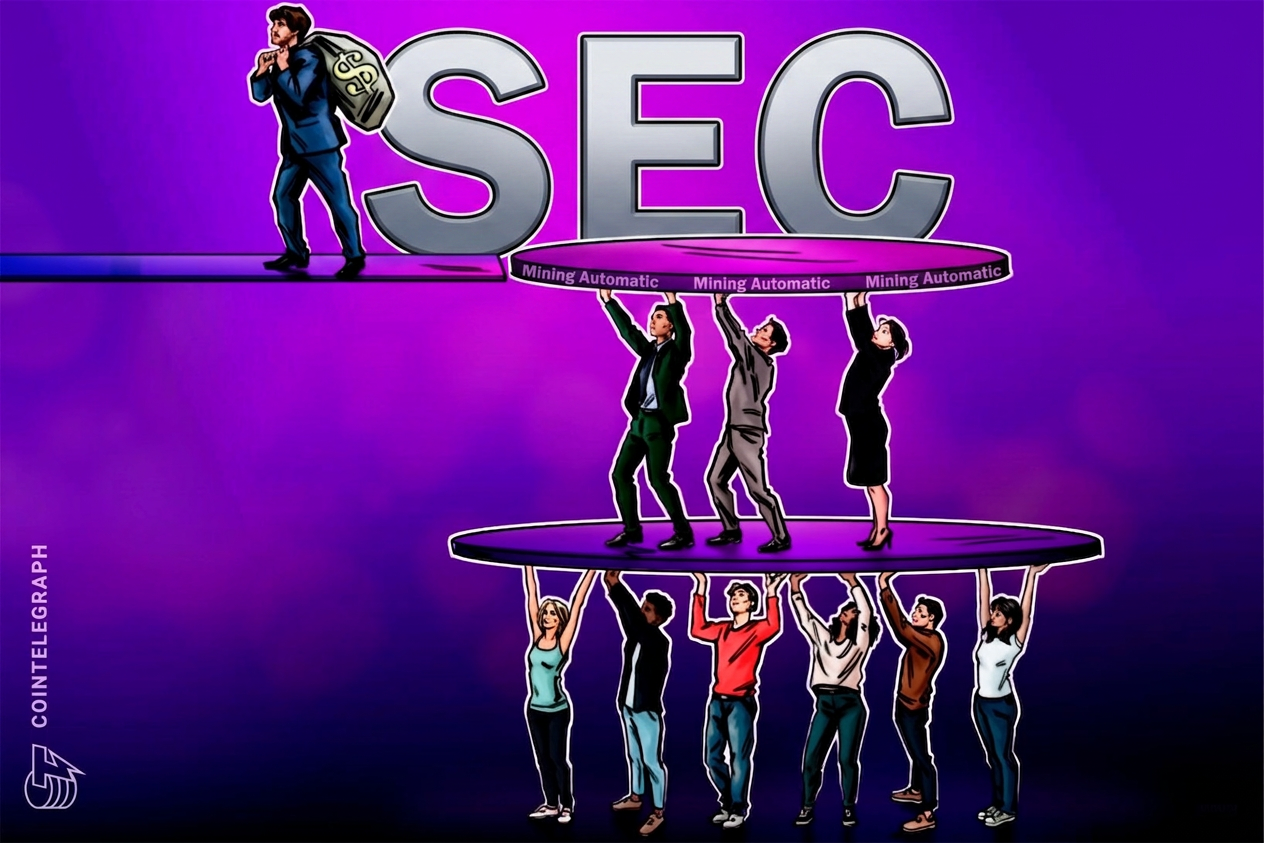
When the markets get quiet, or when specific sectors like AI start eating up all the headlines, people tend to get nostalgic for the old ways of making money in crypto. There is something fundamentally satisfying about the concept of mining—the idea that you can turn electricity and compute into hard currency. But that same psychological hook is exactly what scammers use to bait the trap. This week, the SEC filed a lawsuit against a firm called Mining Automatic and its founder, alleging they ran a $22 million scheme that was less about hash rates and more about a standard slush fund.
The Core of the Allegations
The SEC’s complaint is a familiar script. According to the filing, Mining Automatic and its primary operator prometed a vision of a high-yield crypto mining operation. They reportedly promised investors guaranteed daily returns, ranging from 0.8% to 12%. If you have been in this space for more than five minutes, your alarm bells should be deafening right now. There is no such thing as a guaranteed return in mining. Between the fluctuations in difficulty adjustments, the volatile price of the underlying assets, and the rising cost of energy, the math simply does not support a fixed daily payout.
Instead of building out a massive mining farm to rival the professionals, regulators claim the company spent only a tiny fraction of that $22 million on actual hardware. The rest? The SEC says it went toward personal expenses, luxury purchases, and the classic hallmark of a Ponzi scheme: using new investor money to pay out the older ones to keep the illusion of a profitable business alive.
The Cloud Mining Trap
Cloud mining has always sat in a gray area of the industry. For a builder, the appeal is obvious. You create a platform that democratizes access to expensive hardware. You handle the maintenance and the noise, and the users get a cut of the rewards. In theory, it is a great service for people who cannot afford a rack of S19s or a dedicated transformer. In practice, it is almost impossible to make the economics work for the end user while remaining profitable as an operator unless you are operating at an insane scale.
The problem is that the "passive income" narrative is too easy to sell. When the SEC looks at these cases, they are looking for the common enterprise and the expectation of profit solely from the efforts of others. Mining Automatic allegedly checked every one of those boxes while adding a layer of deception about where the money was actually going. For founders, this is a lesson in transparency. If you claim to be buying hardware, that hardware needs to exist, it needs to be plugged in, and it needs to be generating the revenue you are paying out.
Why This Still Happens
You might wonder how a scheme like this still pulls in eight figures in an era where everyone claims to be "crypto-literate." It happens because people want a shortcut. Mining is hard. It is a logistical nightmare involving cooling, firmware management, and power contracts. When someone tells you they have solved all those problems and can give you 1% back a day, it is incredibly tempting to switch off the critical thinking part of your brain.
From a builder's perspective, these scandals are incredibly damaging because they poison the well for legitimate infrastructure projects. Every time a $20 million cloud mining scam hits the news, it makes it harder for a real data center operator to get a bank account or to convince a skeptical public that crypto mining provides actual utility to the grid. It reinforces the idea that the entire mining sector is a house of cards.
Red Flags for the Modern Builder
If you are building in the infrastructure space, there are a few things you can take away from this SEC action to ensure you stay on the right side of the line. First, never guarantee a yield. The market determines the yield, not your marketing department. Second, audits matter. Not just security audits for your code, but proof of reserves or proof of physical assets. If you say you have $20 million in miners, you should be able to show the serial numbers and the power draw.
The SEC does not care about your intentions; they care about the gap between what you told an investor and what actually happened with their capital.
The SEC is clearly focusing on the delta between the marketing materials and the bank statements. In the case of Mining Automatic, that delta was reportedly massive. When you take millions of dollars and only spend a fraction of it on the actual business model, you aren't a founder—you're a custodian of a lie. The regulator is seeking permanent injunctions, disgorgement of the funds, and civil penalties. In short, they want to make sure the founder never touches a financial instrument again.
The Infrastructure Reality Check
Real mining companies today are struggling with compressed margins. They are pivoting to AI compute or looking for the cheapest possible stranded energy sources just to stay alive. In that context, a company promising high, stable returns is an mathematical impossibility. As a builder, your job is to educate your users on the reality of the hardware. If your product relies on users not understanding how the business works, your business is probably a security or a scam.
We are moving into an era where "trust me, I have a server farm" is no longer an acceptable business plan. The SEC's aggressive posture on these schemes suggests that they are looking past the large exchanges and starting to clean up the secondary layers of the ecosystem. This isn't just about one guy and a fake mining company; it's about the standard of proof required to operate in the crypto-adjacent investment space.
The Takeaway
The Mining Automatic case serves as a blunt reminder that the SEC is still very much in the business of chasing down fraudulent offerings, regardless of how much the industry tries to shift the conversation toward new regulations. If you are handling investor funds, your primary job is to do exactly what you said you would do. If you stray from that, even if you think you can "make it up later," you are walking into a legal buzzsaw. For the rest of us, if the return looks like a straight line up and to the right, it is usually a drawing, not a real chart.
Read the original at Cointelegraph →