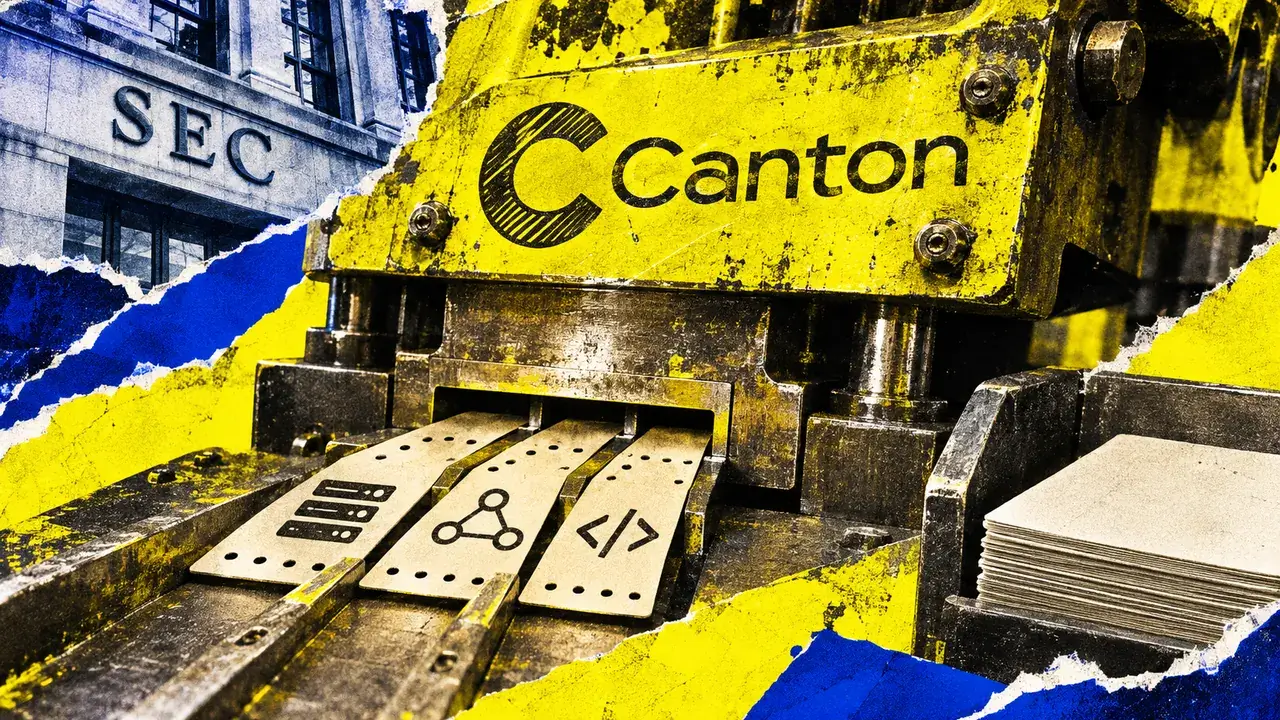
We have spent the last five years in a state of regulatory paralysis. For most founders, the advice from counsel has been simple but frustrating: if you build anything with a token, assume you are breaking the law. But a recent shift regarding the Canton Network suggests the SEC is finally willing to acknowledge that the plumbing of a blockchain is not the same thing as a speculative investment contract.
The Canton No-Action Letter
The SEC recently issued a no-action letter concerning the Canton Network. If you are not familiar, Canton is a privacy-enabled interoperability layer designed for institutional assets. The ruling specifically addresses three types of participants within the network ecosystem. While the legal language is dense, the takeaway is clear: the agency is starting to differentiate between the people running the nodes and the people selling the dreams.
For a long time, the threat of being labeled an unregistered broker-dealer hung over anyone who touched a validator or a relay. This ruling provides a narrow but significant path forward. It suggests that if your role is strictly technical—providing connectivity, validating transactions, or maintaining the ledger—you might finally be outside the crosshairs of the Howey Test.
Why Builders Should Care
If you are building in the trenches, you know that the biggest hurdle to institutional adoption isn't the technology; it is the risk. Large financial institutions will not touch a network if there is a 50% chance the SEC will shut it down tomorrow. By securing this no-action position, the team behind Canton has effectively de-risked the act of participating in the network.
This is a major win for the infrastructure layer. It tells us that the SEC is willing to look at the functional reality of a network rather than just applying a blanket label to everything that uses a consensus mechanism. If you are a founder building middleware or infrastructure, this is your signal to start documenting exactly how your participants interact with the protocol. The more you look like a utility provider and less like a financial intermediary, the safer you are.
The a16z Perspective
Andreessen Horowitz (a16z) has been vocal about this development, viewing it as a legitimate pathway out of the securities law trap. Their argument has always been that decentralization is a spectrum. As a network matures and the founding team’s influence wanes, the token should eventually transition away from being a security. This SEC stance on Canton supports the idea that specialized roles within a network can be carved out of the regulatory definition of a 'security' or a 'broker.'
However, we need to be careful. A no-action letter is not a law. It is a specific agreement between the SEC and one specific entity based on a very specific set of facts. You cannot simply copy-paste Canton's model and expect the same protection. But what you can do is use it as a map. It shows where the SEC is willing to bend and where they are standing firm.
The Reality Check
Let's be honest: Canton is an institutional play. It is designed for regulated entities who already have compliance departments. For the average DeFi founder building a permissionless protocol on a public chain, the road is still rocky. The SEC is much more comfortable giving a pass to a network where participants are known and the use case is enterprise-grade.
That said, the market reacted positively. The 6% bump in Canton’s visibility and value is less about the price and more about the sentiment. It proves that the market is starving for clarity. Even a tiny sliver of regulatory light is enough to drive interest. It shows that when the rules are clear, the capital follows.
How to Build With This in Mind
If I am starting a project today, I am looking closely at the three participant types mentioned in the SEC’s letter. I am asking myself if my users can be categorized similarly. Are they providing a service to the network, or are they just hoping the price goes up? If it is the latter, you are still in the danger zone.
- Focus on Utility: Ensure your token has a functional requirement within the ecosystem that is disconnected from speculative trading.
- Node Independence: The more independent your validators are, the easier it is to argue they are service providers rather than partners in a common enterprise.
- Documentation: Keep a paper trail of how your network evolved. The transition toward decentralization needs to be verifiable, not just a marketing claim.
We are seeing the beginning of a shift from 'crypto as a casino' to 'crypto as a stack.' The SEC's willingness to engage with the Canton model suggests they are beginning to understand that blockchains are essentially just fancy databases with better coordination tools. If you build your project as a tool rather than a financial instrument, you have a fighting chance.
The Takeaway
Don't mistake this for a total victory. The SEC is still aggressive, and the 'regulation by enforcement' era isn't over. But for the first time in a while, we have a document that says 'if you do X, Y, and Z, we won't sue you.' That is a massive upgrade from the 'guess and find out' strategy we’ve been forced to use. Use this as a framework to audit your own project's risk profile. The path to legitimacy is getting clearer, but you still have to walk it carefully.
Read the original at CryptoSlate →