We have been hearing about the Great Tokenization for years. The promise is always the same: everything from real estate to stocks will eventually live on a blockchain, providing 24/7 liquidity and instant settlement. But the recent move by Japan's SBI Group and HashKey to bring Japanese equities to the Solana network through the JX product serves as a cold bucket of water for anyone expecting a revolution overnight.
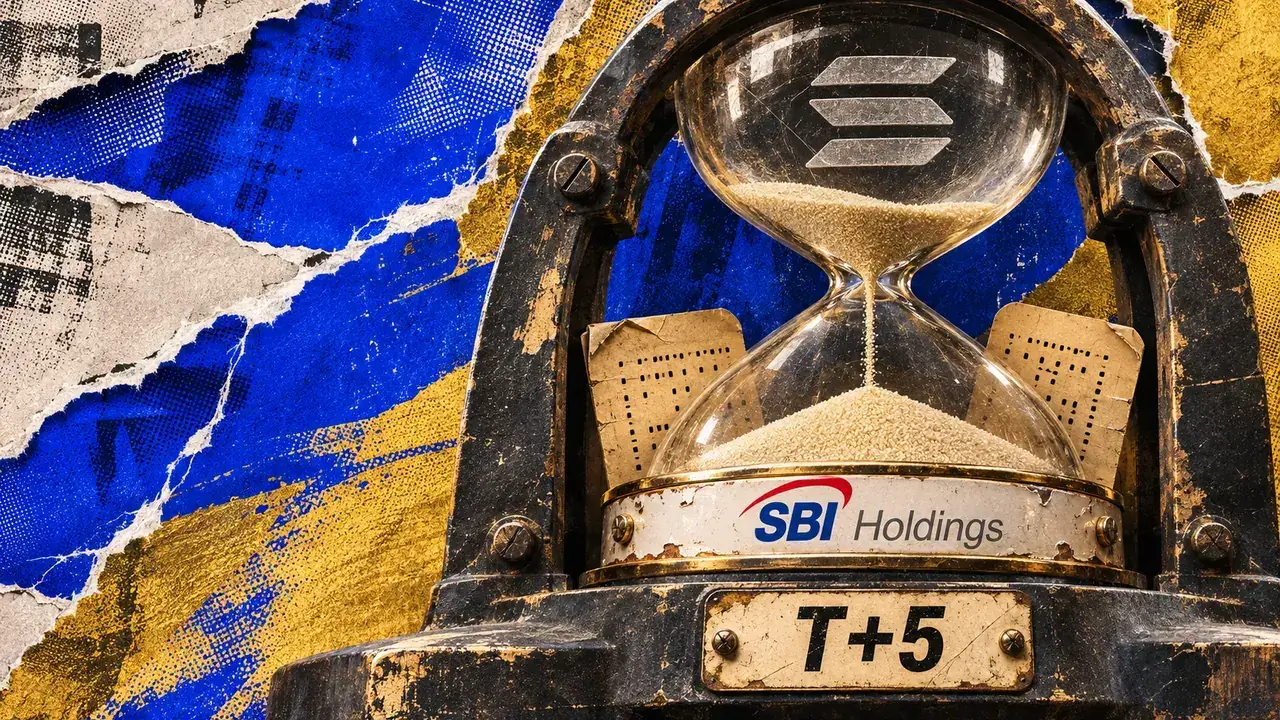
The concept is simple on paper. HashKey Earn is providing eligible investors access to a Japanese equity strategy. It is built on Solana, a chain known for high throughput and low fees. But here is the catch: when an investor wants to exit their position and get their USDC back, they are looking at a T+5 redemption window. That is five business days. In crypto time, five days is an eternity. It is the difference between a successful trade and a total portfolio liquidation.
The Legacy Bottleneck
This highlights the fundamental problem for builders in the RWA (Real World Asset) space. You can build the fastest smart contracts in the world, but if your asset is pegged to the traditional banking system, you are still moving at the speed of a fax machine. The underlying Japanese stocks don't trade on Saturday. They don't settle in milliseconds. They operate on a centuries-old schedule of market hours and clearinghouse delays.
For a founder, this is a lesson in product-market fit versus technical capability. Putting a wrapper on Solana does not magically make the underlying asset more liquid. It just makes the interface look better. The T+5 settlement period is a stark reminder that we are currently living in a hybrid era. We are building Ferraris (Solana) to drive on dirt roads (legacy equity settlement layers).
Why Japan, and Why Now?
Japan has quietly become one of the most progressive jurisdictions for regulated crypto activity. While the U.S. SEC spent years playing a game of whack-a-mole with crypto firms, Japan’s Financial Services Agency (FSA) was busy building a framework. SBI is the giant in this room. They aren't a scrappy startup; they are a massive financial conglomerate that understands how to navigate the regulatory maze.
By choosing Solana, they are making a bet on the network's growing institutional appeal. But they are also restricted by the reality of the assets they are moving. Japanese equities are stable, but they are not fast. The JX strategy through HashKey Earn is designed for the long-term holder, not the degen looking to flip a position during a weekend pump.
The Builder's Dilemma
If you are building in the RWA space, you have to be honest about these friction points. If your marketing says "Instant Settlement" but your terms of service say "T+5," you are going to lose trust. The industry needs to stop pretending that tokenization solves the settlement problem of the underlying asset. It doesn't. It only solves the distribution problem.
A tokenized stock can be sent to a wallet in Singapore or London in seconds. That is the win. The distribution is global and permissionless (within the bounds of the KYC/AML layers). But the actual realization of value—turning that token back into spendable cash—still requires a bridge back to the old world. Builders need to focus on how to bridge that liquidity gap. Perhaps the next step is not just tokenizing the stock, but creating liquidity pools where market makers take the T+5 risk for a fee, allowing users to exit instantly.
The Realistic Path Forward
We should look at the SBI and HashKey partnership as a successful pilot, not a finished product. It proves that the pipes work. It proves that a major Japanese institution is comfortable using Solana for real value. That is a massive win for the ecosystem’s credibility.
However, the five-day wait period is a feature, not a bug, of the current system. It represents the safety check of the traditional world. For now, investors will have to accept that "on-chain" doesn't always mean "instant." We are in the middle of a massive migration, and the bridge is still being built.
The industry needs to stop pretending that tokenization solves the settlement problem of the underlying asset. It only solves the distribution problem.
Final Takeaway for Founders
If you are building in the RWA space, don't overpromise on speed. The real value right now is in accessibility and composability. Being able to use a Japanese equity position as collateral in a DeFi protocol (if and when that becomes compliant) is a much bigger deal than how fast the USDC hits your wallet. Focus on what the blockchain actually changes—ownership transparency and global access—and stop trying to outrun the legacy settlement cycle until the banks themselves move onto the ledger.
The T+5 reality is a reminder that we are still early. We are still translating the old language of finance into the new language of code. It’s going to be a slow process, and that is okay. The founders who survive this era will be the ones who are honest about the limitations of the current bridge between these two worlds.
Read the original at CryptoSlate →