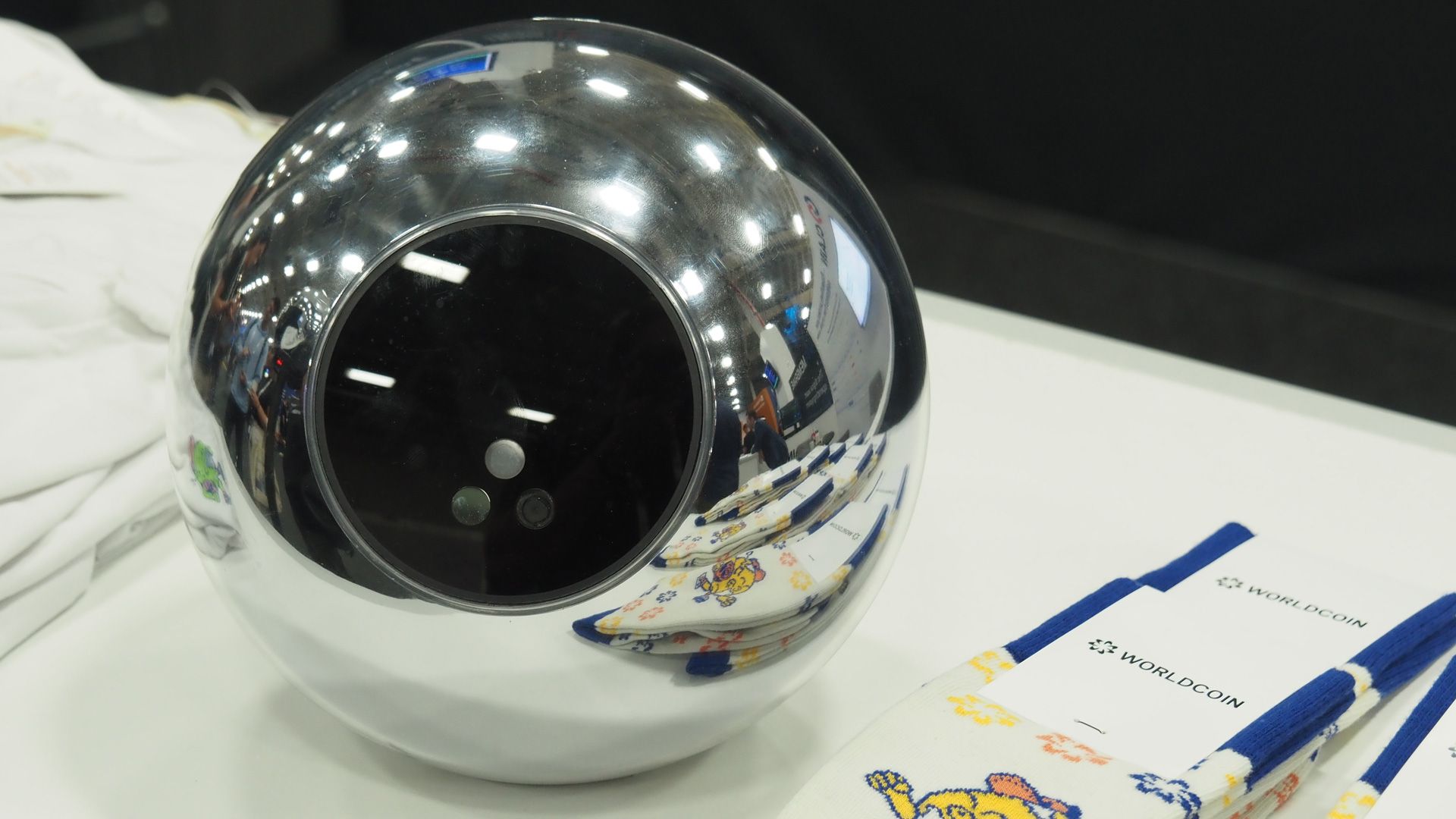
Sam Altman’s World Network, the project formerly known as Worldcoin, just closed a $52.5 million funding round. If you follow this space, you know the narrative has been messy. It started as a grand vision to distribute a universal basic income via silver spheres that scan your irises. It felt like a fever dream from a 1970s sci-fi novel. But the market has shifted, and so has the strategy. They aren't just looking for users anymore; they are looking for enterprise utility.
The Pivot Toward Proof of Personhood
This fresh capital isn't earmarked for generic network growth or buying more billboard space in developing nations. Instead, the focus is narrowing. World is rebranding itself as the primary defense mechanism against the rising tide of AI-generated deepfakes. This is a smart move for a company that has faced immense regulatory scrutiny over privacy. By positioning itself as a security layer for the internet, it moves the conversation away from creepy biometric harvesting and toward a necessary utility for the age of generative AI.
We are entering an era where you cannot trust a video call, an audio clip, or even a digital signature. If an AI can replicate your voice and face with 99% accuracy, the current methods of online verification are essentially broken. World is betting that their biometric hardware—the Orb—is the only way to provide an immutable link between a digital account and a physical human being.
Why Builders Should Care
For those of us building in the trenches, this signals a major shift in the identity stack. We’ve spent the last decade trying to move toward decentralized identity (DID) and zero-knowledge proofs. While those technologies are great, they still suffer from the 'garbage in, garbage out' problem. You can have a perfectly secure, decentralized wallet, but if a bot created it, the network’s integrity is compromised.
The integration of World’s biometric screening into enterprise software suites is the real story here. Imagine a world where logging into a corporate Slack or a banking portal requires a World ID check. It’s a friction point, sure, but in a world where phishing attacks are being automated by LLMs, that friction starts to look like a feature rather than a bug.
- Software Integration: They are moving away from the consumer 'app' model and toward an API-first enterprise model.
- Deepfake Mitigation: This is a massive market. Companies are terrified of social engineering attacks that use cloned voices to authorize wire transfers.
- Hardware Moat: By doubling down on the Orb, they are essentially saying that software-only solutions for identity are no longer sufficient.
The Skeptical Take
As a founder, I have to be honest: there are massive hurdles here. First, there is the centralization of the hardware manufacture itself. If World is the only one making the Orbs, they aren't building a decentralized protocol; they’re building a gated utility. Second, the 'creep factor' hasn't gone away. No amount of rebranding can change the fact that asking people to scan their eyeballs is a hard sell in many jurisdictions.
We also have to look at the funding environment. Raising $52.5 million in this climate suggests that VCs are still betting big on the 'Altman Effect.' But capital doesn't solve the regulatory wall that World has hit in Europe and parts of Asia. To win, they have to prove that the data isn't being stored in a way that creates a massive honeypot for hackers. They claim the iris codes are anonymized, but in the world of high-stakes security, 'trust us' isn't a sustainable business model.
The Enterprise Shift
By focusing on enterprise software, World is trying to bypass the individual skeptic and go straight to the IT department. If your employer tells you that you need a World ID to access your workstation, your personal feelings about biometric privacy likely take a backseat to your desire to keep your job. This top-down adoption strategy is much more likely to succeed than the previous 'tokens-for-scans' grassroots approach.
For builders, this means we need to start thinking about how our applications handle 'proof of humanity' at the core level. Whether it is World, Gitcoin Passport, or some yet-to-be-invented biometric standard, we are moving toward a tiered internet. There will be a 'verified' layer where you know you are interacting with humans, and an 'unverified' layer that will almost certainly be overrun by AI agents within the next 24 months.
The Core Takeaway
World Network’s $52.5 million infusion is a pivot toward pragmatism. The project is shedding its more idealistic, pseudo-religious skin to become a tool for corporate security. The focus is no longer on how many billions of people they can scan, but on how many enterprise ecosystems they can embed themselves into. For anyone building AI or crypto infrastructure, the takeaway is clear: identity is the next major bottleneck. If you don't have a plan for how to verify your users effectively, your platform will eventually become a playground for bots.
The shift from universal basic income to anti-deepfake infrastructure is the most honest thing World has done since its inception. It admits the problem isn't wealth distribution—it's the collapse of digital trust.
I remain skeptical about the hardware-centric approach and the privacy implications, but I cannot deny the market demand for what they are building. As AI continues to erode our ability to tell fact from fiction, a physical anchor to the real world—even if it's a silver ball in a shopping mall—becomes increasingly valuable to the people running the world's most sensitive networks.
Read the original at CoinDesk →