The Kremlin Flips the Script on Durov
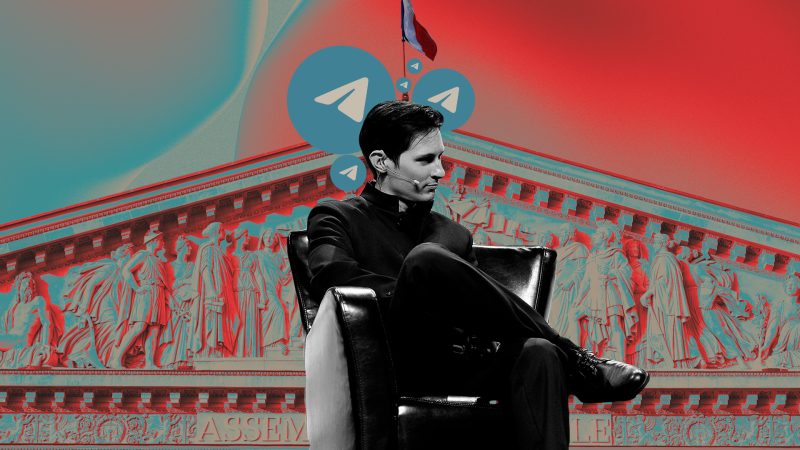
Pavel Durov is no stranger to being a target. After fleeing Russia years ago when the government tried to seize control of his first major venture, VKontakte, he positioned himself as the ultimate defender of digital privacy. But the narrative just took a hard turn. Russian authorities have officially charged the Telegram founder with aiding terrorism, issuing an international arrest warrant that signals a complete breakdown in whatever uneasy truce existed between the billionaire and his homeland.
For those of us building in crypto and decentralized tech, this isn't just another headline about a high-profile founder in trouble. It is a case study in why the middle ground is disappearing. Durov tried to build a platform that resisted moderation at all costs, and now he is being squeezed by both the West and the East. The irony here is thick: Russia, which once banned Telegram only to later embrace it, is now using the heaviest legal hammer in its toolbox against the man who built it.
The Charges and the Context
The specific charges of aiding terrorism are predictably vague and incredibly dangerous. In the legal landscape of current-day Russia, these charges allow for sweeping enforcement actions. By framing Telegram as a tool for coordinated terror, the state is effectively claiming that the existence of end-to-end encryption—or at least the refusal to hand over keys—is a criminal act of facilitation.
This development follows Durov's high-profile detention in France, creating a bizarre pincer movement. While French authorities focused on the lack of moderation regarding illegal content and financial crimes, the Russian charges take on a more geopolitical weight. It suggests that if the Kremlin cannot control the information flow on Telegram, they will ensure the founder stays in a permanent state of legal exile or worse.
Why Builders Should Be Skeptical
We often talk about "sovereign technology" as if it exists in a vacuum. Durov lived the dream of the digital nomad, holding multiple citizenships and running a massive platform from the relative safety of Dubai. But the hard reality is that servers live in buildings, and founders live in bodies. If you build a system that is sufficiently large and sufficiently private, you will eventually become a target for every major power center on the planet.
The Russian warrant is a message to other founders: neutrality is being redefined as complicity. If you aren't actively helping the state monitor its citizens, the state will classify your silence as an act of war. This is the exact scenario that Bitcoin and true decentralized protocols were designed to avoid, yet even those projects rely on human developers who can be pressured, charged, or detained.
The Telegram Power Vacuum
Telegram is the backbone of the crypto industry. It is where every project starts, where the whales communicate, and where the news breaks. If the founder is trapped in a legal battle with both the EU and Russia, the stability of the platform is no longer a given. We have to ask ourselves what happens to the TON ecosystem and the various integrations if the leadership is decapitated by international warrants.
Founders need to look at their own stacks. Are you relying on a centralized platform run by a single charismatic figure? If so, you are inheriting their legal risk. The charges against Durov for "aiding terrorism" are a reminder that the terms of service can be rewritten by a judge in a matter of hours.
What History Tells Us
This isn't the first time Russia has gone after a tech pioneer, but the timing is suspicious. By issuing this warrant now, Russia creates a layer of complexity for any potential extradition or cooperation deals Durov might have been considering with Western authorities. It makes him a radioactive asset. If he cooperates with one side, he is a traitor; if he stays silent, he is a terrorist.
For the builder community, the takeaway is clear. We are entering an era of "aggressive jurisdiction." Small projects might fly under the radar, but the moment you achieve scale, you are no longer just a developer—you are a geopolitical actor. Pavel Durov didn't set out to be a part of the Russian security apparatus's target list, but he built something so effective that they couldn't afford to let it remain independent.
The Founder's Dilemma
As builders, we often prioritize growth over legal structural integrity. We think we can solve the "compliance problem" later. Durov is the ultimate example of what happens when "later" arrives. He built a fortress, but he forgot that he still has to walk through the gate. The charges of aiding terrorism are not about facts; they are about leverage. They are meant to force a hand, to compel access, and to remind the world that there is no such thing as a digital safe haven when governments are involved.
Do not expect this to resolve quickly. This is a multi-year chess game where the primary pieces are encryption keys and personal freedom. If you are building tools for privacy, you must assume that these same labels—terrorist, facilitator, criminal—will be leveled at you the moment you become useful to the public and a nuisance to the powerful.
The Hard Takeaway
The Russian warrant for Durov is a signal that the age of the untouchable tech founder is over. Whether it's France or Russia, the message is the same: your platform's privacy is your personal liability. If you are building today, you need to decide if you are truly decentralized—meaning there is no one to arrest—or if you are just a centralized target waiting for a warrant. There is no middle ground left to stand on.
Read the original at The Block →