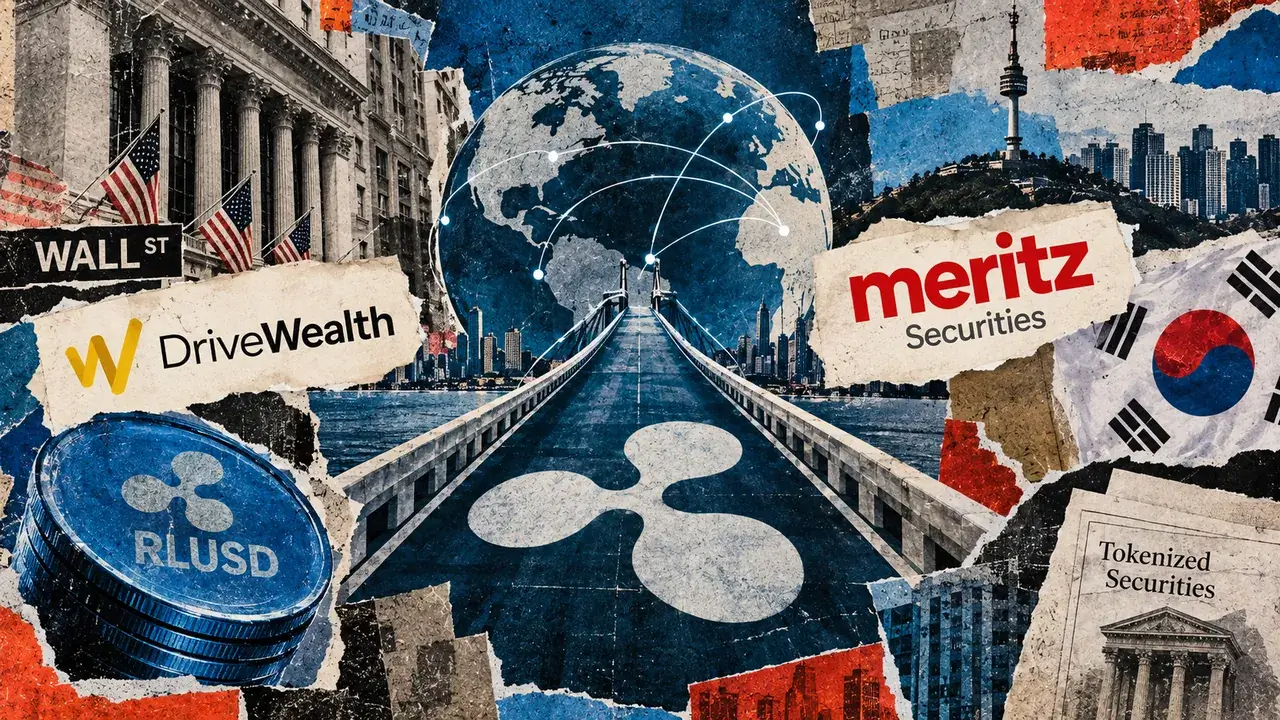
Ripple is playing a different game now. For years, the conversation around the company was stuck in a loop: the SEC lawsuit, the XRP price, and the dream of replacing SWIFT for cross-border payments. But if you look at their recent moves in the U.S. and South Korea, you will see a founder-led shift away from being just a payment rail toward becoming the underlying plumbing for the global securities market.
The company recently secured a U.S. broker-dealer license and locked in a strategic deal with Meritz Securities in South Korea. This isn't just about adding more names to a partner list. It is a calculated bet on the tokenization of real-world assets. They are moving into a space where trillions of dollars in traditional securities are waiting for a more efficient way to move, and Ripple wants to be the one holding the keys.
The Broker-Dealer Milestone
Getting a U.S. broker-dealer license is a massive hurdle that most crypto firms try to avoid or ignore. It brings a level of regulatory scrutiny that makes decentralization purists uncomfortable. But for Ripple, it is a prerequisite for their long-term survival. You cannot talk to a Tier-1 bank about tokenizing their bond portfolio if you do not have the legal standing to handle those transactions.
By securing this status, Ripple is signaling to the market that they are willing to play by the rules of the existing financial system to eventually disrupt it from the inside. For builders, this is a lesson in pragmatism. Sometimes you have to accept the regulatory overhead to get access to the capital that actually moves the needle. If you want to build at scale, you can't just live in the gray area forever.
The South Korean Connection
While the U.S. license provides the legal framework, South Korea is providing the momentum. The deal with Meritz Securities marks their fourth major institutional partnership in that region this year alone. South Korea has consistently been a leader in retail crypto adoption, but the institutional side is where the real structural change is happening.
The focus here is custody and tokenization. Meritz is looking at how to take traditional financial instruments and put them on a ledger. Ripple provides the technical stack to make that happen. This is not about a flashy retail app; it is about the back-end infrastructure that allows a massive brokerage to manage assets more cheaply and transparently. Ripple is positioning itself as the bridge between the legacy ledger and the new one.
What This Means for Builders
If you are building in the crypto space, you need to watch this shift closely. The era of "pure" DeFi that ignores the traditional financial system is hitting a ceiling. The real growth is in the hybrid model. Ripple’s focus on custody and tokenization shows where the institutional money is actually going. They aren't looking for the next meme coin; they are looking for a way to make their existing business cheaper to run.
We are seeing a trend where the technical stack is becoming secondary to the regulatory and institutional stack. Ripple’s XRP Ledger is the tool, but the value is in the trust they are building with entities like Meritz. If you are a founder, ask yourself: Is your product solving a technical problem, or a trust problem? The latter is where the trillion-dollar markets live.
The Reality of Tokenization
Tokenization is one of those buzzwords that gets thrown around every cycle, but we are finally seeing the plumbing get installed. When Ripple talks about widening their cooperation as regulation develops, they are admitting that the technology is ready, but the laws are not. They are building the infrastructure now so that when the regulatory dam finally breaks, they are already the default choice.
This is a marathon, not a sprint. The transition from T+2 settlement to near-instant settlement on a ledger won't happen overnight. It requires companies like Ripple to do the heavy lifting of compliance, custody, and partnership building. It is slow, expensive, and often boring work, but it is the only way to move from a speculative market to a functional one.
The Skeptic's View
Of course, we have to be realistic. Ripple is still fighting uphill against a fragmented global regulatory landscape. A broker-dealer license in the U.S. does not solve all their problems, and partnerships in Korea do not guarantee global dominance. There is also the question of competition. Every major bank is looking at their own internal private ledgers. Why would they use Ripple's ecosystem when they could build their own walled garden?
The answer lies in interoperability. If Ripple can prove that their system allows different institutions to talk to each other more efficiently than a fragmented series of private blockchains, they win. But that is a big "if." The next two years will be about whether these partnerships result in actual volume or just more press releases.
Takeaway for the Industry
The pivot toward institutional securities is the most honest thing Ripple has done in years. They are leaning into their identity as a fintech provider for the big guys. For the rest of us, it serves as a roadmap. The future of this industry isn't just about creating new assets; it's about upgrading the ones that already exist. If you want to capture the trillion-dollar market, you have to start by fixing the plumbing.
"
Read the original at CryptoSlate →