The Institutional On-Ramp Nobody Expected
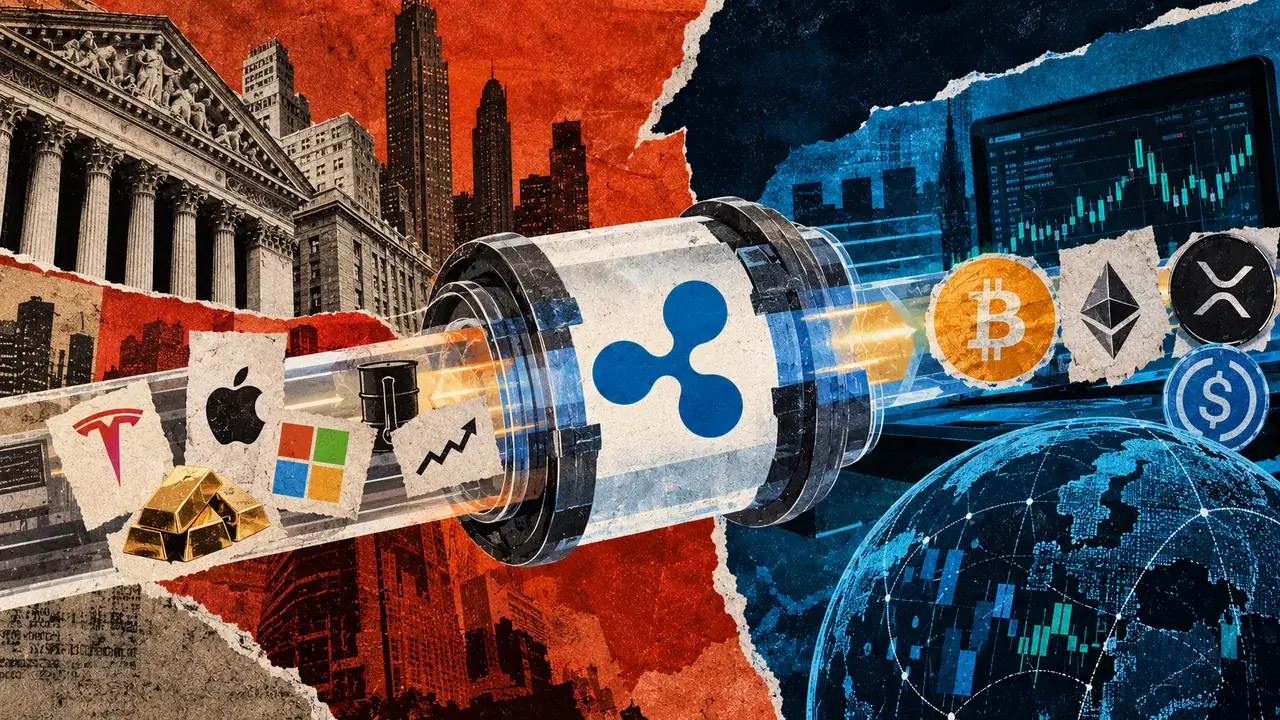
Wall Street has a specific way of doing things. They don't usually jump into new tech just because it's fast or innovative; they wait for someone to build a bridge that fits their compliance and risk models. That is exactly what Ripple is doing right now with Hyperliquid. By acting as the principal counterparty through its Ripple Prime service, the company is effectively giving big banks a back door into one of the most active corners of the decentralized finance world.
We are talking about $59 billion in trading volume. That is the kind of gravity that institutions can't ignore. But instead of forcing a hedge fund manager to manage their own private keys or navigate a DEX interface, Ripple is wrapping that exposure into something that looks and feels like a traditional swap agreement. It is a clever move, and it tells us a lot about where the infrastructure layer of crypto is heading.
Bridging the Gap Between Perps and Traditional Assets
Hyperliquid has become a powerhouse because it offers perpetual contracts on everything from obscure altcoins to major indices. Ripple’s new play focuses on the latter. Through Trade.xyz, Ripple is facilitating swaps that reference over 100 different traditional financial markets. This includes gold, energy, foreign exchange, and major equity ETFs. The catch? It is all running 24/7 on a decentralized backend while the front-end remains institutional-grade.
For a builder, this is the blueprint for the next two years. The industry is moving past the stage where we try to convince the world that decentralized is "better" simply because it is decentralized. Instead, we are seeing the rise of hybrid models. The execution happens on-chain for transparency and speed, but the counterparty risk is managed by a known entity like Ripple. This removes the two biggest hurdles for institutional entry: regulatory uncertainty and technical complexity.
The Multi-Asset Future of On-Chain Liquidity
The significance here isn't just about Ripple. It’s about the underlying asset class. By using perpetual swaps as the vehicle, Ripple is allowing traders to get exposure to the S&P 500 or Crude Oil without ever touching a traditional brokerage account. This is the definition of financial sovereignty, even if it is currently wrapped in a corporate service. It proves that decentralized exchanges (DEXs) are no longer just playgrounds for memecoins; they are becoming legitimate venues for global macro trading.
Hyperliquid’s growth has been organic, driven by high-performance trading and a smooth user experience. When you add a heavy hitter like Ripple to the mix to handle the settlement and legal heavy lifting, the floodgates open. We are seeing a consolidation of markets. In the past, you needed one platform for crypto and another for stocks. Now, the liquidity is merging. As a founder, if you aren't thinking about how to integrate cross-asset liquidity, you’re building for the past.
Risk, Centralization, and the Founder's Dilemma
We should be honest about the trade-offs here. Ripple acting as the principal counterparty means there is a central point of failure in the trust chain. If Ripple has a bad day, the bridge breaks. This is the tension we live with in the current market. Pure decentralization is too scary for the big money, and pure centralization is exactly what we are trying to replace. The "middle way" that Ripple is carving out is necessary for adoption, but it shouldn't be the final destination.
For developers, the takeaway is clear: focus on building robust, high-throughput chains like Hyperliquid that can handle institutional-grade volume, but leave the door open for service providers to build the compliance layer on top. Don't try to build the compliance into the protocol itself. Keep the protocol permissionless and let the market decide which bridges to trust. Ripple chose Hyperliquid because it works, not because it asked for permission.
Why This Matters for Builders
- Liquidity is agnostic: Capital doesn't care if it's trading a token or a barrel of oil, as long as the spread is tight and the settlement is fast.
- Counterparty trust is the product: Ripple isn't selling technology here as much as they are selling their balance sheet and their reputation.
- Perpetuals are the winning format: The "perp" has emerged as the most flexible instrument in crypto. Seeing it applied to traditional markets at this scale confirms its dominance.
What we are witnessing is the slow-motion absorption of traditional finance by crypto infrastructure. Ripple is just the first major entity to realize that you don't need to rebuild the stock market; you just need to build a better way to trade its value. If you are building in the DeFi space, your competition isn't the other DEX on your chain—it's the legacy clearinghouses that haven't realized their business model is about to be automated away.
The goal isn't just to put crypto on Wall Street; it is to put Wall Street on the blockchain. Ripple's move into Hyperliquid's ecosystem is a massive step toward that reality.
The lesson for founders is to build for scale from day one. Hyperliquid didn't wait for Ripple to show up to become a $59 billion market. They built a product that was so efficient that the institutions had no choice but to find a way in. Build something undeniable, and the bridges will build themselves.
Read the original at CryptoSlate →