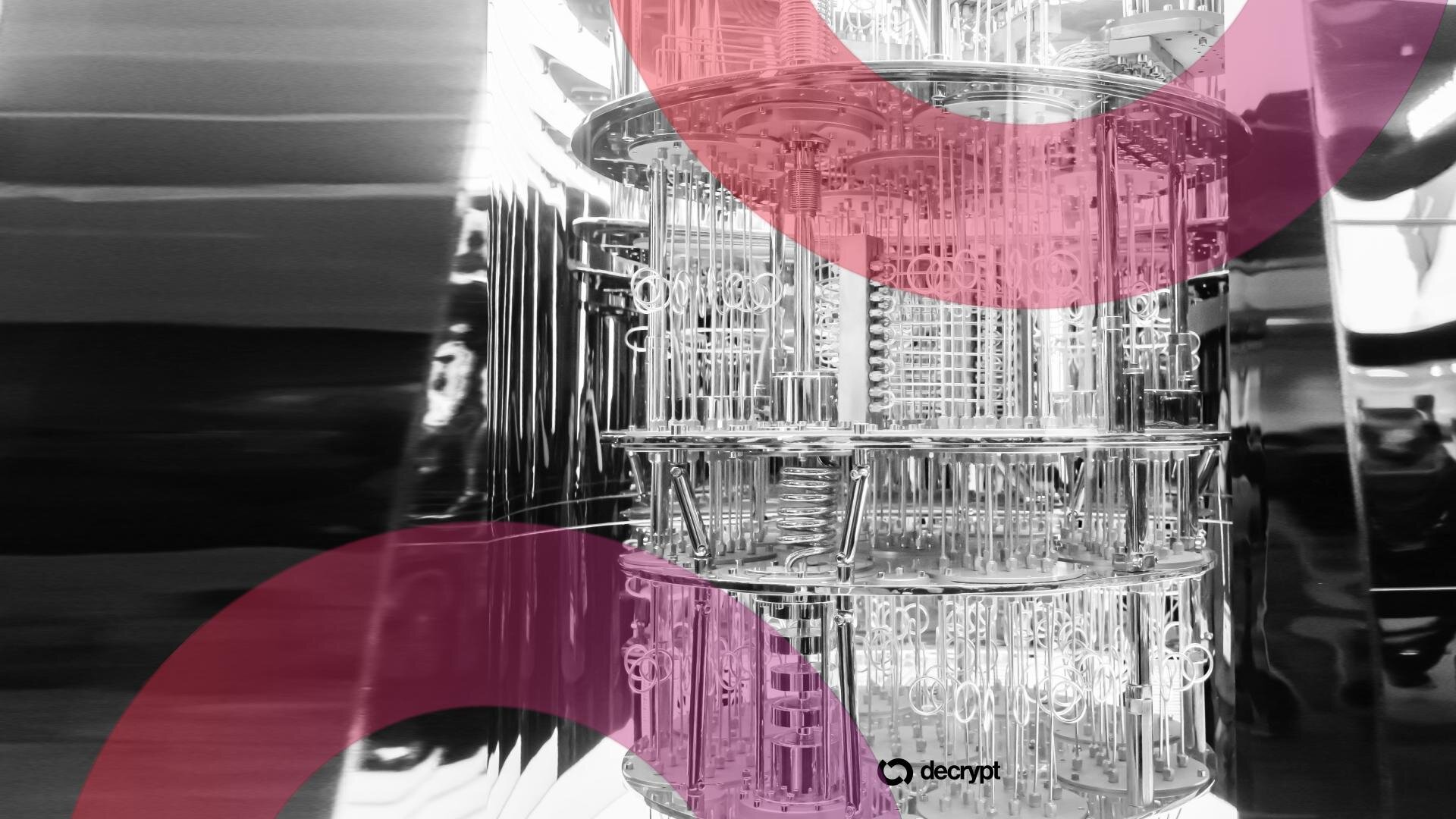
We have spent the last decade arguing about block size and transaction throughput, but a much larger shadow is starting to loom over the industry. The International Organization of Securities Commissions, or IOSCO, recently released a report that shifts the conversation from theoretical academic threats to a genuine regulatory concern: the arrival of quantum computing.
For most of us building in this space, quantum feels like science fiction. It is something we assume will be solved by the time it matters. But IOSCO is making the case that for distributed ledger technology, the upgrade path to quantum resistance is going to be significantly more painful than it will be for traditional centralized finance. This is not just a hardware race; it is a structural crisis for how we prove ownership on-chain.
The Mathematical Wall
The core of the problem is that our entire industry is built on a specific type of math that quantum computers happen to be very good at breaking. Whether you are using Bitcoin or Ethereum, your security relies on elliptic curve cryptography. It works because it is computationally impossible for a classic computer to derive a private key from a public key within any reasonable timeframe.
Quantum computers change the math. Using something called Shor’s algorithm, a sufficiently powerful quantum computer could theoretically reverse-engineer a private key almost instantly. If that happens before we have migrated to new standards, the entire concept of self-custody collapses. Every dormant wallet, every smart contract, and every DAO treasury becomes an open vault for anyone with the right hardware.
Why Blockchains Are Uniquely Vulnerable
You might ask why this is a blockchain-specific problem. After all, banks and governments also use encryption. The difference, as IOSCO points out, lies in the lack of a central coordinator. When a bank needs to update its security protocols, it pushes a server-side update. Users might need to reset a password or update an app, but the transition is managed from the top down.
In a decentralized environment, there is no one to force an update. We rely on consensus, which is notoriously slow and politically charged. Upgrading a protocol to be quantum-resistant requires every single participant to agree on a new set of rules. This creates a massive coordination risk. If a portion of the network refuses to move, or if the migration process is botched, the network could fork or leave trillions of dollars in assets exposed on the old, vulnerable chain.
The Bulkiness Problem
Even if we achieve consensus on which post-quantum algorithms to use, we face a technical hurdle that most builders are ignoring: size. Quantum-resistant signatures and public keys are significantly larger than the ones we use today. We are talking about an increase in data size by a factor of ten or even a hundred in some cases.
For a technology that is already struggling with scalability and data availability, this is a nightmare. Larger signatures mean fewer transactions per block. They mean higher gas fees and more storage requirements for nodes. This creates a direct conflict between the need for security and the desire for a usable, low-cost network. We might have to choose between a blockchain that is fast and cheap but hackable by quantum computers, or one that is secure but sluggish and expensive.
The Retroactive Threat
There is also the issue of "harvest now, decrypt later." There are likely bad actors and state-level entities currently capturing and storing encrypted blockchain data. They can't read it today, but they are betting that in ten or fifteen years, they will have the quantum power to unlock it. For privacy-focused projects, this means the threat isn't in the future; it has already happened. Anything you have done on-chain today is potentially visible to a future observer with a quantum machine.
The regulatory pressure is going to mount long before the first quantum computer actually cracks a block. IOSCO is signaling that they expect builders to have a plan now, not in a decade.
What Builders Should Do
As a founder, it is easy to dismiss this as a problem for the core protocol developers. But if you are building an L2, a wallet, or a DeFi protocol, you are inheriting the risks of the base layer. We need to start asking harder questions of the protocols we build on. Do they have a roadmap for quantum resistance? Are they looking at lattice-based cryptography? Are they considering how to handle the bloat that comes with these new standards?
We also need to rethink the long-term storage of sensitive data. If your project relies on on-chain privacy, you need to assume that privacy has a shelf life. We should be designing systems that minimize the amount of sensitive information stored permanently on a public ledger, even if it is currently encrypted.
The Bottom Line
The warning from IOSCO isn't just about technical specs; it's about market stability. If the investing public loses confidence in the long-term security of digital assets because of a looming quantum threat, the capital will dry up long before the first exploit. The industry has a habit of moving from one fire to the next, but this is a fire that we can see coming from miles away. Ignoring it because it feels like science fiction is a recipe for a catastrophic systemic failure.
We have built an entire financial ecosystem on the assumption that certain math problems are hard to solve. We are about to enter an era where that assumption is no longer true. The builders who survive will be the ones who didn't wait for the crisis to start designing the solution.
Read the original at Decrypt →