The Prediction Market Mirage
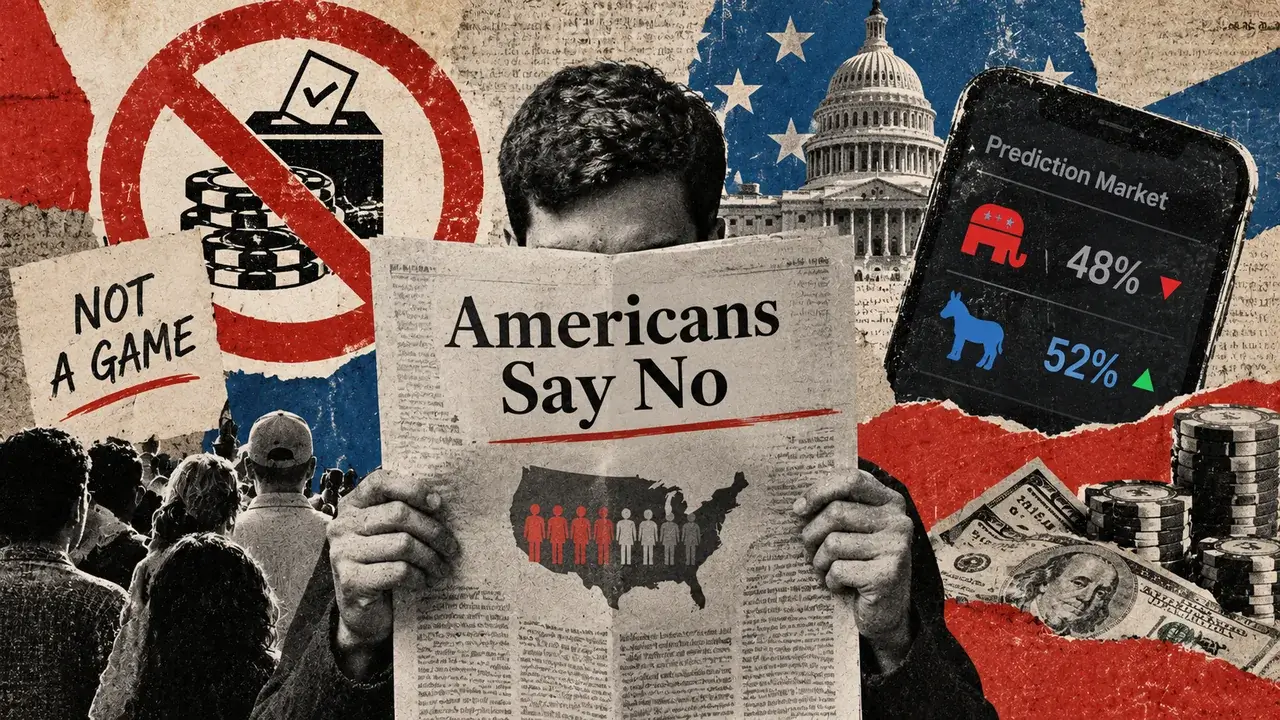
If you have spent any time on Crypto Twitter lately, you would think prediction markets are the new oracle of truth. The narrative is simple: markets are more efficient than polls because people have skin in the game. But there is a massive gap between what the crypto bubble believes and how the rest of the world actually functions. A recent look at public sentiment shows that the vast majority of Americans are not just uninterested in betting on elections—they are actively opposed to the idea.
For founders building in this space, this is a reality check. We often mistake liquidity for legitimacy. Just because a few whales are moving millions of dollars on Polymarket doesn't mean the average person sees these platforms as a reliable source of information. In fact, most people still view them as nothing more than digital casinos.
The Data vs. The Hype
When you look at the numbers, the disconnect is staggering. Despite the record-breaking volume we have seen this year, surveys indicate that most U.S. citizens do not want to participate in election-based markets. There is a fundamental cultural barrier here. To a builder, an election is a data point. To a voter, it is a civic duty, a personal identity, or a source of anxiety. Turning that into a gamble feels distasteful to a large portion of the population.
This is a classic example of the founder's blind spot. We get so excited about the mechanism—decentralized order books, instant settlement, global participation—that we forget to ask if the product solves a problem people actually want solved. Most Americans do not want to bet on their future; they just want to live it. When we frame the future of democracy as a betting line, we shouldn't be surprised when the public pushes back.
Why Builders Should Be Skeptical
As someone who has been in the trenches building products, I have learned to be wary of "inevitability." The idea that prediction markets will eventually replace polling is not a foregone conclusion. Polls, for all their flaws, attempt to measure the intent of the entire population. Prediction markets only measure the sentiment of those with spare capital and a willingness to risk it. That is a very specific, very small demographic.
If you are building in the AI or crypto space, you need to understand that being right about the tech is only half the battle. You have to be right about the human element. The current resistance to election betting suggests that the "wisdom of the crowd" might just be the "wisdom of the degens." If the crowd you are measuring is not representative of the people actually making the decisions, your data is just noise.
The Regulatory Headwind
We cannot talk about these markets without talking about the legal landscape. Regulators in the U.S. have been historically hostile toward event contracts, specifically those involving elections. They argue that these markets could incentivize interference or undermine the integrity of the voting process. While the crypto community sees this as innovation-stifling bureaucracy, the general public largely agrees with the caution.
For a founder, this creates a precarious environment. Building a business on a foundation that the majority of your potential users find unethical or untrustworthy is a recipe for a pivot. You aren't just fighting the SEC; you are fighting the cultural grain.
The Role of AI in Filtering the Noise
This is where AI comes into play. We are seeing a surge in AI agents participating in these markets, supposedly to provide more rational, data-driven outcomes. But if the underlying market is rejected by the public, does the AI's involvement even matter? An AI can be a master of probability, but if it's operating within a siloed market that doesn't reflect real-world sentiment, it's just generating sophisticated guesses based on flawed inputs.
Builders should be focused on how to use AI to bridge the gap between market data and real-world behavior, rather than just automating bets. The real value is not in the betting itself, but in the sentiment analysis that can be derived from it—if, and only if, we can get more people into the ecosystem.
Beyond the Betting Line
The industry needs to stop treating prediction markets as a replacement for truth and start treating them as a specific tool for a specific audience. The marketing needs to change. Instead of "bet on the president," the pitch needs to be about "hedging against uncertainty." That is a founder’s perspective. We don't bet for the sake of gambling; we manage risk.
If prediction markets want to survive past the next election cycle, they need to find a way to appeal to the people who currently find them repulsive. That means better education, better user interfaces, and a move away from the gambling aesthetic. It also means acknowledging that some things might not be meant for the market.
What This Means for You
- Don't mistake volume for adoption: High trade volume is often driven by a tiny group of power users, not a broad base.
- Respect the cultural barrier: If the public thinks your product is unethical, no amount of decentralized tech will save it.
- Focus on utility over speculation: The most successful tools will be those that help people navigate the future, not just gamble on it.
The biggest risk in crypto isn't the code; it's the assumption that everyone wants to live in a world where everything is a market.
The current rejection of election betting by the American public is a loud signal. We can either listen to it and build more thoughtful, integrated products, or we can keep shouting into our own echo chamber while the rest of the world walks away. Prediction markets are a powerful technology, but they are currently failing the most important test: the trust of the people they claim to represent.
Read the original at CryptoSlate →