We have all been there. You look at your wallet and see a dozen different tickers. You have some Layer 1s, a few DeFi protocols, a handful of gaming tokens, and maybe a stray memecoin or two. You feel diversified. Then, a single piece of macro news hits or a major exchange stumbles, and every single one of those assets drops by 20% in lockstep. The diversification you thought you had was a mirage.
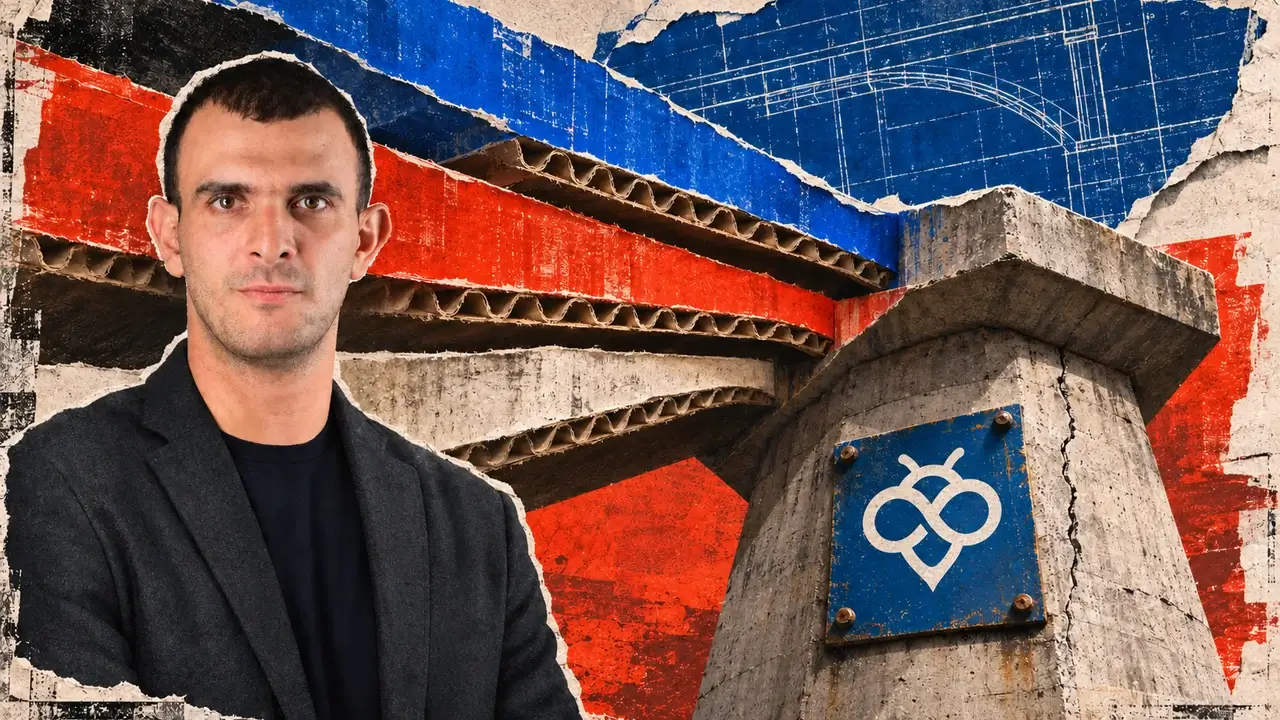
Yasser Elmansy, the growth lead at Toobit, recently touched on a pain point that most crypto founders and traders ignore until it is too late: correlation risk. In the traditional finance world, you have sophisticated tools to tell you if your portfolio is over-indexed to a specific sector. In crypto, we mostly have vibes and spreadsheets. Elmansy argues that AI shouldn't just be used to find the next moonshot; it should be used as a guardrail to tell you when a new trade is actually just doubling down on a risk you already own.
The Illusion of Choice in Crypto Markets
The hard truth about the crypto market is that it is still incredibly consolidated. We like to pretend that a decentralized lending protocol has nothing to do with a modular blockchain scaling solution, but their price action says otherwise. When Bitcoin breathes, the rest of the market reacts. When liquidity dries up, the exit door is small, and everyone tries to run through it at once.
For a builder, this is a massive problem. If you are building a project, your treasury is likely tied to your native token or a few major assets. If those assets are all correlated, your runway can vanish overnight. Elmansy’s vision for AI in this space is a tool that looks at these invisible threads. It is about moving away from the "what should I buy?" mentality and toward a "what am I actually holding?" perspective.
Why Simple AI Bots Aren't Enough
Right now, the intersection of AI and crypto is flooded with basic trading bots. These bots are usually optimized for one thing: execution. They follow a trend, they execute a swap, or they alert you when a whale moves funds. While that is useful, it doesn't solve the structural problem of portfolio health. A bot might tell you that a certain token is undervalued, but it won't tell you that buying it increases your exposure to a specific venture capital firm that is currently facing a liquidity crisis.
A founder-first approach to AI in crypto requires something deeper. We need tools that analyze the underlying plumbing. Who are the market makers? Which liquidity pools are interconnected? If one bridge fails, which of your assets are effectively frozen? This is the kind of risk flagging Elmansy is talking about. It is the difference between a dashboard that looks pretty and a dashboard that actually protects your capital.
The Correlation Trap
Builders often fall into the trap of thinking their niche protects them. They think, "I'm building in AI-compute, so I'm safe from a DeFi exploit." But the market doesn't care about your whitepaper during a deleveraging event. The capital flows through the same pipes. If a major player gets liquidated, they sell what they can, not just what is failing.
- Asset Overlap: Many tokens share the same backers and market makers. When one goes down, the others often follow due to forced selling.
- Liquidity Thinness: An AI should flag when a new position is being entered into a pool that lacks the depth to handle a sudden exit.
- Sentiment Contagion: AI can track how news in one sector of crypto ripples into others, providing a lead time that humans simply can't match.
Shifting the Focus to Risk Mitigation
As an editor and a founder, I see a lot of pitch decks for "AI-powered trading assistants." Most of them are junk because they focus on the upside. The upside takes care of itself in a bull market. The real value is in surviving the flat years and the sudden crashes. Elmansy’s point is that the AI should act as a skeptical partner. It should be the voice in your ear saying, "You already have 40% exposure to this specific ecosystem, adding this token makes you 50% more vulnerable to a single point of failure."
For those of us building in this space, this isn't just about trading; it's about treasury management. If you are running a startup, your goal is to stay alive long enough to find product-market fit. You can't do that if your operational capital is tied up in five different assets that all trade like they are the same coin. We need AI that understands the nuance of the crypto stack, not just the price charts.
The Practical Path for Builders
So, where does this leave us? If you are a developer or a founder looking at the AI-crypto crossover, stop trying to build another "alpha caller." The market is saturated with them, and most people don't trust them anyway. Instead, look at the risk side of the equation. Build tools that offer transparency into hidden dependencies.
"The goal isn't to stop people from taking risks. It's to make sure they know exactly how much risk they are taking."
We are entering an era where data is abundant but signal is rare. An AI that can map out the contagion risks in a portfolio in real-time would be far more valuable to a serious builder than a bot that tries to predict the next pump. The technology is there; the data is on-chain. What's missing is the focus on the boring, essential task of not losing everything at once.
What This Means for You
If you are managing a portfolio or a project treasury, take a long look at your holdings. Don't look at the names; look at the behavior. If your tokens all move in the same direction at the same time, you aren't diversified. You are just betting on one thing with different names. The next wave of AI tools in this space will hopefully be the ones that tell us what we don't want to hear: that we are more exposed than we think.
The take-away is simple: true diversification in crypto is harder than it looks, and until AI tools start prioritizing risk flagging over hype generation, you are your own best risk manager. Watch the correlations, not just the prices.
Read the original at CryptoSlate →