The Gatekeeper Problem
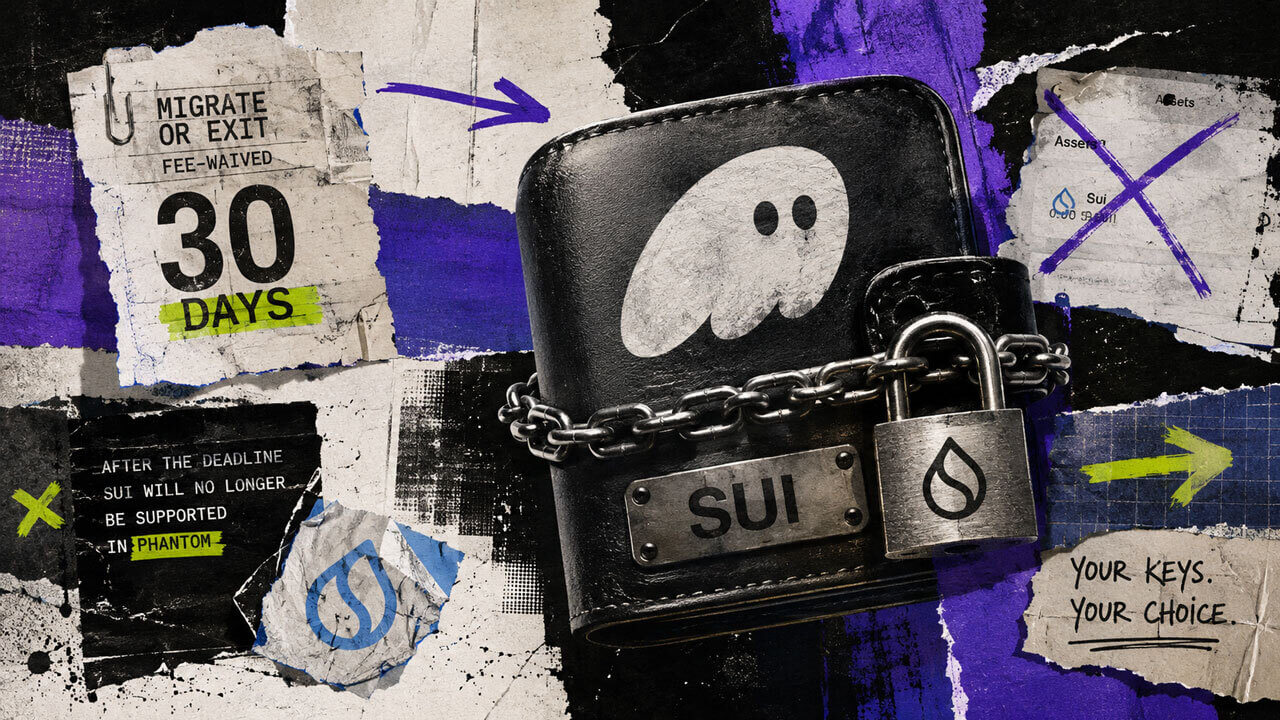
Phantom recently announced it is sunsetting support for the Sui blockchain. On the surface, this looks like a simple business decision. A company decides a specific integration isn't worth the overhead, they pull the plug, and users move on. But for those of us building in this space, this move highlights a structural vulnerability we often ignore: the massive, centralized power held by non-custodial wallet interfaces.
When a wallet like Phantom—which has become the default entry point for millions of users—decides to stop supporting a chain, it doesn't just change a dropdown menu. It effectively severs the primary connection between a user and their capital. While the assets technically remain on the Sui blockchain, the average user's ability to interact with them is crippled. This is the irony of self-custody. You own the keys, but if the door disappears, you're still locked out.
The Illusion of Portability
We talk a lot about decentralization and the idea that users have total control over their assets. We tell people that as long as they have their seed phrase, they are safe. That is technically true, but practically flawed. Most retail users do not know how to interact with a blockchain via a command-line interface. They don't want to research which alternative wallets are compatible with their specific hardware or derivation paths. They want to open an app and see their balance.
When Phantom drops Sui, they are forcing a massive migration. Users now have to find new interfaces, trust new codebases, and potentially deal with the friction of importing private keys into software they aren't familiar with. For builders, this is a wake-up call. If your entire user base accesses your dApp through a single popular wallet, your project's uptime is essentially at the mercy of that wallet's product roadmap.
The Cost of Maintenance
From a founder's perspective, I understand why Phantom is doing this. Maintaining multi-chain support is expensive. Every new L1 or L2 requires unique engineering resources, security audits, and constant updates to keep up with protocol changes. If the volume on Sui doesn't justify the burn rate required to support it, a lean company is going to cut it. This is a business reality that clashes with the crypto-idealist vision of a frictionless, multi-chain future.
This creates a hierarchy of blockchains. There are the 'essential' chains that every wallet must support (Ethereum, Solana, Bitcoin) and the 'experimental' ones that are at risk of being delisted by the interfaces. If you are building on a non-EVM chain or a newer L1, you aren't just fighting for liquidity; you are fighting for permanent real estate inside the major wallets. If you lose that spot, you lose your distribution channel.
The Friction of the Migration
The transition for Sui users on Phantom isn't instantaneous, but it is final. Users are being pointed toward alternatives like Slush or told to connect their Ledger devices elsewhere. This is where the risk of loss increases. Every time a user is forced to move their seed phrase or import a key into a new interface, the surface area for phishing and user error expands. We are essentially forcing a massive group of people to perform a security-sensitive operation because of a backend business pivot.
This also impacts the developers building on Sui. Imagine you've spent a year building a DeFi protocol or a game. You've spent money on marketing to acquire users. Now, the main pipe through which those users access your product is being capped. You now have to spend your own resources educating your community on how to migrate wallets, troubleshoot connection issues, and avoid scams during the transition. It’s a tax on the ecosystem that nobody planned for.
Dependency is a Technical Debt
Builders need to stop viewing wallets as neutral utilities. They are platforms. Just as a mobile developer is subject to the whims of the App Store, a dApp developer is subject to the whims of the dominant wallet interface. If Phantom, Metamask, or Keplr decides your chain is no longer a priority, your user experience is downgraded instantly.
We need to start building with more interface redundancy. This means encouraging users to be comfortable with multiple wallets from day one. It means investing in browser-based or 'wallet-less' onboarding through social logins and account abstraction, reducing the reliance on any single third-party extension. If your product dies because one Chrome extension stopped supporting your chain, your product wasn't actually decentralized; it was just outsourced.
The Path Forward for Founders
This situation is a reminder that the infrastructure layer is still very much a centralized bottleneck. As we move toward 2025, the 'wallet wars' will likely result in more chains being dropped as companies try to find profitability. We are seeing a consolidation of power where a few major interfaces dictate which ecosystems thrive and which ones are relegated to the 'advanced user only' category.
If you are a founder, you should be asking yourself: what happens to my users if my primary wallet provider disappears? If you don't have a clear answer or a migration plan, you are sitting on a massive piece of technical and operational debt. The Sui/Phantom split isn't an isolated incident; it's a preview of the next phase of the industry where convenience and business logic start to override the pure 'support everything' ethos of early crypto.
The Takeaway
- Wallets are gatekeepers: Self-custody matters, but the interface is where the actual power resides.
- Platform risk is real: Building on a specific chain means you are also betting on that chain's continued support by major wallets.
- Diversify your entry points: Don't let your project's survival depend on a single third-party wallet's roadmap.
- User education is permanent: You must constantly teach users how to move their assets safely between interfaces, or they will eventually get stuck.
Read the original at CryptoSlate →