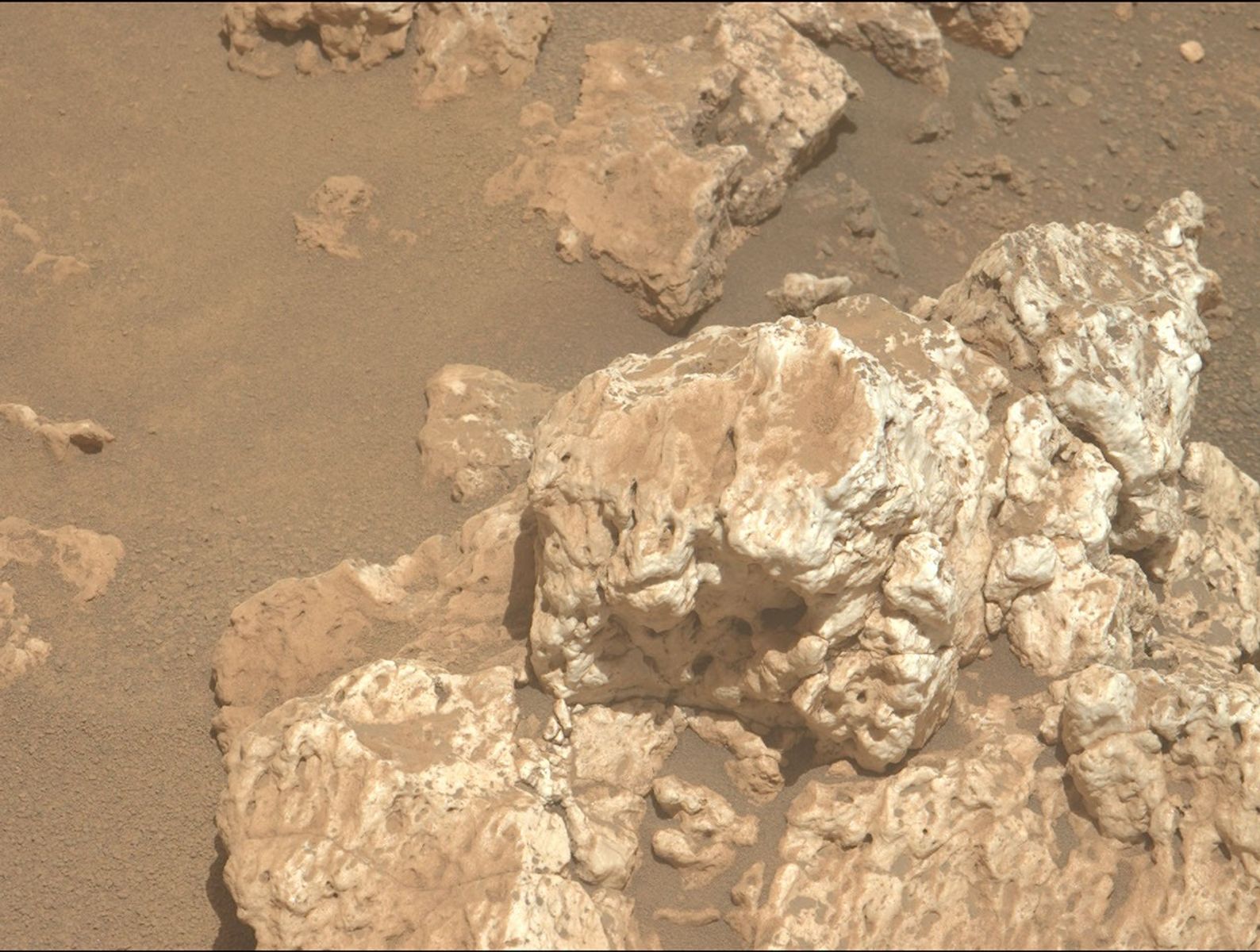
NASA’s Perseverance rover just hit a technical snag that every founder has experienced: the data coming back from the field doesn’t match the pitch deck. While exploring the Lac de Charmes region, specifically an area nicknamed Idubi, the team stumbled across a cluster of rocks that look like they were dropped there by mistake. They are bright, light-toned, and almost ghostly against the typical Martian red. They are being called the Idubi rocks, and they represent a significant break in the expected geological pattern.
The Anomaly at Lac de Charmes
For context, Perseverance is currently outside the Jezero crater, digging into the ancient Martian crust. The goal is simple: find out what happened billions of years ago. Most of the terrain is predictable basalt and dark minerals. Then, the rover cameras picked up something that looked like bleached bone. These light-toned rocks aren't just a different color; they are a different chemistry entirely. They are the physical remnants of an ancient aqueous system, essentially the scars left behind by water flowing through the crust long before Earth had even figured out multi-cellular life.
As a builder, I look at this and see a classic edge case. You build a system to solve for X, and suddenly the environment throws you Y. In NASA’s case, Y is a group of rocks that shouldn't be where they are. These are fragments of the deep crust that were likely brought to the surface by massive geological upheaval or ancient water pressure. They are highly altered, meaning they’ve been through the chemical wringer.
Why Builders Should Care About Ancient Mud
You might be wondering what Martian rocks have to do with crypto or AI. It’s about the methodology of discovery. When you’re building in a new sector—like decentralized physical infrastructure or agentic AI—you are going to hit your own version of Idubi. You’re going to find data points that shouldn't exist according to your current thesis.
Most people ignore these anomalies because they’re inconvenient. They require stopping the rover, recalibrating the sensors, and spending precious mission time on something that wasn't in the original sprint plan. But NASA understands that the anomaly is usually where the real value is hidden. The Idubi rocks tell a story of a wet Mars that was far more complex than the dry, dead rock we see today. If you’re building a startup, your biggest breakthroughs won't come from the stuff that works as expected; they’ll come from the weird bug in the code that reveals a new way to process data.
The Technical Breakdown
The science team at Purdue, specifically researchers like Candice Bedford, are looking at these rocks as time capsules. Because these rocks are so light-toned, they likely contain minerals that were precipitated from water—think carbonates or sulfates. These minerals are excellent at trapping organic compounds. If life ever existed on Mars, these ghostly rocks are exactly where the evidence would be hiding.
The rover is using its full suite of tools, including the Mastcam-Z and the SuperCam, to strip back the layers of these rocks. It’s a slow, methodical process. There is no "move fast and break things" here. If they move too fast, they miss the subtle chemical signatures that define the mission's success. This is a lesson in patience for the modern founder. We are often pressured to ship every Tuesday, but some problems—especially at the intersection of hard science and tech—require a slower, more deliberate cadence.
Infrastructure and Legacy
We talk a lot about "permanent" storage in crypto. We want our data to last forever on Arweave or IPFS. But nature has its own version of permanent storage. The Idubi rocks have held their data for billions of years without a single node or a consensus mechanism. They are the ultimate decentralized database.
What’s fascinating is that these rocks are remnants of an "aqueous system." That’s scientist-speak for a plumbing system. Water didn't just sit there; it moved, it reacted, and it changed the environment. This is exactly how we should think about liquidity and data flow in our own systems. It isn't just about having the resource; it’s about what that resource does to the infrastructure it passes through over time.
The Skeptical Take
I’ll be honest: we’ve seen "exciting" rocks before. Every few months, there’s a headline about a strange discovery on Mars that promises to rewrite history, and usually, it’s just a weirdly shaped piece of basalt. However, Idubi feels different because of the location. Being outside the crater means we are looking at the foundational crust, not just the sediment that washed into a hole. This is the raw source code of the planet.
The skepticism comes in when we look at the timeline. Perseverance is doing the heavy lifting, but we won't truly know what these rocks are until they are back on Earth. We are building a giant logistical bridge—a sample return mission—that is years away and billions of dollars over budget. It’s the ultimate long-tail project. In the tech world, we complain if a roadmap spans two years. NASA is playing a twenty-year game.
Takeaway for the Founder
If you are building something new, you need to be looking for your own Idubi rocks. You need to be looking for the anomalies in your user data or the strange results in your LLM outputs that don't make sense. Don't smooth over the edges to make your chart look pretty. The bright, weird, ghostly data points are usually the only ones that actually matter.
- Stop for the anomalies: When your data breaks your model, the model is wrong, not the data.
- Long-term data persistence: Understand that the most valuable information is often buried under layers of noise.
- Resource movement: Like the Martian aqueous systems, how your resources flow is more important than where they sit.
The Perseverance team is going to spend a lot of time at Idubi. They should. It’s a reminder that even in a desert of red dust, there are still bright spots that we don’t understand yet. As a builder, your job is to find those spots in your own field and have the guts to stop and investigate, even when the rest of the world wants you to keep driving.
Read the original at NASA Breaking News →