The New York Stock Exchange opens at 9:30 a.m. and shuts down at 4:00 p.p. local time. If you live in Singapore or London, you are forced to adjust your circadian rhythm to the whims of a timezone that hasn't changed its structural approach to trading in over a century. It is a system built for physical floor traders in suits, not for a globally connected internet population that operates 24/7. When crypto emerged, it didn't just introduce new assets; it introduced a new expectation for how those assets move. Now, the legacy world is trying to catch up by borrowing one of crypto's most successful inventions.
The Legacy Mismatch
For a founder in the fintech or crypto space, the concept of a closed market feels like an relic from the industrial revolution. We have high-frequency trading, fiber-optic connections, and instant settlements, yet we still hold our breath for the opening bell. This creates a massive structural mismatch. The volume of activity doesn't stop because a building on Wall Street closes its doors. Instead, that activity just becomes fragmented, moving into pre-market and after-hours sessions with thinner liquidity and higher volatility.
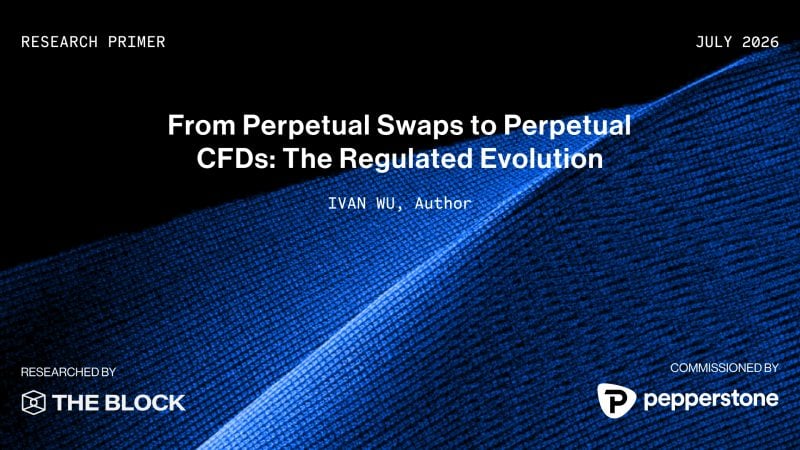
Retail traders are the ones who suffer most from this. While institutional players have the infrastructure to navigate fragmented hours, the average person is often left holding the bag if a major news event happens at 8:00 p.m. on a Tuesday. Crypto fixed this by never turning off. But crypto also brought us the perpetual swap, a creative financial instrument that allows for continuous positioning without an expiration date. Now, we are seeing the emergence of Perpetual CFDs in the regulated space, which is essentially the legacy market's way of legitimizing the perpetual swap model for traditional equities and indices.
Understanding the Shift to Perpetual CFDs
Contracts for Difference, or CFDs, have been around for a long time, but they have traditionally functioned with rollover dates or expirations that mirror the underlying asset's schedule. By adopting the "perpetual" mechanic, regulated exchanges are moving toward a model where the price of the contract is pegged to the underlying asset through a funding rate mechanism—exactly like what we see on platforms like dYdX or Binance.
This isn't just a technical tweak. It is a fundamental shift in how risk is managed. In a world of perpetual CFDs, the market doesn't need to close to settle accounts. The funding rate handles the pressure between buyers and sellers in real-time. For builders, this is a signal that the "crypto-fication" of traditional finance is accelerating. The tools we built to handle the chaos of 24/7 volatile markets are being adopted by the very institutions that once looked down on them.
Why This Matters for Builders
If you are building in the DeFi space or working on cross-chain liquidity, you need to pay attention to this regulated evolution. As legacy finance adopts perpetual mechanics, the line between "crypto trading" and "traditional trading" blurs. This creates a few specific opportunities and challenges:
- Liquidity Aggregation: If traditional assets begin trading 24/7 via perpetual contracts, the demand for liquidity providers who can operate across both crypto and traditional silos will skyrocket.
- Regulatory Precedent: As regulators get comfortable with perpetual CFDs, it becomes much harder for them to argue that the mechanics of crypto perpetuals are inherently dangerous or unmanageable.
- User Experience: The expectation for instant, continuous access is becoming the global standard. Any product built today with a "waiting period" or "market hours" restriction is already obsolete.
The Skeptical Edge
I have to be honest: just because legacy finance is adopting 24/7 mechanics doesn't mean they will do it well. Regulated markets are buried under layers of compliance, reporting, and intermediary requirements that crypto simply ignores. There is a high probability that "Perpetual CFDs" in the regulated world will come with higher fees, slower execution, and more friction than their crypto counterparts.
However, the fact that they are trying is significant. It proves that the 24/7 model is the only logical path forward. The 9-to-5 market is a zombie, and we are just waiting for the rest of the world to realize it. The friction we see now is the friction of two different worlds colliding: one that values control and one that values efficiency.
The Funding Rate as the New Interest Rate
In the crypto world, we are used to watching funding rates. We know that if everyone is long, the longs pay the shorts. This is a beautiful, self-regulating mechanism. Bringing this to traditional finance changes the game for hedging. Imagine being able to hedge a portfolio of tech stocks with the same fluid mechanics you use to hedge a Bitcoin position. It removes the need for complex options rolling and allows for a more granular approach to risk.
For founders, this means the financial primitives we are building in DeFi are actually the blueprints for the future of all finance. We aren't just building a parallel system; we are building the R&D lab for the global economy. When an exchange like NYSE or a major CFD provider starts talking about perpetual mechanics, they are admitting that the crypto founders were right about the architecture.
The Long-Term Play
The transition from traditional swaps to perpetual contracts represents more than just a change in product—it's a change in philosophy. It’s an admission that the world is no longer centered on a single geographic hub. It’s an admission that retail participants deserve the same access as the big banks.
As a builder, your goal shouldn't just be to replicate what exists. It should be to bridge the gap. The winners of the next decade won't be the ones who just build another DEX; they will be the ones who figure out how to bring the efficiency of perpetual mechanics to every asset class on the planet, all while navigating the regulatory minefield that still exists.
The 24/7 market isn't a feature; it's a requirement for a digital civilization.
We are moving toward a reality where every asset—from a share of Apple to a tokenized piece of real estate—trades on a perpetual basis. This eliminates the "gap risk" that occurs when markets close and allows for a more honest discovery of price. The legacy world is slow, but it isn't blind. They see the volume moving to crypto because crypto is more convenient. If they want to survive, they have to evolve. And for us, that means the tools we’ve spent years refining are finally becoming the industry standard.
Read the original at The Block →