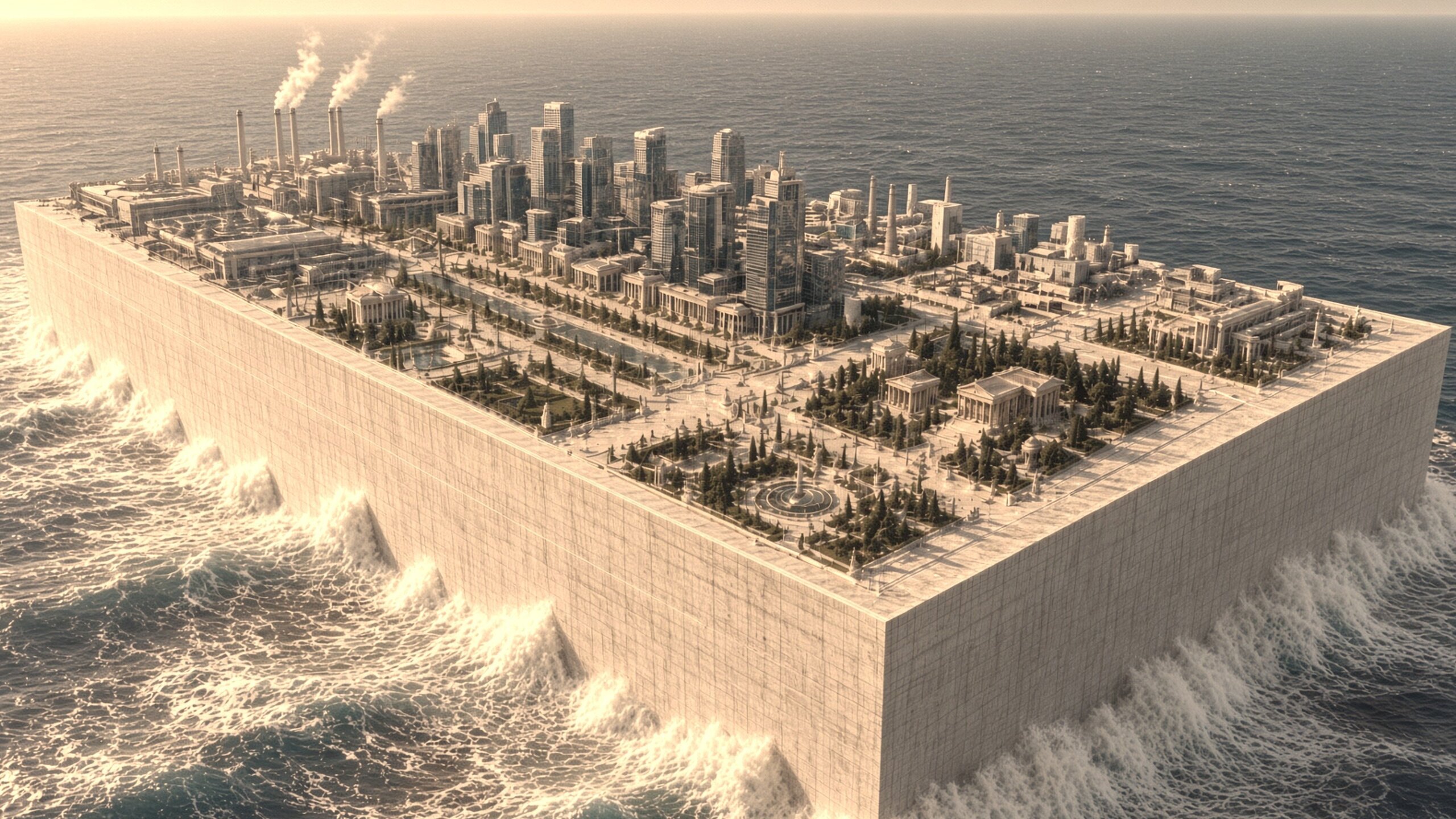
Palmer Luckey has a knack for building things that make people uncomfortable before they become inevitable. First it was consumer VR, then it was AI-powered border defense through Anduril. Now, he is dusting off a decade-old plan to step outside of national jurisdictions entirely. The goal? A floating industrial haven called SLAB.
Luckey recently detailed his vision for a massive offshore platform designed to bypass the regulatory friction that he believes is strangling innovation. We are not just talking about tax dodges or loose corporate filings. He is talking about heavy manufacturing and, more controversially, medical treatments that are currently prohibited by federal agencies like the FDA.
The Founder's Fixation with Sovereignty
For those of us building in crypto and AI, the concept of exit is familiar. We build decentralized protocols because we don't trust centralized intermediaries to keep the lights on or play fair. Luckey is applying that same logic to physical atoms. He views the modern state as a collection of legacy code that is too bloated to update, so he wants to fork the physical environment.
The SLAB project—which stands for Sovereign Light Annex Base—isn't a new whim. Luckey has been thinking about this for ten years. The premise is simple: build a stable, large-scale structure in international waters where the primary rule is the founder's intent rather than a bureaucrat's permission. It is the ultimate expression of the builder-first mentality, taken to a literal extreme.
Why Illegal Medicine Matters
The most striking part of Luckey’s pitch involves what he calls illegal medicine. In the United States and most developed nations, the path from a medical breakthrough to a bedside treatment is paved with ten years of paperwork and billions of dollars in compliance costs. While these regulations are designed for safety, Luckey argues they also act as a death sentence for people who don't have a decade to wait.
By operating in a gray zone or international waters, a facility like SLAB could theoretically host procedures like advanced gene editing, experimental longevity treatments, or high-risk surgeries that haven't cleared the final hurdle of state approval. For a builder, this is the ultimate sandbox. For a regulator, it is a nightmare scenario of accountability vacuums.
The Manufacturing Bottleneck
Beyond the medical aspect, Luckey is focused on the physical constraints of building hardware. Environmental regulations, zoning laws, and labor codes in the U.S. make it nearly impossible to iterate on heavy industrial tech at the speed of software. If you want to build a new type of reactor or a massive drone fleet, you spend more time filing permits than you do welding steel.
Luckey’s offshore haven is designed to be a high-throughput factory. By removing the need for state-level sign-offs, he believes he can collapse the time-to-market for hardware the same way the cloud collapsed the time-to-market for software. It is a bold bet on the idea that speed is the only competitive advantage that actually matters in the long run.
What This Means for the Crypto and AI Community
We need to look at this through the lens of decentralization. For years, the crypto community has talked about network states—digital communities that eventually manifest as physical territories. Luckey is trying to leapfrog the digital part and go straight to the hardware. If you are building AI agents or decentralized physical infrastructure (DePIN), SLAB represents the ultimate hosting provider.
However, there is a healthy dose of skepticism required here. History is littered with failed seasteading projects and offshore micro-nations that ended in legal disaster or literal shipwrecks. Building at sea is incredibly expensive and physically hostile. The salt water alone is enough to destroy most high-end machinery. But Luckey has something previous dreamers didn't: billions of dollars and a proven track record of delivering hardware that the government actually wants to buy.
The Practical Risks
There are three main hurdles Luckey faces that every builder should watch closely:
- Geopolitical Friction: Just because you are in international waters doesn't mean you are invisible. Nations have a way of projecting power when they feel their monopolies on force or health are being challenged.
- Liability and Trust: If a medical procedure goes wrong on a floating platform with no sovereign oversight, who is the arbiter? Trust is the hardest thing to scale in a lawless environment.
- Supply Chain Dependency: You can't build everything from scratch. A floating island still needs to import raw materials and food. This creates chokepoints that land-based governments can easily squeeze.
Luckey seems to think he can overcome these through sheer engineering will. He isn't interested in a hippie commune on the waves; he wants an industrial powerhouse that happens to be unmoored from the traditional legal system.
The Founder's Takeaway
For builders, the lesson here isn't necessarily to go buy a boat. The lesson is that the friction of the old world is reaching a breaking point. Whether it's through decentralized finance, local-first AI, or offshore manufacturing, the smartest people in the room are looking for ways to opt out of systems that no longer function at the speed of light.
Luckey’s SLAB project is a high-beta bet on the future of sovereignty. It is honest about its goals—it wants to do things that are currently illegal because the legal system is too slow to adapt. If he succeeds, he won't just be building a platform; he will be providing a blueprint for how industry functions when the state is no longer the primary stakeholder. Keep your eyes on this, but don't sell your land-based assets just yet. The ocean is a very unforgiving place for a startup.
Read the original at Decrypt →