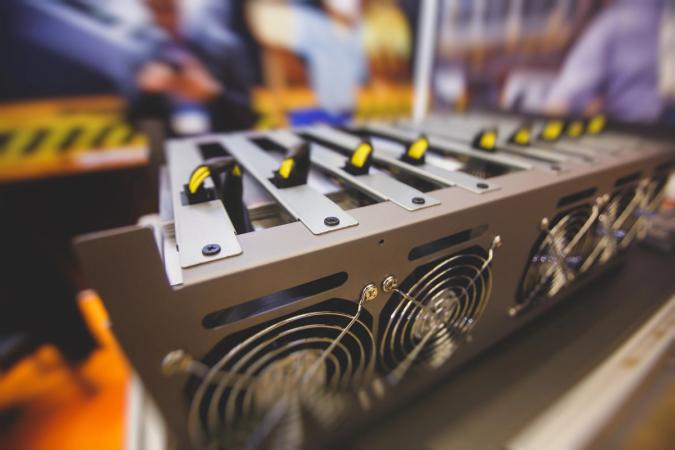
In the world of Bitcoin mining, we usually talk about hash rates, hardware efficiency, and energy costs. We rarely talk about the plumbing of the internet itself. But earlier this month, someone decided to remind us that the pipes are leaking. In a span of about one second, an attacker managed to redirect over 1,000 Bitcoin miners to a fake pool, effectively stealing the computational work of 1.9 exahashes per second (EH/s) of mining power.
This wasn't a sophisticated zero-day exploit in the Bitcoin Core code. It wasn't a breach of a mining pool's database. It was an old-school Border Gateway Protocol (BGP) hijack. If you're a founder or a builder in this space, this should be a wake-up call. We are building decentralized protocols on top of a centralized, aging internet architecture that is fundamentally trusting and, frankly, broken.
The Anatomy of the Heist
To understand how this happened, you have to understand BGP. Think of BGP as the GPS of the internet. It’s the protocol that routers use to announce to the world: "Hey, if you want to reach this set of IP addresses, send your traffic through me." The problem is that BGP was built on a handshake and a promise. When a network router tells the internet it owns a certain route, the rest of the internet generally believes it.
In this specific attack, the malicious actor broadcasted fake routes for the IP addresses belonging to several major mining pools. Because the internet is designed to find the shortest path, miners' machines suddenly started sending their proof-of-work data to the attacker's server instead of the legitimate pool. The miners didn't know the difference. Their machines were still humming, consuming power, and submitting shares. The only difference was that the rewards were going into a stranger's wallet.
The scale here is what matters. 1.9 EH/s is a massive amount of power. For context, that is more than the total hash rate of many entire countries or smaller altcoins. For a few minutes, someone owned a significant chunk of the network's security, and they didn't have to buy a single ASIC to do it.
Why Builders Should Be Skeptical
As a founder, I often see teams obsess over smart contract audits while ignoring the infrastructure their nodes actually run on. We spend millions securing the "on-chain" logic but leave the "off-chain" routing to chance. This incident proves that if you can control the routing, you can control the consensus—or at least the rewards derived from it.
The industry has known about BGP vulnerabilities for decades. There is a fix called RPKI (Resource Public Key Infrastructure), which acts as a sort of cryptographic verification for these internet routes. It’s essentially a way to sign your routes so that peers know they are legitimate. The frustrating part? Many of the world’s largest mining pools still haven't fully implemented or enforced RPKI. It’s a classic case of technical debt in a high-stakes environment.
When we talk about "decentralization," we usually mean the distribution of nodes. But if 40% of those nodes are routing through the same vulnerable ISPs or using pools that don't secure their BGP announcements, how decentralized are we actually? We’ve built a high-tech skyscraper on a foundation of shifting sand.
The Cost of Convenience
Most miners connect to pools via Stratum, a protocol that, in its original form, is unencrypted and lacks robust authentication for the pool itself. While Stratum V2 is making rounds and promises to fix many of these issues—allowing miners to negotiate their own blocks and adding better security—adoption has been slow. Why? Because the current system "works," and miners are notoriously focused on the short-term bottom line.
But the cost of this convenience is rising. This isn't just about one thief stealing some block rewards. This is a proof of concept for a much more devastating attack. Imagine a state actor using BGP hijacking to partition the network, creating a massive chain split or a double-spend opportunity by isolating a large chunk of the hash rate. This isn't science fiction; it's a documented architectural flaw.
What This Means for the Build Cycle
If you are building infrastructure, whether it's a wallet, a bridge, or a mining operation, you need to be thinking about network-level resilience. Relying on the default settings of your ISP is no longer a viable security strategy. Here is what needs to change:
- RPKI Adoption: If you are running a pool or a large-scale node operation, RPKI isn't optional. You need to sign your prefixes and demand that your upstream providers filter based on those signatures.
- Stratum V2 Transition: The industry needs to push for the adoption of protocols that give power back to the individual miners and encrypt the communication between the machine and the pool.
- Redundancy Beyond the Cloud: We see too many builders relying solely on AWS or Google Cloud. A routing error at a major cloud provider can take down half the network. Diversification at the ISP and physical route level is necessary.
The Honest Takeaway
We like to pretend that crypto is an island, isolated from the failures of the "old world." It’s not. We are deeply tethered to the legacy internet. This attack was a reminder that you can have the most secure private keys in the world, but if the map used to send your data is forged, you’re still going to lose your money.
The takeaway for founders is simple: stop assuming the base layer of the internet is a neutral, functioning utility. It’s a collection of trust-based shortcuts. If your business model depends on 100% uptime and 100% routing integrity, you are currently at risk. It’s time to stop building apps and start looking at the plumbing. If we don't fix the routing, the decentralization we're all working toward is just an illusion.
We got lucky this time. 1.9 EH/s was diverted for a relatively short period. Next time, the attacker might not be looking for a quick payday; they might be looking to break the network itself. Builders need to move faster than the hackers, and right now, we’re lagging behind.
Read the original at CoinDesk →