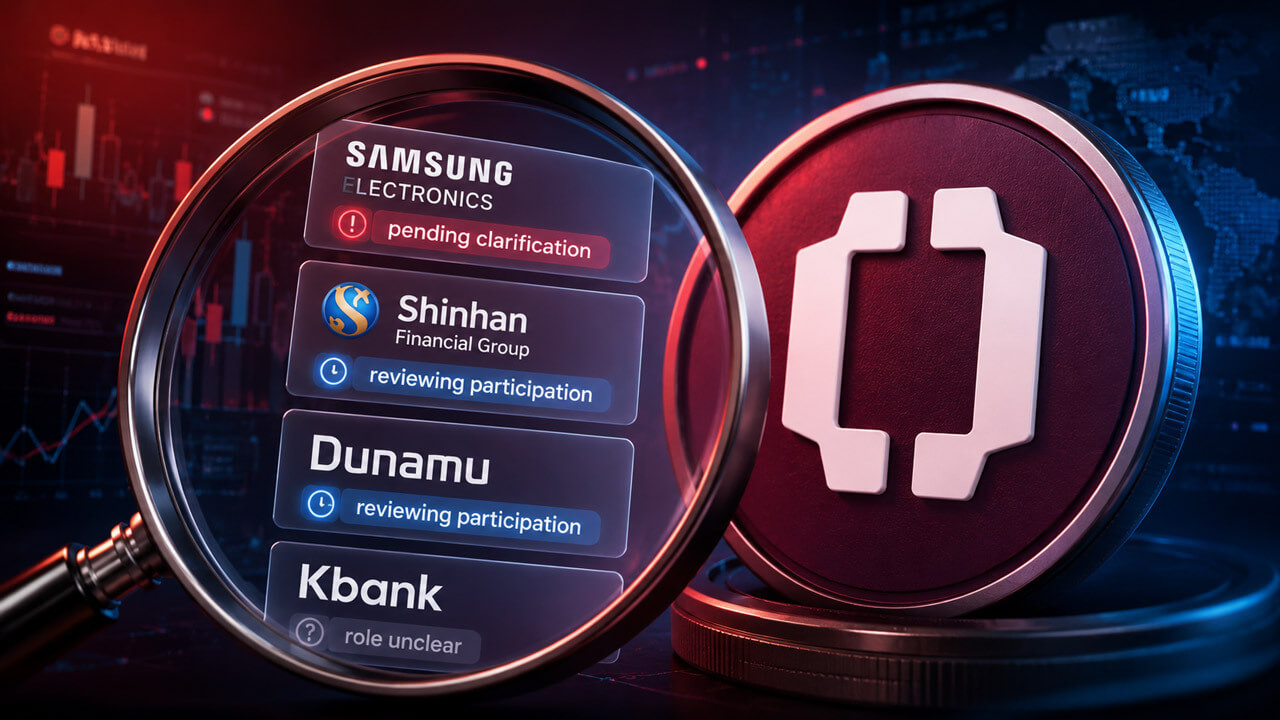
I have seen this movie before. A new project launches with a massive graphic showing fifty logos of Fortune 500 companies and established protocols. It looks impressive on a slide deck. It suggests immediate liquidity and total market dominance. But then, a few days later, the press releases start getting edited, and the tweets start getting deleted. Suddenly, nobody is quite sure who is actually signed up and who just had a 15-minute introductory call.
The OpenUSD Situation
The recent friction surrounding OpenUSD is a classic case study in what happens when marketing speed outruns legal and operational reality. OpenUSD was introduced as a coalition-based stablecoin, a collective effort designed to challenge the dominance of USDT and USDC by leveraging a massive network of partners. On paper, it is a great idea. In crypto, the biggest problem is always distribution and trust. If you launch with a hundred partners, you solve those problems on day one. Except, as we are seeing, a list of logos is not a business model.
Several firms that were originally associated with the launch have had to clarify their involvement. Some have moved from being marquee partners to being technical observers or simply users of the underlying technology. In the world of high-stakes finance, there is a massive legal gulf between testing a piece of code and putting your name on a financial instrument. When that gulf is ignored in the name of a splashy launch, credibility takes a hit.
The Trouble with Coalition Coins
Stablecoins are basically commodities now. They have become the plumbing of the internet. To make a new one succeed, you either need a massive innovation in how they are backed, or you need a network effect so big that everyone is forced to use it. OpenUSD is banking on the latter. The theory is that if enough players hold a stake in the success of the token, it becomes the new standard.
But coalitions are fragile. They suffer from the consensus problem. If every major move requires the thumbs-up from fifty different entities with fifty different risk tolerances, you cannot move at the speed of the market. More importantly, when one partner gets shaky or clarifies that they are not actually an official member, it creates a domino effect. If Company A is only in because Company B is there, and Company B says they were just lookin at the GitHub repo, then the whole foundation begins to crack.
Why Founders Should Be Wary
If you are building in this space, the lesson here is about managing expectations. It is incredibly tempting to use the proximity to big names as a way to bootstrap legitimacy. We call it halo-effect marketing. You get a meeting with a Tier-1 exchange or a major payment processor, and suddenly they are on your ecosystem map. But for a builder, this creates a massive amount of technical and reputational debt.
- Operational Drag: Managing a hundred partners is harder than managing a hundred developers. You will spend more time in PR meetings than writing code.
- Misalignment: Big companies have different incentives than startups. A bank wants regulatory safety; a crypto startup wants speed. You cannot satisfy both in a single coalition indefinitely.
- Liquidity Illusions: Partnership announcements do not always equate to liquidity. Just because a firm says they support an ecosystem does not mean they are moving their balance sheet into your token.
The Credibility Test
The marketplace is currently exhausted by announcements that do not lead to products. We have spent years watching partnerships grow into nothing. This is why the OpenUSD mix-up matters. It is not just about one stablecoin; it is about whether the concept of an alliance-driven asset is viable. If the partners do not have skin in the game, it is just a mailing list with a ticker symbol.
A real coalition needs more than a logo on a website. It needs committed capital, integrated APIs, and legal departments that have signed off on the specific risks of the asset. When companies start distancing themselves or clarifying that their involvement is purely technical, it tells the market that the venture is still in the sandbox. The transition from a sandbox project to a global stablecoin is a brutal one, and it is rarely achieved through a press release.
The most dangerous thing in crypto isn't a lack of features; it's a gap between what you claim to have built and what your partners are willing to defend in public.
I would rather see a project launch with three partners who are 100% committed to using the asset for every transaction than a hundred partners who are just curious. Depth beats breadth every single time in financial infrastructure. If you are building the future of money, you need allies who will stand by you when the regulators start asking questions, not just move your logo to a different section of their website.
The Builder Real-Talk
To the founders looking at this: do not build your credibility on the backs of others unless you have the contracts to prove it. It is much harder to recover from a public correction than it is to build a smaller, more focused community from the ground up. The stablecoin market is already crowded. Adding noise does not help. Adding utility does.
OpenUSD now has to work twice as hard to prove that its remaining partners are actually participants. They have to move past the logo soup and show actual volume, actual integration, and actual commitment. The tech might be brilliant, the team might be world-class, but if the foundation is built on a misunderstanding of partnership, the market will remain skeptical. This is a reminder that in decentralized finance, honesty about your centralization and your relationships is your most valuable asset.
Final Takeaway
A partnership is only as real as the liability each party is willing to share. If your partners are not ready to be named as stakeholders in the venture, they are just observers. Do not confuse the two. For the rest of us, wait for the on-chain data to show the volume before believing the coalition hype. Real demand doesn't need a press release to find a way to the market.
Read the original at CryptoSlate →