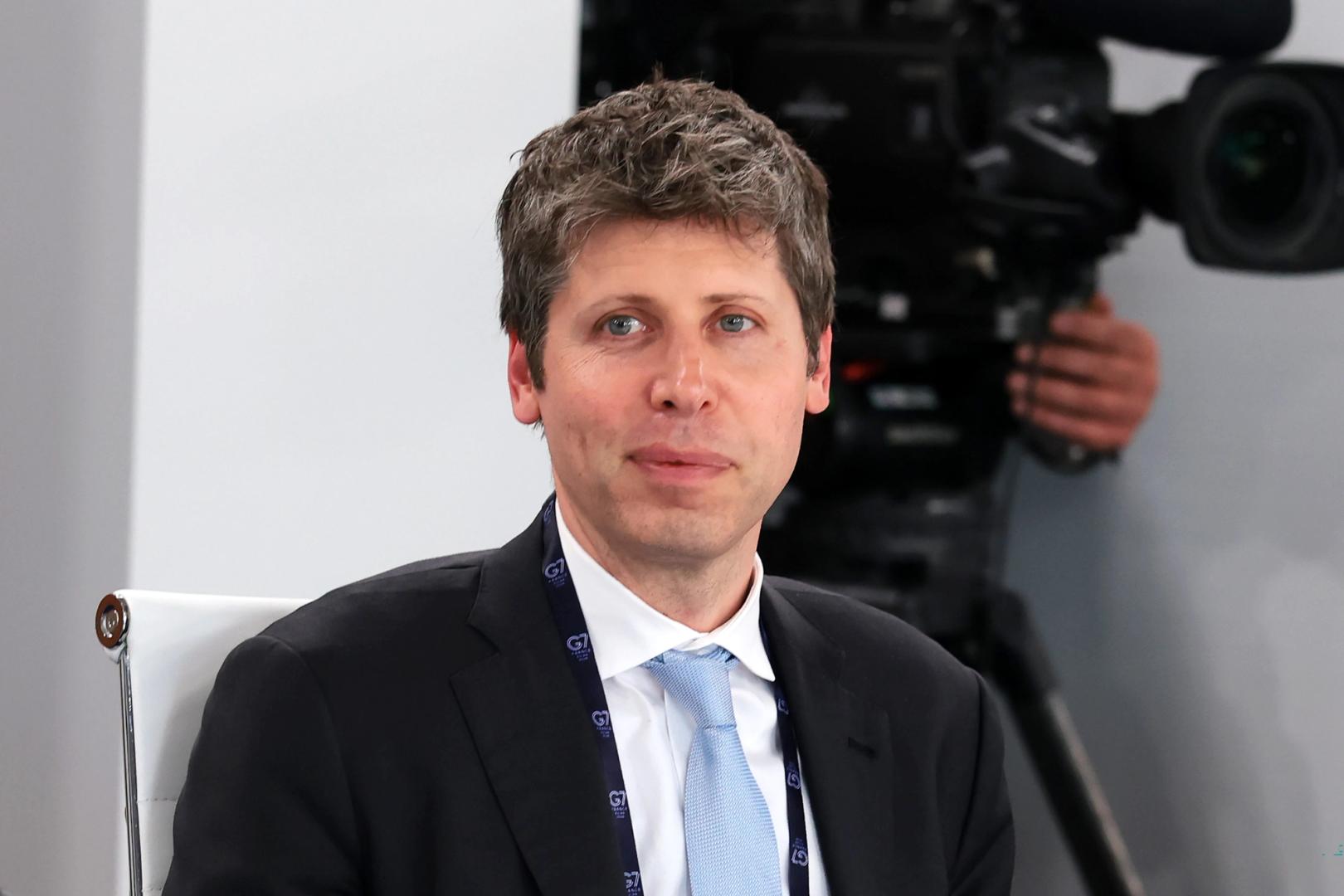
The narrative surrounding OpenAI is shifting from invincibility to a more grounded, perhaps even vulnerable, reality. For the past two years, Sam Altman has been the face of an unstoppable force in the tech world. But the latest reports indicate that the sheen is wearing off. With financial losses deepening and a sudden pause in training their next frontier models, the industry leader is showing signs of friction that founders and developers need to pay attention to.
The Cost of Being First
Building at the bleeding edge is expensive, but we are starting to see just how expensive it actually is. OpenAI's burn rate is no longer just a figure on a balance sheet; it is a structural challenge that defines their roadmap. When you are losing billions while trying to maintain a lead, every delay becomes a liability. The news that OpenAI has paused reinforcement-learning for its next-generation models suggests that the path to AGI isn't just a straight line of adding more compute.
For those of us building in the trenches, this is a reminder that capital isn't a substitute for sustainable architecture. OpenAI has essentially been subsidized by massive venture rounds and Microsoft’s credits, but even those deep pockets have limits when the delivery timeline for the next breakthrough keeps sliding. The company claims the pause is about strengthening safety controls, which is a convenient narrative, but it also smells like a technical or financial bottleneck.
The Anthropic Shadow
While OpenAI hits the brakes, Anthropic is gaining ground. For a long time, Claude was seen as the polite, overly-cautious cousin to GPT. That has changed. Developers are increasingly moving production workloads to Anthropic because the models are often more reliable and the company seems less distracted by the internal drama that has defined OpenAI's last year.
Competition is healthy for the ecosystem, but it is dangerous for a first-mover with a massive overhead. If Anthropic can deliver comparable performance with a leaner operational structure, the premium that OpenAI commands starts to look unjustified. We are seeing a shift from "who has the most parameters" to "who provides the most stable platform for builders." Right now, OpenAI's internal shifts are creating a vacuum that their competitors are more than happy to fill.
The Safety Pivot or a Technical Wall?
Altman’s team is framing the current slowdown as a commitment to safety. In the crypto and AI space, we have learned to be skeptical of these pivots. Often, a renewed focus on "safety and alignment" is code for "we hit a scaling wall and need time to figure out why the model is hallucinating or breaking."
If you can't scale the intelligence, you scale the safety protocols to keep the regulators happy while you troubleshoot the backend.
For builders, this is a critical distinction. If the pause is truly about safety, we can expect a more controlled, perhaps more restrictive, API environment. If the pause is due to technical diminishing returns, then the era of rapid, exponential jumps in model capability might be transitioning into a period of incremental refinement. This would mean that the value in the AI stack is moving away from the foundation models themselves and toward the application layer—where we actually live and work.
What This Means for Founders
If you are building a startup that relies entirely on OpenAI’s next release to stay competitive, you are in a risky position. The delay in frontier training proves that you cannot bank on a specific release window for GPT-5 or whatever comes next. The smart play right now is diversification. You should be testing your prompts and workflows against Claude, Llama, and even smaller, specialized models.
- Don't get locked in: If OpenAI is stalling, your product shouldn't stall with them.
- Watch the burn: If the leader of the space is bleeding cash, evaluate your own infrastructure costs. Efficiency is becoming a feature, not an afterthought.
- Ignore the hype: Safety pauses are often PR theater. Focus on the raw performance you can access today, not the promises of what might be trained tomorrow.
The Skeptic’s View on AGI Timelines
We’ve been sold a dream that AGI is right around the corner. Every time a major lab pauses or reports massive losses, that timeline gets pushed back. OpenAI's current situation suggests that the "compute-only" path to intelligence is hitting a point of diminishing returns. You can only throw so much hardware at a problem before the physics and the economics start to fight back.
I don't think OpenAI is going away, but their dominance is no longer a foregone conclusion. They are becoming a standard tech company, complete with bureaucratic delays and budgetary constraints. This is actually good news for the rest of us. It levels the playing field. It means that the winner of the AI race won't just be the one with the most GPUs, but the one who builds the most useful tools for real people.
Final Thoughts for the Builder Community
The takeaway here isn't that OpenAI is failing, but that the "blitzscaling" phase of AI is hitting a wall. We are moving into the utility phase. As a founder, your job isn't to wait for Sam Altman to give you a smarter brain for your app. Your job is to take the tools that exist now—which are already incredible—and build something that doesn't rely on a single provider's breakthrough.
The era of the AI deity is over. We are entering the era of the AI architect. While the giants struggle with their massive overhead and internal pivots, the builders who stay lean and model-agnostic will be the ones who actually survive the next two years.
Read the original at CoinDesk →