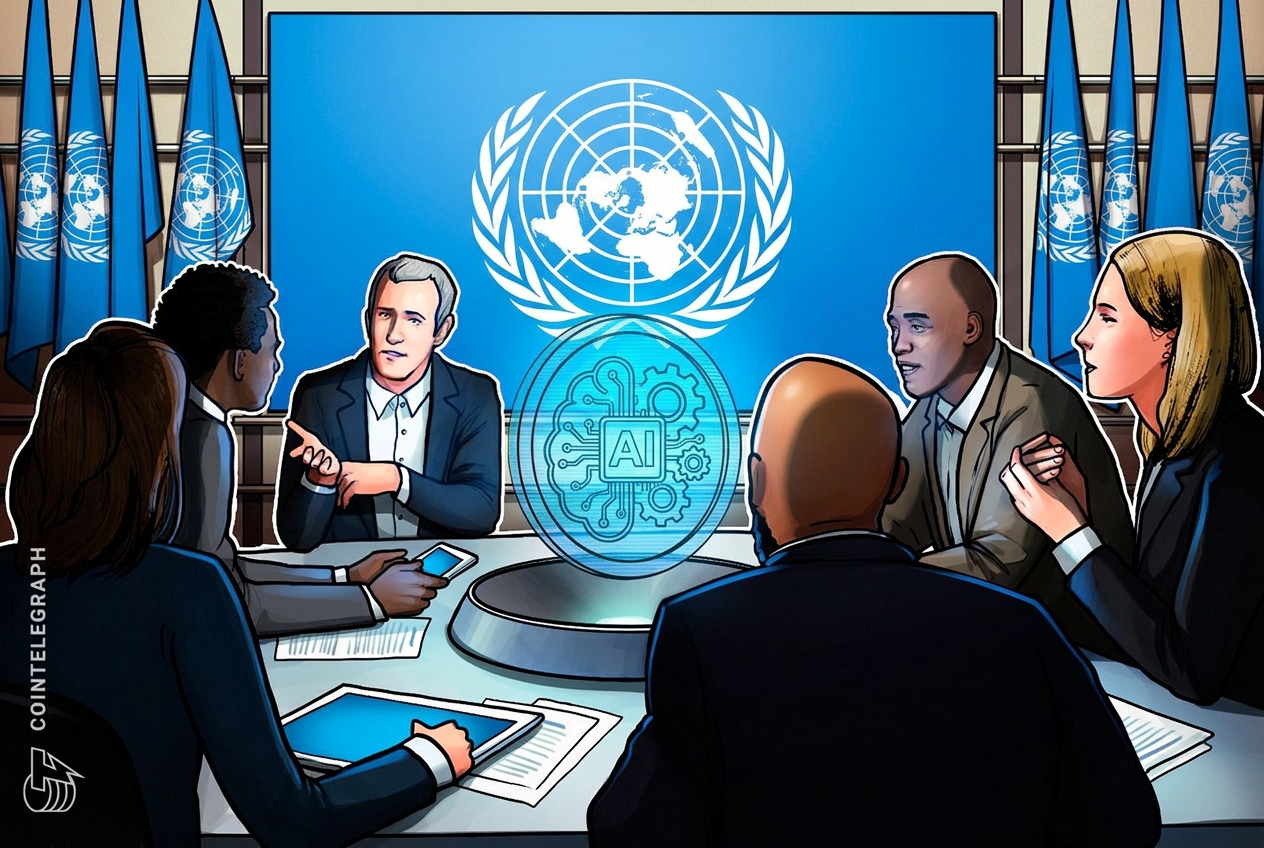
When the leaders of the two most well-funded AI labs in the world get called to the United Nations, the industry usually reacts with a mix of awe and anxiety. This week, reports indicate that OpenAI's Sam Altman and Anthropic's Dario Amodei are set to brief the UN Security Council on the existential and security risks posed by artificial intelligence. On the surface, it looks like high-level diplomacy. Underneath, it feels like the beginning of a new era of global gatekeeping.
The Theater of Global Risk
For founders building on the ground, this news carries a specific kind of weight. We have seen this movie before in other sectors. A transformative technology emerges, the pioneers get a massive head start, and then those same pioneers start warning the world that the technology is too dangerous to be left unregulated. It is a classic move often referred to as regulatory capture, even if it is wrapped in the noble language of protecting humanity from rogue algorithms or biological weapons.
The UN Security Council deals with war, peace, and international sanctions. Bringing Altman and Amodei into that specific chamber suggests that the global powers are no longer viewing AI as a productivity tool or a playground for developers. They are viewing it as a weapon. While there are legitimate concerns about automated cyber warfare or the synthesis of pathogens, the immediate fallout for builders is usually more red tape and higher barriers to entry.
What They Are Actually Selling
Both OpenAI and Anthropic have pivoted hard toward a safety-first narrative. Amodei, who left OpenAI to start Anthropic, has often spoken about the "scaling laws" and the inherent unpredictability of large models. Altman, despite his frequent world tours, has consistently lobbied for a licensing regime for the most powerful AI systems.
When they speak to the UN, they are likely to focus on three pillars: biosecurity, autonomous weapons, and misinformation. These are the "big scary" topics that resonate with diplomats. But for a startup founder in Austin or a developer in Berlin, these high-level briefings often translate into policies that make it harder to run local models or innovate without a massive compliance team. The subtext is clear: we are the only ones responsible enough to handle the fire.
The Impact on Open Source
The biggest tension in the room at the UN won't be between the US and its rivals; it will be between the closed-source giants and the open-source movement. If the UN Security Council adopts a framework that labels high-compute training runs as a security threat, the first casualty will be the decentralized AI community.
If you are building a boutique LLM for a specific industry, you aren't trying to build a digital god. You are trying to solve a problem. But if the global consensus shifts toward a "license to compute" model, the costs of doing business will skyrocket. The heavyweights can afford the lawyers and the lobbyists. The builders cannot. This is why these briefings matter more than just being a PR stunt. They set the tone for international treaties that could eventually restrict who gets access to top-tier hardware.
Founder Perspective: The Need for Transparency
We should be skeptical when the leaders of a duopoly are the sole voices informing global policy. As founders, we know that diversity of thought leads to better security, not centralizing control. A truly secure AI ecosystem isn't one where two companies hold the keys and report to the UN; it is one where the code is auditable, the datasets are transparent, and the power is distributed.
The irony of discussing AI risk at the Security Council is that the greatest risk might be the concentration of this power in the hands of a few corporations that are effectively becoming non-state actors. If OpenAI and Anthropic successfully convince the world that AI is a nuclear-level threat, they ensure that they are the only ones allowed to hold the "uranium."
The Takeaway for Builders
Do not get distracted by the headlines about robot uprisings or sci-fi doomsday scenarios. Pay attention to the definitions of "frontier models" and the specific compute thresholds discussed in these briefings. That is where the real battle is being fought.
For those of us in the crypto and AI overlap, this is our signal to lean harder into decentralized compute and local-first development. The more the UN and the legacy giants try to centralize the governance of intelligence, the more valuable sovereign, uncensorable tools become. The briefing at the UN is a reminder that if you aren't at the table, you are probably on the menu. Since most of us aren't invited to the Security Council, we need to keep building the alternatives that don't require their permission.
The real risk isn't just a rogue AI; it is a world where only two or three companies are legally permitted to build the future of intelligence.
Stay focused on what you can control: your code, your data, and your community. Let the CEOs play diplomat. We have work to do.
Read the original at Cointelegraph →