The Ghost in the Smart Contract
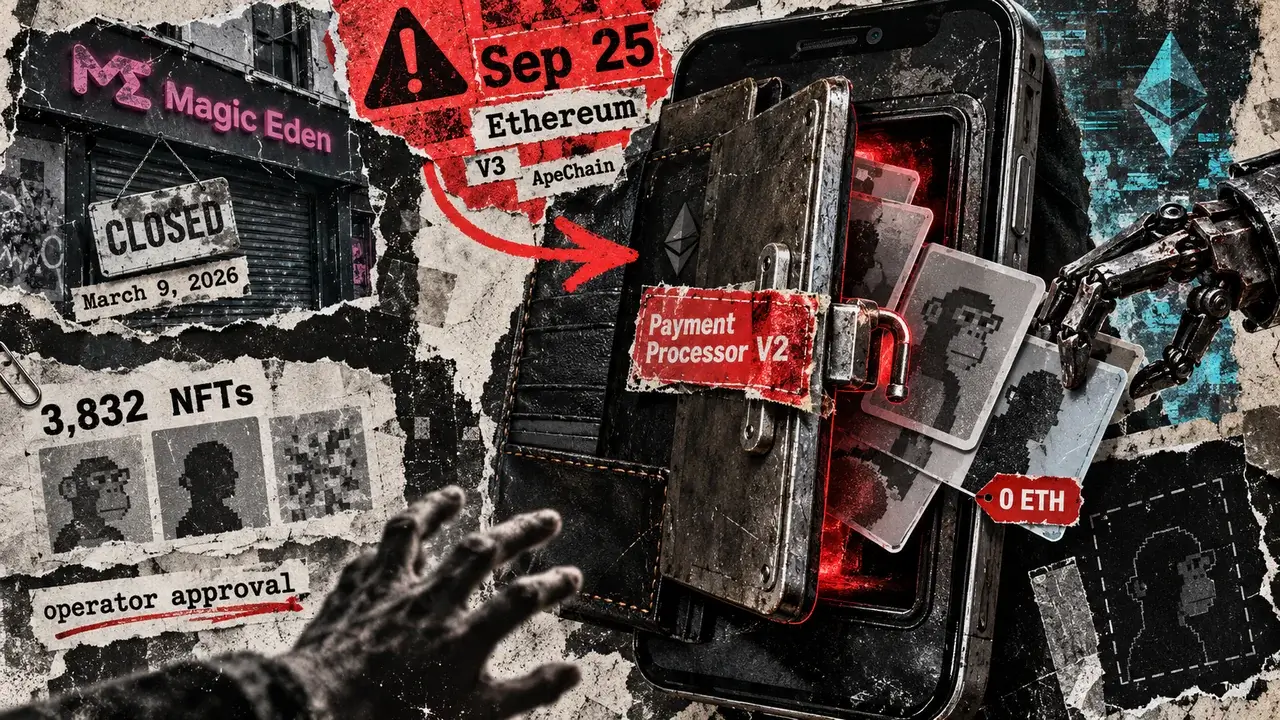
In the crypto world, we are often told that code is law. But as any founder who has had to sunset a product knows, the law has a long and sometimes dangerous tail. This week, we saw a vivid example of this tail wagging the dog as a whitehat developer intervened to save 3,832 NFTs from a vulnerability left behind by Magic Eden’s legacy Ethereum Virtual Machine marketplace.
The issue stems from a fundamental misunderstanding of what happens when a platform stops operating. Most users assume that if a marketplace UI goes dark or a company announces they are moving to a new architecture, their risk exposure disappears with it. It doesn't. The smart contract permissions—those "approve" clicks you signed months or years ago—stay alive on-chain indefinitely until they are manually revoked.
The Rescue Operation
Reports from Revoke.cash recently flagged a critical oversight: an old processor permission associated with Magic Eden remained active even after the marketplace ceased its specific EVM operations. This wasn't just a theoretical bug. It was a wide-open door that could have allowed malicious actors to drain assets from unsuspecting wallets that had previously interacted with the contract.
Fortunately, a whitehat actor stepped in before the worst-case scenario unfolded. By moving nearly 4,000 NFTs to a secure location, they demonstrated both the fragility of our current ecosystem and the reliance we have on the goodwill of skilled developers. While the total loss to actual malicious drains remains unclear, the sheer scale of the vulnerability is a wake-up call for anyone holding assets in long-term storage.
The Builder Perspective: Technical Debt as a Liability
If you are building in the NFT or DeFi space, this isn't just a story about a security flaw; it’s a story about technical debt. When Magic Eden pivoted or shuttered parts of their EVM experience, the cleanup wasn't thorough. As builders, we often focus on the "happy path"—how the user enters our ecosystem and how they transact. We rarely spend enough time engineering the exit.
Smart contracts are designed to be immutable, which is their greatest strength and their most significant liability. When you ask a user to approve a contract to spend their tokens or move their NFTs, you are creating a permanent link. If that contract has a flaw, or if the governance over that contract is compromised, every user who ever signed that approval is at risk.
- Unlimited Approvals: The industry standard of asking for "infinite" approvals to save on gas fees for future transactions is a ticking time bomb.
- Sunset Protocols: We need a standardized protocol for shutting down services that includes a "revoke all" function or at least a loud, clear campaign to educate users on clearing their permissions.
- User Education: We cannot expect the average user to understand the intricacies of Etherscan. The burden of security must shift back to the developers and the interfaces they build.
The Industry's Silent Crisis
We talk a lot about hacks and exploits, but we don't talk enough about "abandonware" risk. There are billions of dollars worth of liquidity sitting in contracts that are no longer actively maintained. As the underlying protocols evolve, or as new exploit vectors are discovered, these stagnant pools of capital become prime targets.
The Magic Eden incident shows that even well-funded, reputable teams can leave doors unlocked. It highlights a lack of hygiene in the space. We are so focused on the next mint, the next bridge, and the next airdrop that we forget to sweep the floor of the products we’ve already built. For a founder, this is a reputation killer. Even if the platform is "closed," your brand is tied to the security of those legacy contracts forever.
What Builders Should Do Differently
We need to stop treating smart contract approvals as a one-time setup cost. Instead, we should be building tools that encourage users to audit their own permissions. If your dApp sees a user has an active approval for a deprecated version of your contract, your UI should proactively prompt them to revoke it.
Furthermore, we need to move away from the "infinite approval" model entirely. EIP-2612 and other permit-based standards allow for signed messages that don't require the same permanent overhead. If you're building a new marketplace today and you aren't using the most gas-efficient, least-permissive standards available, you are essentially creating future work for a whitehat—or a payday for a hacker.
The Takeaway
The whitehat rescue of 3,832 NFTs is a win for the community, but it's a warning shot for the industry. We are building on top of a growing pile of legacy permissions that most users have forgotten about. If you are a builder, your responsibility doesn't end when you stop shipping updates to a specific contract. You owe it to your users to ensure their assets aren't left vulnerable in your rearview mirror.
The bottom line: Clean up your code, educate your users, and never assume that a closed marketplace means a closed risk. The blockchain never forgets, and in the case of stale approvals, it never forgives either.
Read the original at CryptoSlate →