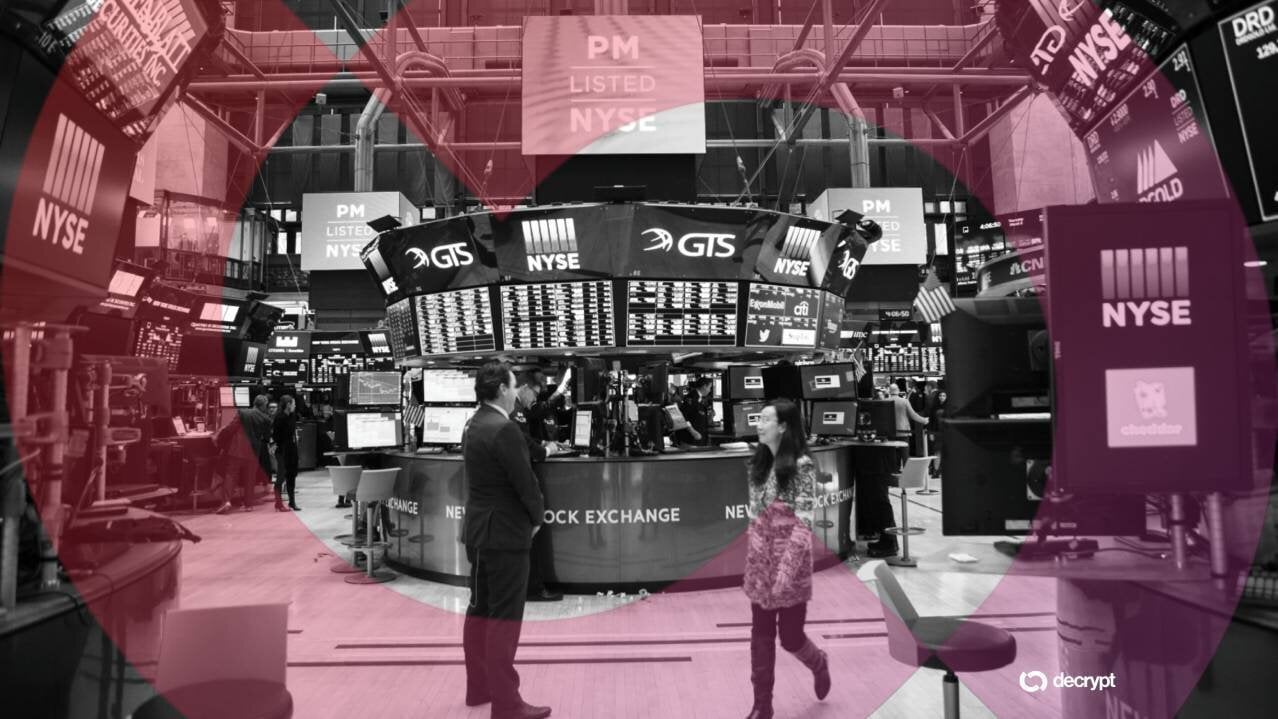
We have been talking about the bridge between traditional finance and crypto for years, but most of it has been noise. Usually, it is just a bank launching a private chain that nobody uses. But this recent move from OKX and Intercontinental Exchange (ICE)—the guys who actually own the New York Stock Exchange—feels different. They are moving to trade tokenized stocks around the clock under a specific SEC exemption. This is not just a pilot; it is a signal that the infrastructure of ownership is fundamentally shifting.
The Death of the Closing Bell
The concept of a stock market that closes at 4:00 PM is a relic of the telegraph era. It exists because humans used to need to sleep and paper needed time to clear. In a world of global liquidity and AI-driven trading, a market that sleeps is a market that creates unnecessary risk. If a company drops bad news on a Friday night, you are stuck watching your portfolio burn until Monday morning. That is a terrible user experience that crypto solved years ago.
By leveraging the SEC's Innovation Exemption, OKX and ICE are looking to list over 60 high-profile stocks, including the likes of Nvidia and even SpaceX, paired directly with stablecoins. This is not just about convenience; it is about capital efficiency. When you tokenize a stock, you are removing the layers of intermediaries—the clearinghouses and transfer agents that take their cut and slow down the process. You are moving toward T+0 settlement, which has been the holy grail of finance since the 1970s.
Why Builders Should Care
If you are building in the DeFi or RWA (Real World Asset) space, this is your green light. For a long time, the hurdle for tokenized securities was not the tech—it was the legal framework. The SEC has historically been the wall that builders crashed into. Seeing the owner of the NYSE lean into an exemption suggests that the regulatory climate is thawing, or at least becoming more navigable for those with the right institutional backing.
For founders, this opens up a massive design space. If stocks trade like ERC-20 tokens, they become composable. Imagine a lending protocol where you can collateralize your Nvidia shares to borrow USDC, all without leaving the chain. Or a DAO treasury that holds a mix of ETH and tokenized S&P 500 stocks, rebalancing automatically via smart contract. We are moving away from "crypto vs. stocks" and toward a unified ledger of value.
The Risk of Centralization
I have to be the skeptic here: this is not decentralization. When ICE and OKX run the show, you are still trusting a centralized gateway to hold the underlying shares. This is "on-chain" in the sense that the ledger is digital and accessible, but the custody remains firmly in the hands of the legacy players. If the custodian fails or the SEC revokes the exemption, your tokens might just become expensive entries in a database that no longer points to anything.
Builders need to think about the bridge risk. We saw what happened with wrapped assets in the past. If the connection between the digital token and the physical share in a vault is not transparent and verifiable in real-time, we are just recreating the same opaque systems we tried to escape, just with a faster ticker symbol.
Market Implications for Stablecoins
One of the most interesting parts of this filing is the pairing with stablecoins. This solidifies the stablecoin as the primary unit of account for the global internet economy. If you can buy Nvidia with USDT or USDC 24/7, the need to ever move back into a traditional bank account diminishes. This is the ultimate "sticky" feature for crypto ecosystems. Once your brokerage account is essentially a crypto wallet, the traditional banking system becomes an off-ramp you rarely need to use.
However, this puts an even larger target on the back of stablecoin issuers. If the entire equity market starts settling in these assets, the systemic risk shifts from banks to the entities managing the reserves. Founders building in this space should be looking at decentralized or over-collateralized stablecoin alternatives, as the demand for non-censorable liquidity will only grow as the volume of tokenized equities increases.
A Founder's Perspective on Timing
Why now? The technology has been ready since 2017. The answer is likely a combination of institutional FOMO and a realization that the current market structure is brittle. ICE is a business; they see the volume moving to crypto exchanges and they want a piece of the 24/7 fee machine. They aren't doing this to be innovative; they are doing it to survive.
For those of us building in the trenches, this is the time to focus on interoperability. If the NYSE is going to put stocks on a chain, those stocks need to be able to move. They shouldn't be siloed in a proprietary OKX environment. The winners in the next five years will be the ones who build the plumbing that allows these tokenized assets to flow between different protocols and ecosystems without friction.
Final Thoughts for the Builder Community
Don't get distracted by the hype of "SpaceX on-chain." Focus on the infrastructure. The fact that the SEC is allowing this under an innovation exemption means the door is cracked open. If you are a founder, your job is to kick that door down. Look at the gaps in this model—custody, cross-chain liquidity, and decentralized verification—and build there. The legacy players are bringing the assets; the builders need to provide the transparency and the tools that make those assets actually useful in a decentralized world.
The closing bell is dying. The 24-hour cycle is the new standard. If you aren't building for a world where every asset is a token, you are building for the past.
Read the original at Decrypt →