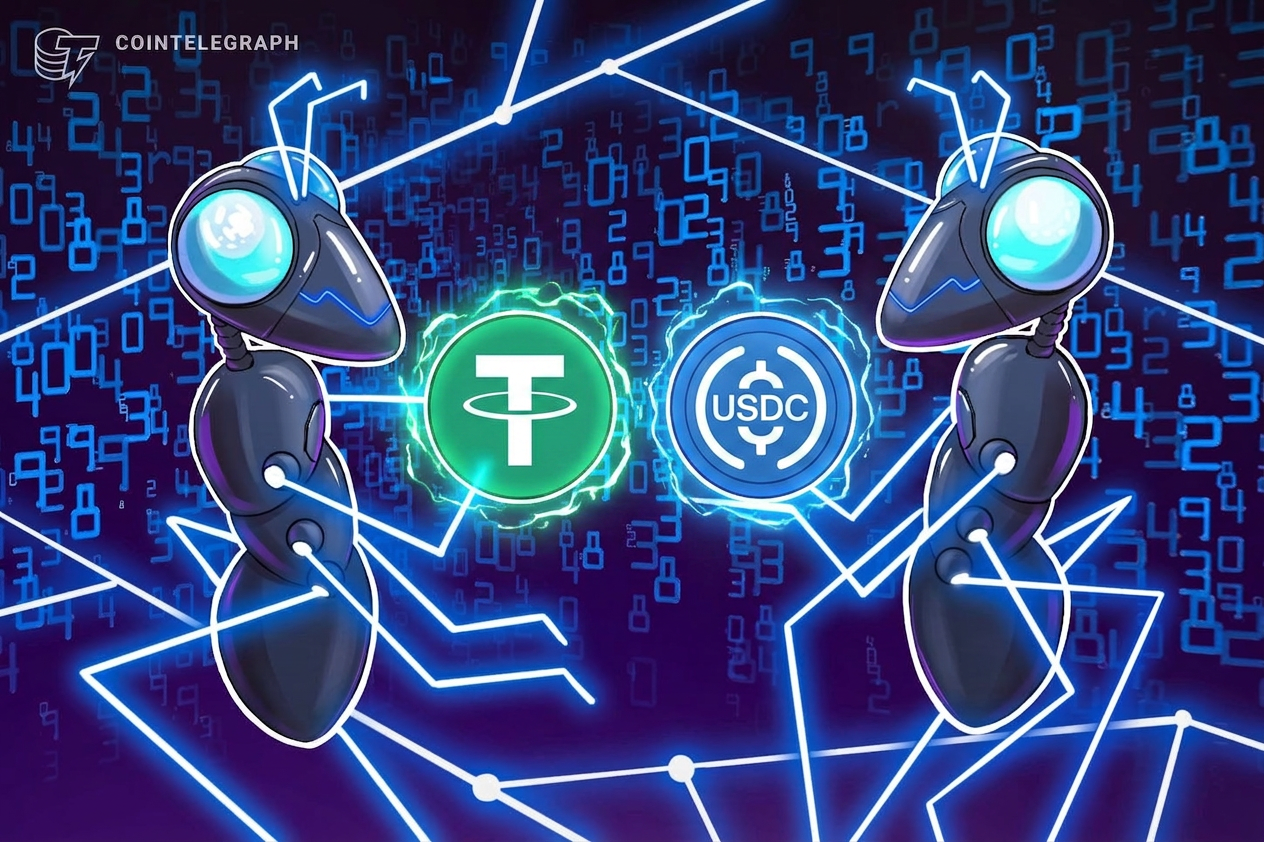
Stablecoins used to be simple. You picked the one with the most liquidity and moved on with your life. But in Europe, the regulatory landscape is shifting from 'wait and see' to 'fall in line or get out.' OKX Europe recently rolled out a new feature allowing users to voluntarily convert their Tether (USDT) holdings into Circle’s USDC. On the surface, it looks like a simple UX improvement. In reality, it is a defensive maneuver against the looming shadow of the Markets in Crypto-Assets (MiCA) regulation.
The End of the Wild West for European Stablecoins
For years, Tether has been the undisputed king of liquidity. It is the plumbing of the crypto world. But Tether has also been the primary target of regulators who want more transparency regarding what exactly is backing these digital dollars. The European Union is now drawing a line in the sand. Under MiCA, stablecoin issuers are required to meet strict prudential and transparency standards to operate legally within the bloc.
Circle, the issuer of USDC, has been aggressive about playing the compliance game. They went through the hoops, filed the paperwork, and positioned themselves as the safe, regulatory-approved alternative. Tether, meanwhile, has historically maintained a more combative or at least distant relationship with Western regulators. This puts exchanges like OKX in a tough spot. They want to provide liquidity, but they cannot risk being caught facilitating the trade of 'unauthorized' assets when the hammer finally drops.
Why Voluntary Conversion Matters
The new OKX feature is framed as a convenience. It allows users to swap their USDT for USDC with minimal friction. However, builders and founders should read between the lines. This is a soft migration. By giving users an easy path to exit Tether, OKX is de-risking its own platform. If the EU suddenly mandates a freeze or a delisting of non-compliant stablecoins, OKX can point to this tool and say they gave their customers plenty of time and a simple mechanism to adapt.
For anyone building in this space, this signals a shift in power. Liquidity follows the path of least resistance, but in a regulated environment, the path of least resistance is defined by law, not just by market depth. If USDC becomes the de facto standard for European pairs because USDT is functionally sidelined, we are going to see a massive shift in how projects manage their treasuries and how decentralized protocols handle their collateral pools.
The Founder Perspective: Liquidity vs. Compliance
As a founder, you are always balancing two things: you want to be where the money is, and you want to ensure your business doesn't get shut down by a three-letter agency. Tether has the money. USDC has the permission. For a long time, the money mattered more. But as the industry matures, the 'permission' side is becoming a prerequisite for doing business in major markets like the EU.
We are entering an era of 'fragmented liquidity.' We might see a world where the 'global' market still runs on Tether while the 'regulated' markets—Europe today, perhaps the US tomorrow—run on a different set of rails. This creates complexity for developers who now have to account for different stablecoin versions depending on where their users are located. It’s not just about writing code anymore; it’s about understanding jurisdictional risk.
MiCA Is Just the Beginning
Don't think for a second that this stops at the borders of Europe. The EU often acts as a regulatory laboratory. Once they prove that they can successfully force exchanges to prioritize compliant stablecoins, other regions will follow suit. The OKX move is a canary in the coal mine. It tells us that the era of 'don't ask, don't tell' regarding stablecoin reserves is coming to an abrupt end.
Building products that rely heavily on a single stablecoin is now an inherent risk. If your entire DeFi protocol or payment gateway is built on the assumption that USDT will always be available and liquid in every market, your business model has a single point of failure. Smart founders are already looking at multi-stablecoin support and even eyeing decentralized alternatives that might bypass some of these centralized compliance hurdles—though those come with their own set of regulatory headaches.
What This Means for the Builders
If you are developing for the European market, the signal is clear: start prioritizing MiCA-compliant assets now. Relying on tethering your project to USDT might give you better immediate liquidity, but you are building on a foundation that the EU is actively trying to erode. OKX is essentially doing the market research for you. They see the writing on the wall, and they are moving their users toward a safer harbor.
We should also expect more exchanges to follow this lead. It won't just be OKX. Any exchange that wants to keep its European license will have to implement similar 'encouragement' for users to move into compliant assets. This is the new normal. The friction is being added to the non-compliant side, making the compliant side the easier choice by default.
The takeaway here is simple but painful: The regulatory moat is being built. You can either learn to swim in the narrow channel the regulators have provided, or you can risk getting caught outside the walls when the tide goes out.
I am generally skeptical of heavy-handed regulation, and MiCA certainly qualifies. It limits competition and favors larger players who can afford the legal fees. But as a founder, you have to play the game on the field that exists, not the one you wish existed. OKX’s move is a pragmatic response to a geopolitical reality. If you are building in crypto, pragmatism is usually what keeps the lights on while the idealists are getting audited.
Read the original at Cointelegraph →