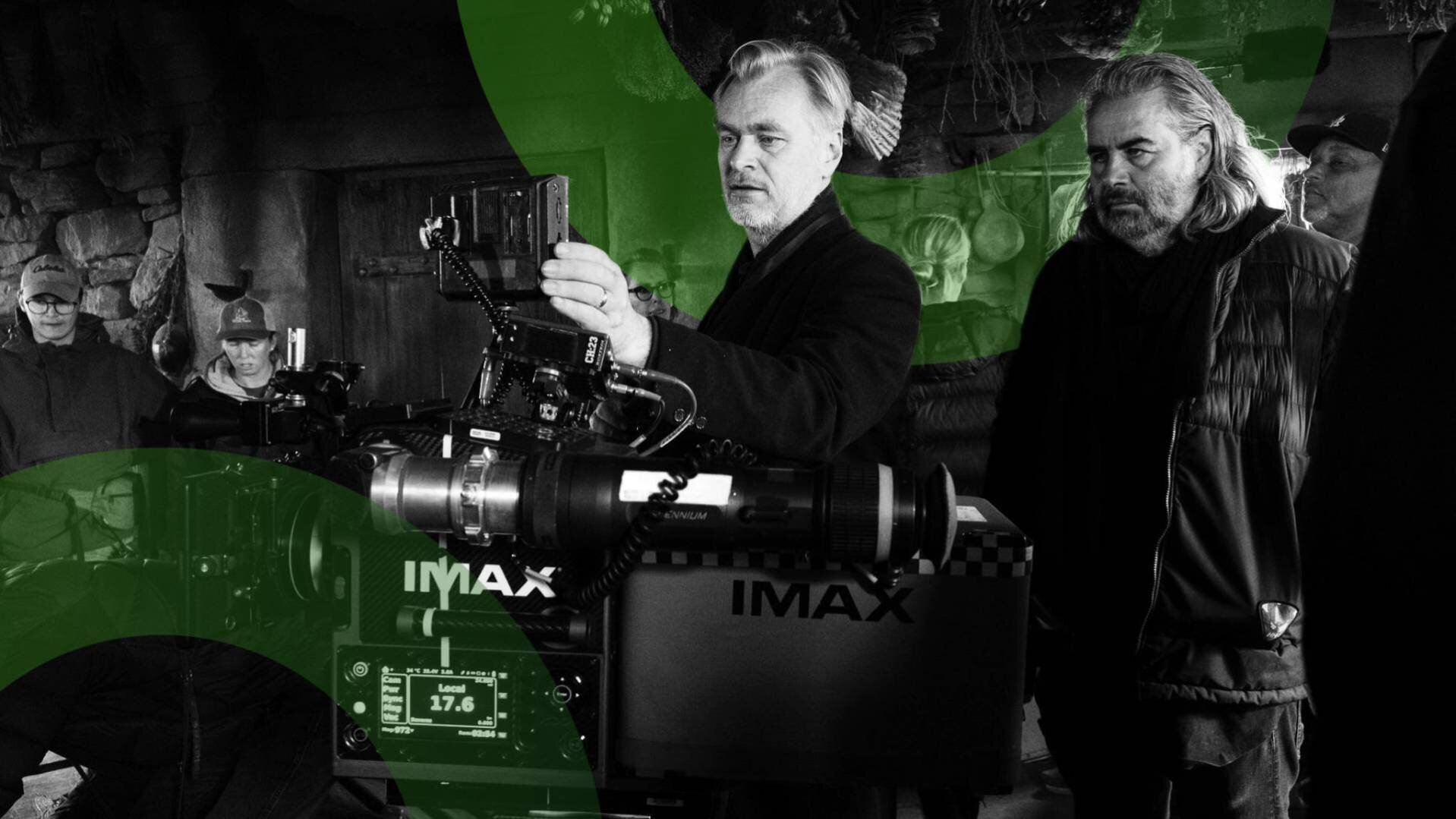
When Christopher Nolan talks about the state of cinema, people usually listen because he is one of the few directors left who can command a massive budget for an original idea. He has built a career on practical effects, real film stock, and a refusal to let the tool dictate the story. Recently, he shared some observations on the younger generation's relationship with AI-generated media. His take is something every founder in the AI space needs to hear: the kids aren't buying it.
Nolan describes the reaction from younger audiences as immediate and harsh. He calls what we are seeing online 'AI slop'—that endless stream of low-quality, mathematically averaged content that lacks a soul. While some developers are busy trying to figure out how to automate the creative process, the actual consumers of that content are developing a sensory immune system against it. They can smell the lack of intent from a mile away.
The Intent Deficit
For those of us building in crypto or AI, we often get caught up in the technical 'how.' We celebrate a model's ability to render an image or write a script in seconds. But for an audience, the 'how' doesn't matter if the 'why' is missing. Nolan’s point is that art is essentially a distillation of human experience. When you remove the human from the loop, you aren't just making production more efficient; you are removing the very thing that makes the product valuable.
This is a major hurdle for builders. If you are building an AI tool for creators, and your pitch is that it replaces the human element, you are betting against the taste of the next generation. Younger demographics—the digital natives who grew up surrounded by filters and bots—have become highly sensitive to authenticity. They value the mistakes, the textures, and the specific choices that only a person can make.
The Aesthetic of Averages
The problem with current AI models is that they are trained to find the middle. They are predictive engines designed to give you the most likely next pixel or word based on a massive dataset of what has already been done. By definition, this creates a 'mean' or an 'average.' Art, especially the kind Nolan makes, thrives on the outliers. It thrives on the weird, the difficult, and the unexpected.
When we flood platforms with AI-generated content, we are essentially feeding the audience a diet of processed food. It’s convenient, it’s cheap to produce, and it fills the space. But eventually, the body—or in this case, the culture—rejects it. We are seeing that rejection happen in real-time. The backlash against AI in gaming, film, and art isn't just a luddite panic; it’s a quality-control movement led by the people who spend the most time online.
What This Means for Founders
If you are a founder in this space, you have two choices. You can double down on the 'slop' and try to win a race to the bottom on price and volume. Or, you can rethink your relationship with the creative process. The winners in the next phase of the AI boom won't be the ones who replace creators; they will be the ones who build tools that allow creators to go deeper into their own intent.
- Don't build tools that generate a finished product; build tools that handle the friction so humans can focus on the vision.
- Focus on high-fidelity output that preserves the 'noise' and 'variance' that makes things look real.
- Understand that 'efficiency' is not a metric that most audiences care about. They care about how something makes them feel.
The Luxury of the Human Touch
We are rapidly approaching a world where 'human-made' becomes a luxury brand. Just as the industrial revolution made handmade furniture more valuable, the AI revolution is going to make human-directed art more prestigious. Digital scarcity isn't just a concept for blockchains; it's going to apply to human attention and effort. If a kid knows a video was made by a prompt, they value it at zero. If they know a team of people bled and sweated to make it happen, they give it their attention.
The younger generation's judgment has been immediate and harsh. They see the lack of intent and they reject it.
Nolan’s observation serves as a warning for the tech industry's hubris. We often assume that if we make something faster and cheaper, the market will naturally follow. But culture doesn't work like a commodity market. You can't commodify soul. If your AI strategy relies on replacing the human spark, you are building on sand.
The Technical Trap
In the crypto world, we saw a similar trend with procedurally generated NFT collections. At first, the novelty was enough to drive volume. But very quickly, the market realized that 10,000 variations of a cartoon monkey didn't actually represent 10,000 units of creative value. The 'slop' flooded the market, and the market responded by crashing. The projects that survived were the ones where the art actually meant something, or where the community was built around more than just a random seed generator.
AI founders are in that 'novelty' phase right now. The tech is impressive, but the output is becoming a background noise that people are learning to tune out. To avoid being tuned out, you have to move past the generative phase and into the collaborative phase. The tool should be an extension of the artist, not a replacement for them. Nolan isn't saying technology is bad—he uses some of the most advanced tech in the world—he is saying that the tech must serve the human vision, not the other way around.
Building for the Skeptics
The smartest builders right now are the ones looking at this skepticism as a feature, not a bug. If young audiences are rejecting AI slop, then there is a massive opportunity to build tools that help creators fight back against the average. There is a market for tools that provide more control, more precision, and more ways to inject personality into digital mediums.
Don't be fooled by the high engagement numbers on AI-generated junk on social media. Much of that is bot-to-bot interaction or 'phantom' engagement. Real, human audiences—the ones with actual spending power and the ability to define a generation's culture—are looking for something real. If you want to build something that lasts, stop trying to automate the artist. Start empowering the outlier.
The takeaway here is simple: stop aiming for the middle. If your AI tool produces something that looks like everything else, it is destined to be rejected as slop. The value is in the edges, the intent, and the things that a machine can't calculate because they haven't happened yet.
Read the original at Decrypt →