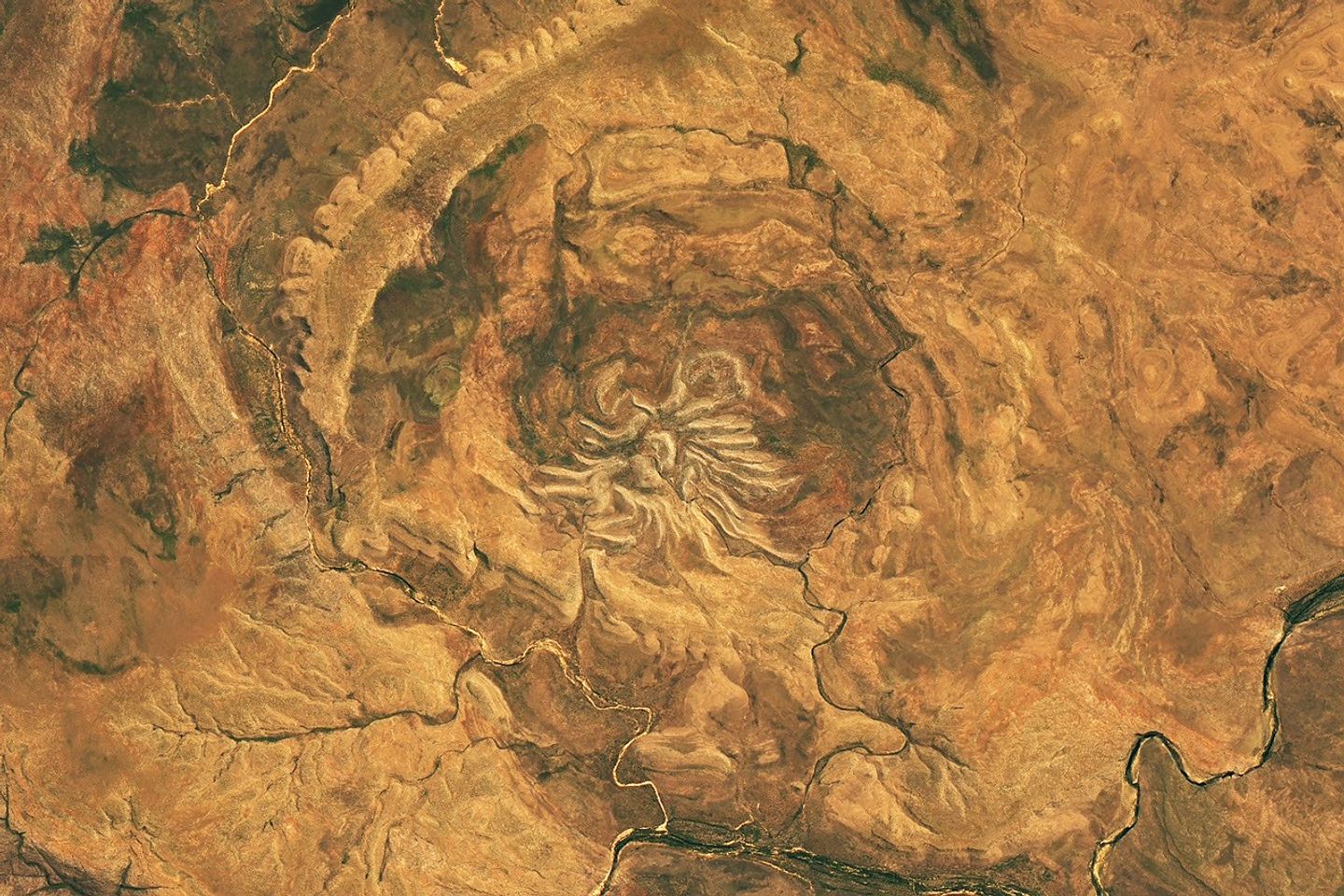
NASA just dropped their October 2026 Satellite Puzzler, and if you have been paying attention to the intersection of geospatial data and decentralized infrastructure, this is not just a game for geography nerds. It is a signal of how we are shifting from passive consumption of satellite data to active, crowd-sourced interpretation.
The Data Pipeline Problem
For years, satellite imagery was the domain of government agencies and billion-dollar defense contractors. You had to have a clearance or a massive budget to see what the eye in the sky was recording. Today, we are flooded with data. We have dozens of private constellations launching every year, dumping petabytes of visual information into the cloud. The bottleneck is no longer getting the image; it is understanding what the hell we are looking at.
This is where NASA’s puzzler comes in. By challenging the public to identify specific locations and explain their significance, they are testing the limits of human-driven pattern recognition. In the startup world, we call this a stress test for the user interface. If a group of enthusiasts can pinpoint a remote geological feature faster than an automated script, it tells us that our current AI models for image recognition still have massive blind spots.
Why Builders Should Care
If you are building in the AI or crypto space, you need to look at these challenges as a precursor to decentralized physical infrastructure networks, or DePIN. We are moving toward a world where the verification of physical events on Earth will be handled by a mix of automated satellite feeds and human validators.
Think about carbon credits or supply chain logistics. You cannot just trust a centralized database anymore. You need proof. A satellite image provides the raw proof, but the interpretation requires a consensus layer. NASA’s game is essentially a manual version of a consensus protocol. They provide the hash—the image—and the community works to find the solution. The first one to solve it wins the social credit.
For a founder, the opportunity here is in the middle layer. How do we take these massive datasets and make them searchable, verifiable, and actionable without needing a PhD in cartography? We need tools that bridge the gap between a raw pixel map and a business decision. If a satellite shows a drought in a specific region, a smart contract should be able to trigger an insurance payout automatically. But someone has to verify that the image actually shows a drought and not just a weird mineral deposit.
The Skeptic’s View
I have to be honest: most of the hype around “space tech” is just that. Hype. We see a lot of companies raising money on the promise of real-time monitoring of every inch of the planet. We are nowhere near that. The latency is still high, the resolution is often grainy, and the cost of processing that data is astronomical.
When NASA puts out a puzzler, it is a reminder of how much we still rely on the “wow” factor to keep people interested. It is a marketing play as much as it is an educational one. They want to remind the tax-paying public that these satellites are doing something cool, even if the day-to-day reality is just staring at endless rows of digital noise. For builders, the lesson is to avoid the trap of the “cool factor.” Do not build a satellite app because space is cool. Build it because there is a specific, boring problem that only an overhead view can solve.
The Decentralization Factor
What happens when we move these puzzles to a blockchain? Imagine a bounty system where a company needs to verify the construction progress of a new factory in a remote part of the world. They post a satellite image, and instead of a NASA blog post, it is a decentralized marketplace. Validators compete to provide the most accurate metadata for that image, and they get paid in a native token for their work.
This removes the centralized bottleneck. We no longer have to wait for a government agency to tell us what is interesting. The market decides what is interesting based on where the capital is flowing. This is the future of Earth observation. It is not about pretty pictures; it is about verifiable truth at scale.
- Human Input: Machines are good at counting cars in a parking lot, but they are bad at understanding context. Humans are still the best at the “why.”
- Data Accessibility: We need better APIs for this stuff. Right now, getting high-res satellite data is a pain in the neck for the average developer.
- Verifiable Proof: The next big thing in DePIN will be linking orbital data to on-chain actions.
NASA is showing us the tip of the iceberg with these challenges. They are training the next generation of analysts, but they are also highlighting the gaps in our current tech stack. If you can identify the location in their October puzzler, you have a skill set that is becoming increasingly valuable in a world where truth is harder and harder to verify.
The goal is not to see everything; the goal is to understand what is worth seeing.
We are entering an era where the sky is no longer the limit for data collection, but our ability to process that data is very much grounded in reality. Whether you are a developer, a founder, or just a curious observer, pay attention to these “puzzles.” They are the blueprints for how we will interact with our planet in the next decade.
Read the original at NASA Breaking News →