The Signaling Reality Check
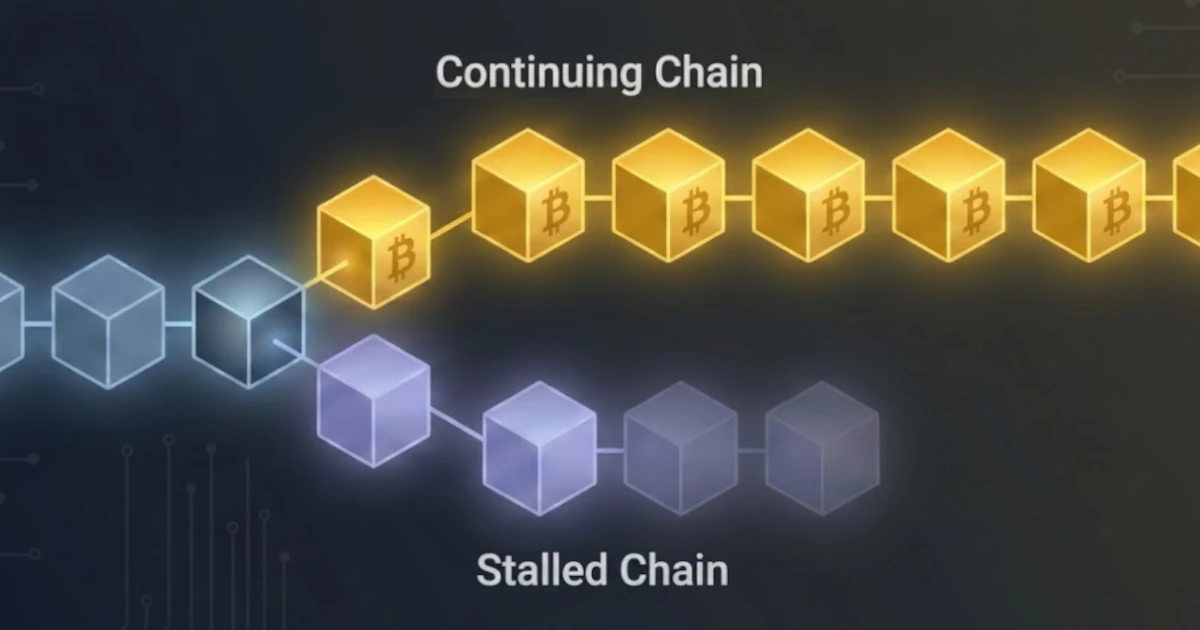
In the world of Bitcoin development, there is often a massive gap between what developers think is necessary and what miners are actually willing to run. Right now, BIP-110 is stuck in that gap. Jason Hughes, the VP of Development and Engineering at Ocean Mining, recently pointed out a harsh reality: signaling for this proposal is virtually non-existent where it matters most. While we see some activity at the node level, the actual hashrate support is hovering below one percent.
For those building in this space, this isn't just another technical debate. It is a lesson in how Bitcoin actually evolves—or doesn't. We are approaching a critical window at block 961632, and the math simply isn't adding up for success. If you are waiting for BIP-110 to change how you interact with the network, you might want to settle in for a long wait.
The Numbers Don't Lie
Data from the network shows a strange disconnect. Node signaling is currently sitting somewhere between seven and fifteen percent. In many developer circles, that might look like progress. But node count is a vanity metric in a world where hashrate is the only thing that provides security and finality. When less than one percent of the mining power is raising their hand for a feature, that feature is effectively dead on arrival.
This lack of consensus is an honest reflection of how the mining industry views changes to the core protocol. Most miners are focused on efficiency, power costs, and uptime. They are inherently conservative because any change is an invitation for unexpected downtime or bugs. To get them to signal for a BIP, the benefit has to be clear, immediate, and economically sound. Right now, BIP-110 isn't checking those boxes for the people holding the hardware.
The Engineering Perspective
Hughes’ analysis highlights a fundamental tension in builder culture. We often think that because a proposal solves a theoretical problem, it deserves to be implemented. But Bitcoin is a live, multi-billion dollar machine. Engineering for Bitcoin isn't just about writing clean code; it’s about social orchestration and economic incentives. If the people running the machines don't see the value, the code is just text on a screen.
Ocean Mining has a unique vantage point here. They see the flow of hashpower and the sentiment of the participants contributing to their pool. If a pool VP is flagging that a proposal lacks measurable consensus, it’s a signal to the rest of the developer community that the outreach strategy—or the proposal itself—needs a total rethink.
Why Builders Should Care
If you are building an application or a service that relies on new Bitcoin features, the failure of BIP-110 to gain traction is a warning. It reminds us that Bitcoin moves at the speed of a glacier. This is by design, but it can be frustrating for those of us coming from the fast-paced AI or SaaS worlds where updates happen overnight.
- Consensus is not popularity: You can have a loud group of people on social media supporting a change, but if the miners aren't on board, it doesn't exist.
- Signaling is a filter: The signaling process acts as a filter for risk. Low signaling tells builders that the community isn't ready to take the risk associated with the change.
- Timing is everything: The block 961632 window is a hard deadline. In decentralized systems, missing a window usually means the proposal gets shelved for months or years.
The Skeptic’s View
I’ve seen plenty of "critical" upgrades come and go. Often, the hype around a BIP is generated by a small group of stakeholders who stand to benefit most. When signaling stays this low, it usually means the broader network doesn't see the utility. We have to ask: is BIP-110 solving a problem the market actually cares about, or is it solving a problem only a few developers care about? The miners seem to have already answered that question with their silence.
Building on top of Bitcoin requires a certain level of pragmatism. You can’t build your business model on the assumption that the protocol will change to accommodate you. You have to build for the Bitcoin that exists today. Proposals like BIP-110 are interesting experiments, but until that signaling moves into double digits, they shouldn't be part of your roadmap.
The Long Game
Does this mean the proposal is bad? Not necessarily. It just means it hasn't earned its place in the consensus layer yet. Bitcoin is resilient because it is hard to change. For a founder, that lack of change is actually a feature—it means the foundation you are building on won't shift beneath your feet without massive, overwhelming agreement from all parties involved.
Hughes and the team at Ocean are doing the right thing by calling this out early. There is no point in pretending a proposal has steam when the data says otherwise. It saves developers from wasting time and helps the community focus on what actually has a path forward.
The reality of Bitcoin development is that code is secondary to consensus. If you cannot convince the miners, you aren't building for Bitcoin; you're just writing a wishlist.
As we get closer to the critical block height, I expect we will see more debates about why signaling is low. Some will blame apathy, others will blame complexity. But the most honest answer is usually the simplest: the value proposition isn't high enough yet. For now, BIP-110 is a case study in the difficulty of moving the needle on the world's most secure network.
The Bottom Line for Founders
Don't bet on protocol changes until they are locked in. The failure of BIP-110 to gain traction is a reminder to keep your architecture flexible and your expectations grounded. If you are a builder, watch the hashrate, not the forums. The hashpower is the only voice that truly counts when it comes to the rules of the game. If you want to see change, you have to prove to the people paying the electricity bills why that change puts more gold in their pockets.
Read the original at Bitcoin Magazine →