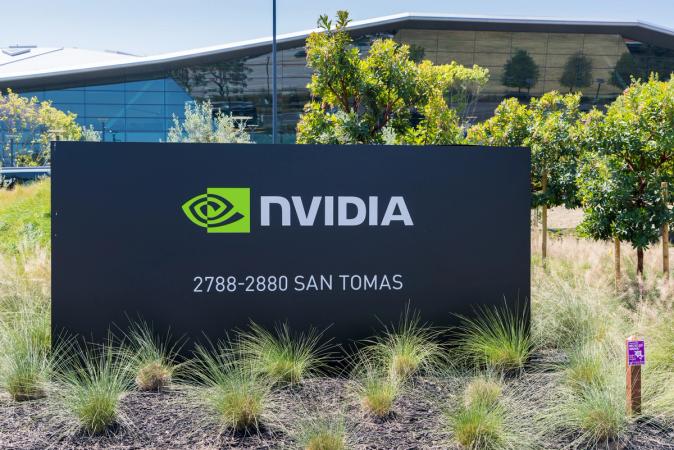
Nvidia just dropped its latest quarterly report, and if you were waiting for the AI bubble to burst, you're going to have to keep waiting. Even with the massive shock of CEO Jensen Huang stepping down just days ago, the numbers show a company that is currently the undisputed king of the computing world. They didn't just beat analyst expectations; they crushed them and raised the bar for the next quarter.
The Raw Numbers
The top-line revenue and earnings per share both came in significantly higher than what Wall Street was looking for. But the most aggressive move wasn't the revenue beat — it was the board's decision to authorize an additional $150 billion for share buybacks. For context, that buyback amount alone is larger than the entire market capitalization of most legacy tech giants. It signals a level of confidence, or perhaps a defensive posture, that suggests the company believes its current valuation still has room to run.
Guidance for the next quarter was equally robust. Nvidia isn't seeing a slowdown in demand for its H100s or the newer Blackwell architecture. They are essentially telling the market that the demand from cloud service providers and sovereign states for AI compute is nowhere near a ceiling. For builders, this is the first signal: the hardware bottleneck is still the primary limiting factor for the entire industry.
Life After Jensen
We have to address the elephant in the room. Jensen Huang is effectively the face of the AI revolution. His departure usually would send a stock into a tailspin, yet the market absorbed the news because the momentum of the product cycle is so strong. As a founder, you have to look at this as a case study in institutionalizing innovation. Nvidia has built a moat that isn't just about a charismatic leader; it is about a software ecosystem (CUDA) that makes their hardware sticky.
If you are building in the AI space, the leadership change at the top of the supply chain matters less than the consistency of their roadmap. The fact that guidance stayed strong suggests that the transition was well-planned and that the internal execution machine hasn't missed a beat. The hardware is the base layer of the stack, and for now, that base layer is stable.
The Real Cost of Compute
While the $150 billion buyback makes for great headlines, we need to look at what this means for the broader ecosystem. Nvidia’s massive margins are essentially a tax on every AI startup and enterprise lab in the world. Every dollar of profit Nvidia reports is a dollar that a builder spent to train a model or run an inference engine. We are seeing a massive wealth transfer from the venture capital and enterprise software world directly into Nvidia's balance sheet.
For those of us building products, this is a reminder that efficiency is your only long-term defense. If your business model relies on burning massive amounts of compute to solve a problem that could be solved with a smaller, more specialized model, you are effectively just working as an unpaid sales rep for Nvidia. The companies that survive the next three years will be the ones that figure out how to do more with less silicon.
Crypto and the DePIN Play
We can't talk about Nvidia without talking about the intersection of crypto and AI. The Decentralized Physical Infrastructure (DePIN) space has been banking on the idea that GPU scarcity would drive builders toward decentralized compute markets. With Nvidia continuing to ramp up production and beat estimates, the "scarcity" argument might start to shift.
If Nvidia can keep meeting demand, the value prop for decentralized compute moves from "availability" to "censorship resistance" and "cost-effectiveness." Builders shouldn't rely on the idea that Nvidia will fail to deliver chips. Instead, they should be looking at how to utilize the massive amount of hardware already hitting the secondary markets as newer architectures displace the old ones. The buyback tells us Nvidia has plenty of cash to keep the R&D cycle moving fast, which means your top-of-the-line H100s will become mid-tier hardware faster than you think.
The Infrastructure Trap
There is a risk here that we are building a house of cards on top of a single company's success. When one company becomes the sole provider for the most important resource in the world — compute — the entire industry becomes sensitive to their specific risks. A supply chain hiccup in Taiwan or a change in export controls could do more damage to your AI startup than any competitor's feature launch.
The smart founders right now are diversifying their compute needs. They are looking at alternative silicon and optimizing for local execution where possible. You don't want to be the guy who built a billion-dollar business that can be turned off by a single company's quarterly earnings call or a change in their licensing terms.
Strategic Takeaway
Nvidia is a beast, and these results prove that the AI build-out is still in its early-to-mid innings. The $150 billion buyback is a flex, but the real story is the sustained demand. However, don't let the hype distract you from the reality of your own margins.
The goal for any builder in this environment is to become compute-agnostic. Use the power of Nvidia's hardware to gain speed, but build your architecture so that you aren't held hostage by their pricing power.
The transition away from Jensen Huang's direct leadership marks the end of the "pioneer" phase for Nvidia and the beginning of its era as a global utility. Treat it like a utility: use it, pay for it, but always have a backup generator in the shed.
Read the original at CoinDesk →