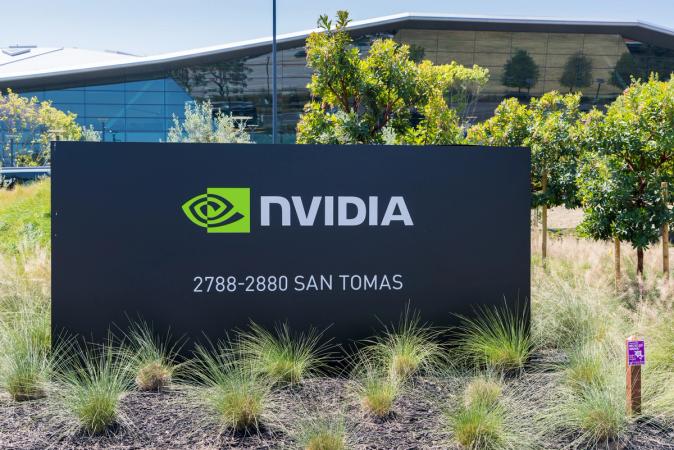
Hardware is the ultimate reality check. In the crypto and AI space, we spend so much time talking about abstract concepts like decentralized intelligence or autonomous agents that we forget everything eventually runs on physical silicon sitting in a rack somewhere. When the government decides that silicon shouldn't move, the entire stack feels the pressure.
The Logistics of Control
The recent news about Nvidia freezing shipments to several Southeast Asian countries isn't just a blip in the market; it is a structural shift. The U.S. government has expanded its export controls, effectively putting a wall around high-end H100 and H200 chips. The goal is clear: prevent advanced compute from leaking into restricted territories. But the collateral damage hits builders and data center operators who were banking on these regions as the next frontier for cheap, accessible AI infrastructure.
For a founder, this is a wake-up call. We have been living in an era where we assumed compute would eventually become a commodity—like electricity or water. You plug in, you pay the bill, and the tokens flow. These new curbs prove that compute is not a commodity; it is a geopolitical weapon. When shipments freeze, billions of dollars in planned data center financing go into limbo. If you can't guarantee the hardware will show up, the banks won't sign the checks.
Why Southeast Asia Matters
You might wonder why a freeze in places like Malaysia or Vietnam matters to a developer in San Francisco or Lisbon. These regions were becoming the back-office of the AI revolution. Because of lower energy costs and relatively friendly regulatory environments, massive amounts of capital were flowing there to build the next generation of GPU clusters. For the decentralized AI (DeAI) movement, these regions represented a way to diversify away from the dominance of AWS and Google Cloud.
Now, that diversification strategy is under fire. If you are building a protocol that relies on distributed nodes, and your biggest nodes are suddenly cut off from the latest hardware updates, your network's performance degrades. You aren't just fighting code bugs; you're fighting trade policy.
The Founder's Dilemma
As a builder, you have to look at your dependencies. If your entire product roadmap depends on being able to rent H200s at a specific price point, you are now at the mercy of the Department of Commerce. This creates a massive incentive for two things that the STKR community should be watching closely: optimization and alternative architectures.
- Optimization: We have been lazy with compute. Because Nvidia kept making faster chips, we just threw more hardware at inefficient models. These curbs will force a pivot toward making smaller, more efficient models that can run on consumer-grade hardware or older chips that aren't subject to these bans.
- Alternative Architectures: This is the bull case for decentralized physical infrastructure networks (DePIN). If centralized data centers can be shut down by a single policy change, the value of a global, permissionless mesh of smaller providers goes up.
However, we need to be honest. You can't just 'decentralize' your way out of a chip shortage. A thousand gaming GPUs in people's basements don't equal a unified H200 cluster for training a massive foundational model. There is a performance gap that marketing hype can't bridge.
The Financing Freeze
The most immediate impact isn't the lack of chips—it's the lack of money. Institutional investors hate uncertainty. When the U.S. government signals that they might change the rules on who can own what hardware at any moment, the 'compute-as-collateral' model breaks. We’ve seen a rise in startups using their GPU allocations as leverage to get loans. If that hardware is suddenly deemed 'restricted,' its value as collateral drops to near zero.
This is going to lead to a shakeout. The companies that survive will be the ones that own their hardware outright in safe jurisdictions, or those that have figured out how to build valuable AI products without needing the absolute top-tier silicon to do it.
What Builders Should Do Now
If I'm starting an AI-focused project today, I'm looking at this news and changing my strategy. First, I'm not building anything that *requires* the latest Nvidia flagship to function. That’s a trap. If your business model only works when you have the newest, most restricted tech, you don't have a business; you have a government-authorized permit.
Second, I'm looking at the software layer. We need better ways to orchestrate workloads across heterogeneous hardware. If we can't get all H200s, can we build a system that seamlessly uses a mix of older Nvidia chips, AMD alternatives, and even high-end consumer hardware? The teams that solve the orchestration problem will be the real winners of this hardware war.
The era of easy, global hardware scaling is over. We are moving into an era of fragmented compute, where the ability to work within constraints is more valuable than a blank check for GPUs.
We need to stop assuming the supply chain will always be there. The friction is increasing, and while that’s a headache for growth, it’s an opportunity for innovation. The builders who stop complaining about export controls and start building for a world where compute is scarce and localized will be the ones who actually build something that lasts.
The Takeaway
Don't get distracted by the stock price of Nvidia or the political rhetoric. The signal here is that the physical layer of the internet is being re-mapped. For the crypto and AI sectors, this is the moment to double down on hardware-agnostic software and localized infrastructure. The dependency on a single manufacturer and a single country's export policy is a systemic risk we can no longer ignore. Build for the world we have, not the one we wish we had.
Read the original at CoinDesk →