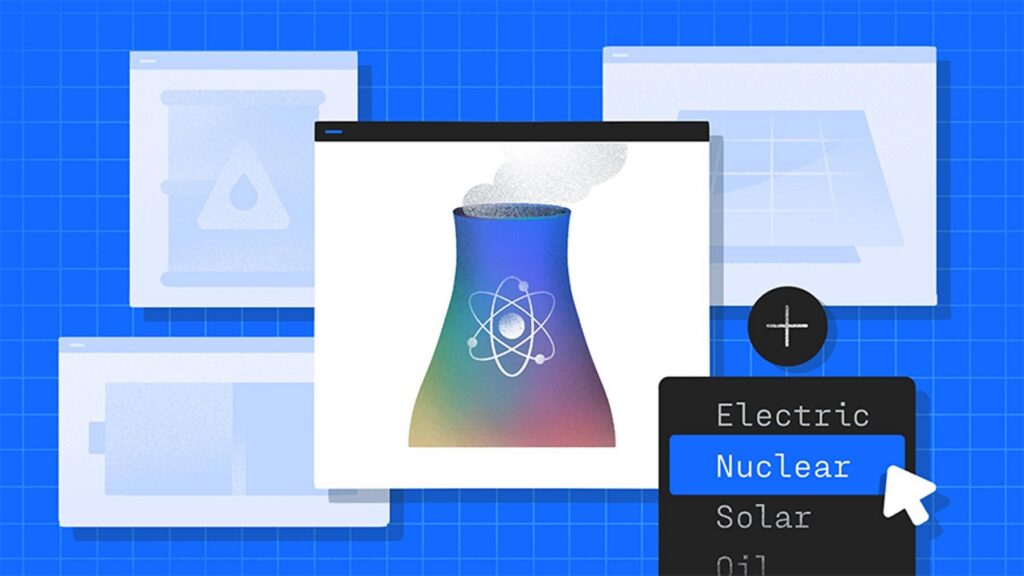
We have reached a strange crossroads in the energy sector. Private capital is flooding into nuclear technology at a pace we haven't seen before, yet the public markets are treating the sector like a radioactive hazard. If you are building in the crypto or AI space, you need to understand why this disconnect exists and what it means for the infrastructure of the next decade.
According to the latest data, venture capitalists and private equity firms have already injected over $6 billion into nuclear fission and fusion startups this year. This isn't just a slight uptick; it is a massive acceleration that eclipses previous records. The motivation is simple: AI needs power, and lots of it. Data centers are reaching the limits of what local grids can provide, and the big tech players are looking for a reliable, carbon-free way to keep the GPUs humming.
The Private Hype vs. Public Reality
While the private funding rounds are getting larger, the story in the public markets is different. Investors who bought into publicly traded nuclear companies are seeing significant volatility and, in many cases, a bearish retreat. This tells us that while big money is betting on the long-term potential of Small Modular Reactors (SMRs) and fusion breakthroughs, the general public isn't convinced that these companies can scale profitably or navigate the regulatory minefield quickly enough.
As a founder, I see this all the time. The gap between "cool technology" and "viable business model" is where most startups die. For nuclear energy, that gap is widened by massive capital expenditures and timelines that often span decades. If you're building a software startup, you can pivot in a weekend. If you're building a fusion reactor, a pivot might cost $500 million and three years of safety audits.
Why Builders Should Care
You might be wondering why a developer building a DeFi protocol or a generative AI tool should care about nuclear energy funding. The answer is simple: compute is your lifeblood. We are moving toward a future where the scarcity isn't just in talent or ideas, but in raw electricity. The winners of the next decade will be the ones who have secured their energy supply.
We are seeing the birth of "vertical integration 2.0." It’s no longer enough to just write the code. The massive AI labs are essentially becoming energy companies. Microsoft, Google, and Amazon are all flirting with nuclear deals because they realize the traditional grid cannot support their growth projections. For a builder, this means that the cost of your infrastructure is going to be increasingly tied to these geopolitical and industrial shifts.
Fission, Fusion, and the Founder Perspective
The $6 billion flowing into the space is split between two very different bets. On one hand, you have fission—the technology we know works, but that people are terrified of. Startups in this space are working on SMRs, which are basically miniature versions of traditional plants that can be built in a factory and shipped to a site. This is a manufacturing play.
On the other hand, you have fusion. This is the holy grail. It’s the "moonshot" of all moonshots. The funding here is speculative, driven by the hope that we can finally replicate the energy of the sun without the radioactive waste. While the progress is real, the commercial viability is still years, if not decades, away. For a founder, fusion is like a Tier 1 research project; fission is the product currently in beta.
The current influx of capital into nuclear isn't just about clean energy; it's an admission that our current infrastructure cannot handle the compute-heavy future we are building.
The Skeptic's Corner
It wouldn't be an honest analysis without a dose of skepticism. We have seen these cycles before. Clean tech 1.0 resulted in a lot of burned VC cash and very few survivors. The public market's bearish stance is a reminder that "innovative" doesn't always mean "profitable." The regulatory hurdles for nuclear are higher than in almost any other industry. One safety incident or political shift can wipe out billions in perceived value overnight.
Builders need to watch for the "subsidy trap." A lot of this private funding is predicated on government incentives and the desperate need for AI companies to look green. If those incentives dry up, or if AI energy efficiency improves faster than expected, the nuclear bubble could pop just as quickly as it formed.
The Takeaway for the Ecosystem
What does this mean for you? If you are in the AI or crypto mining space, diversification is your friend. Don't assume that energy costs will stay linear. We are entering an era of energy volatility where being "grid-independent" could be a massive competitive advantage.
The massive investment in nuclear energy is a signal that the world is finally taking the energy demands of the digital age seriously. But the public market's hesitation is a warning. Don't get caught up in the hype of a $6 billion headline. Look at the lead times, look at the regulations, and look at the actual cost per kilowatt-hour. In the end, the technology that wins won't be the most "futuristic" one—it will be the one that can actually keep the lights on without breaking the bank.
We are building the future on top of an aging electrical foundation. The smart builders are the ones watching how that foundation is being rebuilt, because when the power goes out, it doesn't matter how good your code is.
Read the original at Crunchbase News →