NFTs aren’t dead. They are changing. The market has moved away from the speculative JPEG boom of 2021, but NFTs continue to find uses in digital collectibles, gaming, memberships, and the connection between physical and digital assets.
The bigger question in 2026 is no longer whether NFTs will return to their old hype cycle. It is whether they can become useful enough that people stop caring that they are using an NFT in the first place.
The NFT Market Has Changed
Speculation heavily drove the NFT market that captured mainstream attention several years ago.
Profile-picture collections could sell for extraordinary prices, with buyers betting that another collector would eventually pay more. For a while, scarcity alone appeared to be enough to create value.
That model did not last.
As the broader crypto market turned bearish, NFT prices collapsed and trading activity declined. Many collections that once dominated social media became difficult to sell, while countless projects disappeared altogether.
But declining prices do not necessarily mean the technology has disappeared.
In October 2025, NFT trading volume reached $546 million, a 30% increase from the previous month, while NFT sales reached 10.1 million—the highest monthly sales count of the year, according to DappRadar. At the same time, average prices had fallen sharply from earlier in the year.
That combination is important.
More NFTs changing hands at lower prices suggests a market becoming less focused on expensive speculation and potentially more accessible to ordinary users.
The NFT market isn’t simply going back to where it was; it is becoming more selective.
From JPEGs to Digital Ownership
The most interesting part of the NFT story may be happening outside the traditional collectible market.
An NFT is fundamentally a blockchain-based token with unique properties. That makes it possible to use one as a representation of something that needs to be individually identified, owned, or transferred.
That “something” doesn’t have to be a picture.
NFTs can be used for:
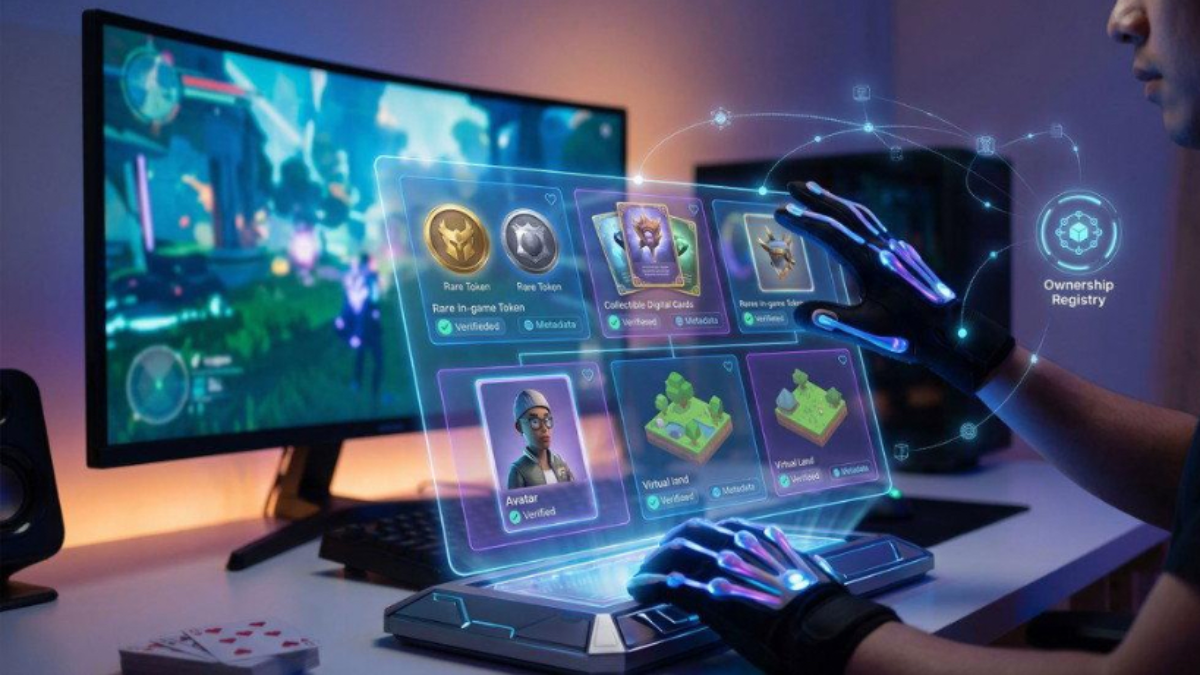
Gaming assets—characters, items, collectibles, and other digital property.
Memberships—access to communities, events, or experiences.
Digital collectibles—verifiable items connected to creators, brands, or entertainment.
Physical assets—digital records connected to real-world goods.
Tickets and access passes—assets that can provide entry to events or experiences.
Creator communities—collectibles that give fans a direct relationship with creators.
This is where the NFT narrative becomes more interesting.
The first major NFT boom largely asked people to buy the NFT itself. The next generation is more likely to ask people to buy what the NFT allows them to do.
That is a very different proposition.
Gaming Could Be One of the Biggest Tests
Gaming remains one of the clearest environments for testing digital ownership.
Players already spend billions of dollars on digital items. The difference is that traditional games usually keep those assets inside a company’s ecosystem.
Blockchain-based assets introduce another possibility: an item can be represented as a token that the player can hold, sell, or transfer independently of the game’s internal database.
That does not guarantee blockchain gaming success.
A 2026 empirical study examining NFT games found that ownership and trading did not necessarily translate into profits for players. In its sample of 12 games, researchers found that players in nine games had negative average trading profits.
That is an important warning for the industry. Simply putting game items on a blockchain is not enough.
The game still has to be good.
Players are unlikely to stay because an item is an NFT if the underlying experience is boring, expensive, or poorly designed. The strongest blockchain games may therefore be the ones where ownership enhances the experience rather than becoming the entire reason for playing.
Utility Is Becoming More Important
The NFT market has already learned a difficult lesson: scarcity by itself does not guarantee lasting value. A collection can be limited to 10,000 items and still have little demand if nobody wants them.
That is why utility, community, and strong intellectual property are becoming increasingly important.
DappRadar’s 2025 reporting described the NFT sector as becoming more accessible, utility-driven, and connected to real-world applications, while sales increased even as prices declined.
That does not mean every project suddenly has genuine utility. There will still be speculation, failed collections, and projects built primarily around hype. The difference is that the market is becoming better at separating those projects from assets with an actual reason to exist.
The NFT Industry May Become Invisible
There is another possibility that is easy to overlook: the biggest NFT use cases might eventually be the ones where users don’t even know they are using NFTs.
Consider a concert ticket. A user doesn’t care whether the ticket is technically an NFT; they care that it gets them into the concert. The same applies to a loyalty reward, a gaming item, a digital certificate, or a collectible connected to a physical product.
If blockchain technology makes ownership easier to verify and transfer, the technology can sit quietly in the background. That could be a much bigger opportunity than convincing millions of people to become NFT collectors.
In other words, NFT adoption may not look like a traditional NFT market at all.
So, are NFTs dead?
No. But the NFT market of the future probably won’t look like the NFT market of 2021.
The speculative JPEG era introduced the concept of digital ownership to a massive audience, but it also exposed the weaknesses of a market built primarily around hype.
Now the industry has a different challenge: it has to prove that NFTs can provide meaningful ownership, access, utility, and experiences.
Some projects will fail. Many already have. But that does not mean the underlying idea has failed.
NFTs aren’t disappearing. They are evolving from something people speculate on into something that could become part of how digital ownership works. The next NFT cycle, if it comes, may not be defined by million-dollar profile pictures. It may be defined by people using NFTs without even thinking about them.
And that could be a much more important development than the hype ever was.