Cleaning Up the Junkyard
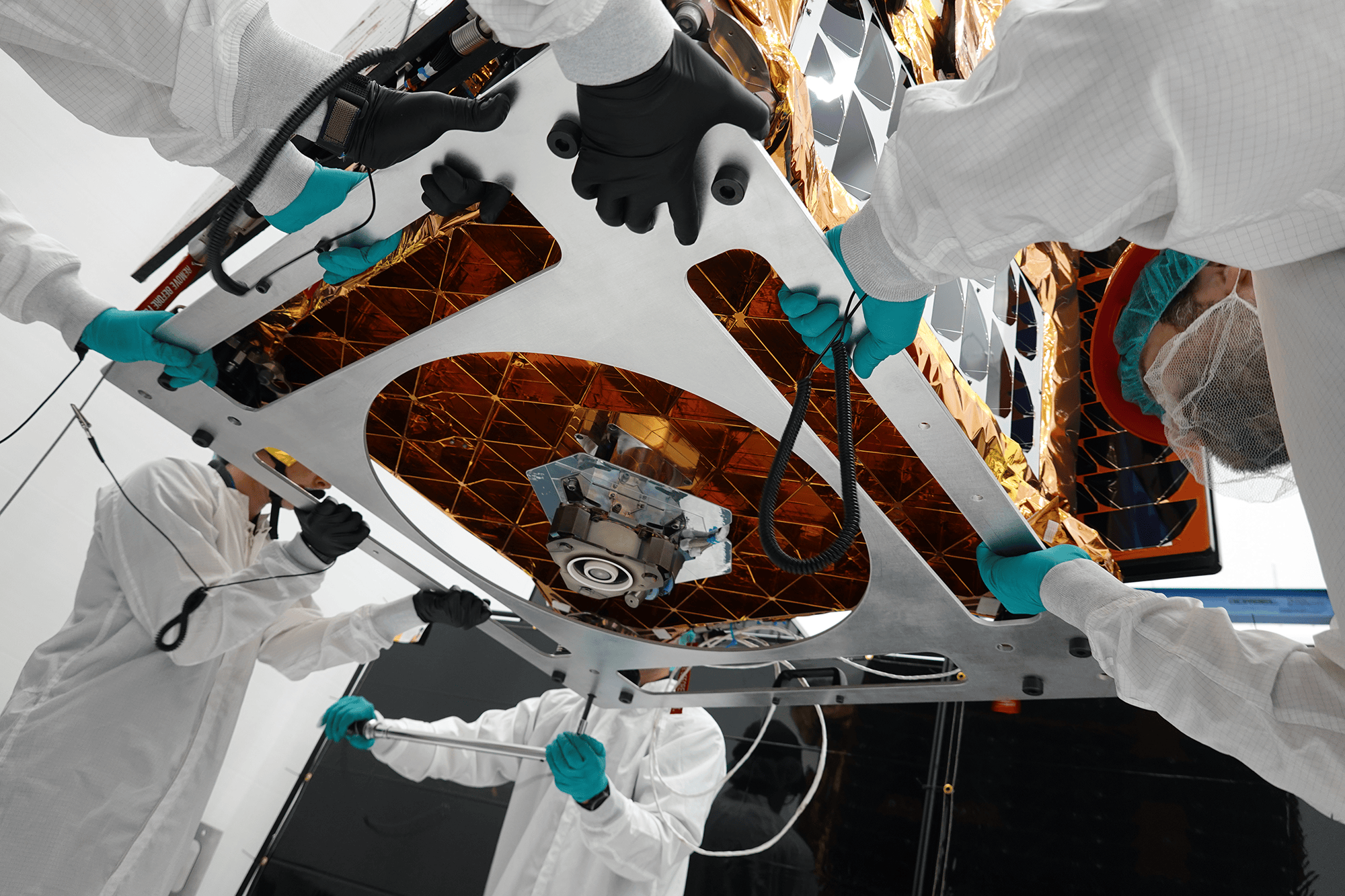
Space is getting crowded, and not in the way that brings venture capital flooding into your seed round. It is getting crowded with trash. We have thousands of dead satellites orbiting the planet, moving at thousands of miles per hour, acting like unexploded landmines for every new piece of infrastructure we launch. NASA’s recently launched SSPICY mission—short for Small Spacecraft Propulsion and Inspection Capability—is a signal that the agency is finally getting serious about the logistics of orbital maintenance.
For years, the approach to space hardware has been 'launch and forget.' If a satellite breaks or runs out of fuel, it becomes a multi-million dollar piece of high-tech litter. The SSPICY mission, which just headed up from Vandenberg Space Force Base, is designed to prove that we can build small, relatively cheap spacecraft that can navigate to these derelict objects and figure out what is wrong with them. It is the first step toward a functional repair and recycling economy in orbit.
The Tech Stack of Orbital Inspection
The mission utilizes a CubeSat—a small, modular satellite—equipped with a cold-gas propulsion system and advanced computer vision. This is not about flashy sci-fi lasers. It is about the incredibly difficult physics of synchronization. To inspect a dead satellite, the inspector craft has to match the velocity and rotation of a hunk of metal that was never designed to be approached. It is like trying to change a tire on a car that is spinning down a highway at 17,000 miles per hour.
What is interesting for builders here is the intersection of computer vision and autonomous navigation. The SSPICY mission is testing how these small craft can identify structural damage or fuel leaks without human intervention. In the crypto world, we talk about trustless systems. In space, you need autonomous systems because the latency of sending a command from Earth to a maneuvering craft is often too slow to prevent a collision.
Why Builders Should Care
If you are building in AI or robotics, you might think NASA missions are outside your lane. You would be wrong. The shift from 'single-use' to 'serviceable' hardware is a massive opportunity for startups. Currently, the barrier to entry for space is the cost of replacement. If we can extend the life of a satellite by five years through a simple robotic inspection and repair, the ROI on orbital assets triples.
We are seeing the early stages of the circular space economy. Just as the shipping industry created a massive secondary market for maintenance, refueling, and logistics, the satellite industry is moving toward a model where 'upkeep' is a viable business vertical. The SSPICY mission is essentially the beta test for the 'AAA' of low Earth orbit.
The Skeptic's View
While the mission is a step forward, we need to be realistic about the scale. There are over 2,000 dead satellites in orbit right now. One tiny CubeSat testing propulsion is a drop in the bucket. The real challenge is not just inspecting these objects, but doing something about them. Deorbiting a multi-ton satellite requires significantly more energy than a small inspection craft can provide.
Furthermore, the regulatory environment for orbital debris is still a mess. Who owns the trash? If a private company’s inspection craft accidentally bumps into a dead government satellite and creates more debris, who is liable? Founders entering this space need to be as savvy about international space law as they are about their sensor arrays.
Opportunities in Data and Simulation
One of the biggest bottlenecks for these missions is training the AI models that handle the approach and docking. You cannot easily recreate zero-gravity, high-velocity environments on Earth. This creates a massive opening for synthetic data and high-fidelity simulation environments. If you can build a platform that accurately simulates the light conditions and physics of an orbital approach, you are solving a problem that every satellite servicer will face.
We are also going to need better ways to track and catalog these objects. The current 'space catalog' is incomplete. Small spacecraft like SSPICY could eventually form a mesh network of sensors that provide real-time situational awareness of the orbital environment. Think of it as a decentralized traffic control system for the stars.
The Founder Perspective
The takeaway here is that the 'infrastructure' layer of space is finally being built. For a long time, space was about the 'what'—what can we launch? Now, the focus is shifting to the 'how'—how do we keep it running? If you are a founder, look at the service side. Look at the mundane problems like fuel transfer, thermal imaging of dead components, and secure communication between autonomous craft.
NASA is providing the proof of concept, but the commercial sector will have to provide the scale. The SSPICY mission proves that small, agile teams can build hardware that performs tasks previously reserved for billion-dollar flagship missions. That is a trend that should excite anyone who values efficiency over bloat.
Takeaway
NASA’s move to test small-scale inspection tech is a win for the lean hardware movement. It signals a shift from disposable satellites to a sustainable orbital economy. For builders, the opportunity lies in the autonomous systems and logistics required to manage space as a long-term infrastructure play, rather than a one-way trip.
Read the original at NASA Breaking News →