The Dark Side of the Data Boom
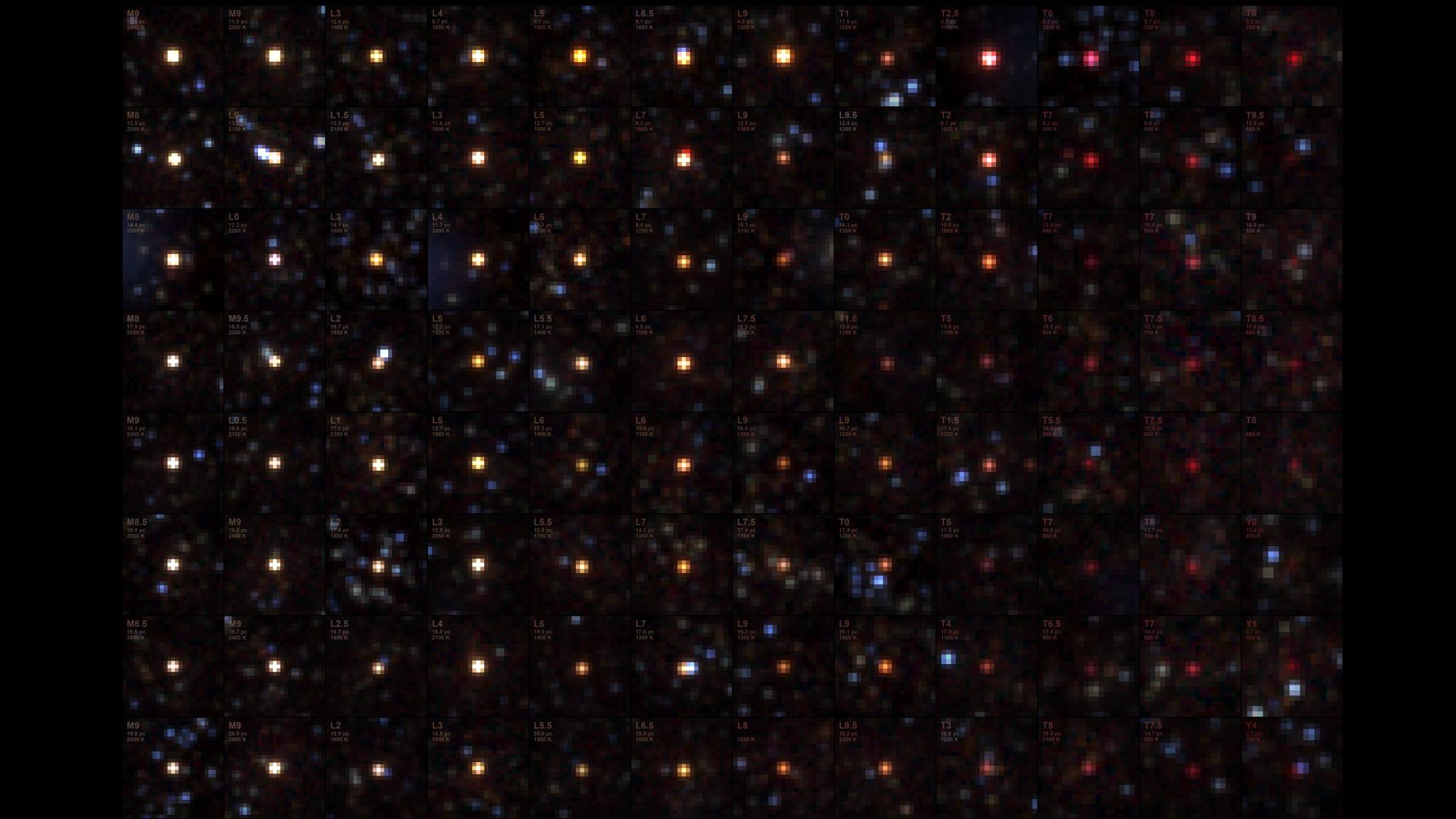
Space is mostly empty, but the parts that aren't empty are increasingly hard to categorize. For a long time, we’ve looked at the sky and seen two main buckets: stars and planets. But there’s a massive gap in the middle occupied by brown dwarfs. These are objects too small to be stars but too massive to be standard planets. They’ve been notoriously hard to study because they don't give off much visible light. They’re the cosmic version of a failed startup—plenty of initial heat, but not enough internal pressure to sustain a nuclear fire.
NASA is about to flood the market with data on these objects via the SPHEREx telescope. SPHEREx stands for the Spectro-Photometer for the History of the Universe, Epoch of Reionization, and Ices Explorer. It’s a mouthful, but for those of us building in the AI and data analysis space, the name is less important than the output. This mission is designed to scan the entire sky every six months, creating a massive, high-resolution spectral map of the universe.
Early findings published in The Astrophysical Journal show that these brown dwarfs aren't just dark lumps of rock. They have complex, chemically rich atmospheres that mimic the gas giants in our own solar system. This isn't just a win for astronomers; it’s a massive opportunity for data engineers and AI researchers who are looking for complex, non-linear datasets to train against.
Mapping the Edge Cases
In the world of product development, we often talk about edge cases. Brown dwarfs are the ultimate edge case of the universe. They inhabit the "sub-stellar" mass range. Because they don't fuse hydrogen like the Sun, they cool down over time. This cooling creates atmospheres with clouds and chemical signatures that look suspiciously like Jupiter’s.
The SPHEREx mission is using infrared light to peer through the dust and capture the unique signatures of these objects. By looking at 96 different color bands, the telescope provides a level of granularity we haven't seen at this scale. For builders, this is a lesson in resolution. If you’re building a model or a platform, the quality of your output is capped by the granularity of your input. By moving from simple imaging to high-resolution spectroscopy, NASA is shifting from 2D observation to multi-dimensional data mapping.
The Founder Perspective: Infrastructure over Ego
What I find most interesting about SPHEREx is that it isn't a "hero" mission like the James Webb Space Telescope. Webb is about looking at one thing very deeply. SPHEREx is about looking at everything broadly. It’s infrastructure. It’s the API layer for the cosmos. It provides the foundational map that other, more specialized tools will use to zoom in on specific targets.
As founders, we often get caught up in building the "hero" feature—the one shiny thing that everyone talks about. But usually, the real value lies in the infrastructure. SPHEREx is going to identify millions of targets that would have otherwise remained invisible. It’s doing the dirty work of cataloging so that other researchers can do the glamorous work of discovery. There is a massive lesson there for anyone building in the Web3 or AI space right now: don't just build the shiny front end; build the data pipeline that makes the front end possible.
Bridging the Gap Between Stars and Planets
The recent findings suggest that the atmospheres of brown dwarfs are dynamic. We’re seeing evidence of water, methane, and carbon monoxide. This matters because it tells us that the chemical building blocks we associate with planets are much more common than we thought. If brown dwarfs—which are essentially orphaned planet-like objects—have these chemicals, the potential for complex chemistry across the galaxy is significantly higher than previous estimates.
From a skeptical founder’s view, we have to ask: what do we actually do with this? Right now, it’s about refining our models. Every time we find an object that doesn't fit into our neat little boxes, it forces us to rewrite the code. Brown dwarfs challenge our understanding of how gravity and heat interact over billions of years. They are the "middle managers" of the galaxy—often overlooked, but they hold the whole structure together.
Why Builders Should Care
You might be wondering why a crypto or AI builder should care about a telescope looking at cold stars. The answer is pattern recognition at scale. The SPHEREx mission is going to generate hundreds of billions of data points. Processing this will require advanced machine learning techniques to separate the signal from the noise. We are reaching a point where human astronomers can no Excel-sheet their way through this. We need automated systems that can identify chemical signatures across millions of light years.
This is the same challenge we face in blockchain forensics or LLM training. We are dealing with massive volumes of data where the most important insights are buried in the nuances of the "spectrum." Whether you're analyzing a transaction hash or a spectral line from a brown dwarf, the fundamental skill is the same: identifying an anomaly within a massive dataset.
What This Means for the Future
The mission is scheduled to launch soon, and the preliminary data is already shaking up the community. We are moving away from a universe that is "binary" (star vs. planet) and into a universe that is a spectrum. This mirrors what we see in technology. The lines between hardware and software, between AI and human thought, and between centralized and decentralized systems are all blurring.
Brown dwarfs are the physical embodiment of that blur. They are neither here nor there. They are the "in-between." As we get better at seeing these objects, we get better at understanding the transitions between states. For builders, this is a reminder that the most interesting things happen at the boundaries. Don't just look at the suns; look at the dark spaces in between them.
The Takeaway
NASA’s SPHEREx isn't just a telescope; it’s a data engine that will redefine our map of the neighborhood. The discovery of complex atmospheres on brown dwarfs proves that the universe is far more chemically active than we gave it credit for. For those of us building on the ground, the lesson is clear: invest in the infrastructure that reveals the invisible, because that’s where the real discoveries are hidden. The mid-tier objects, the edge cases, and the dark data are where the next big breakthrough will come from.
Read the original at NASA Breaking News →