The Seven-Month Shift
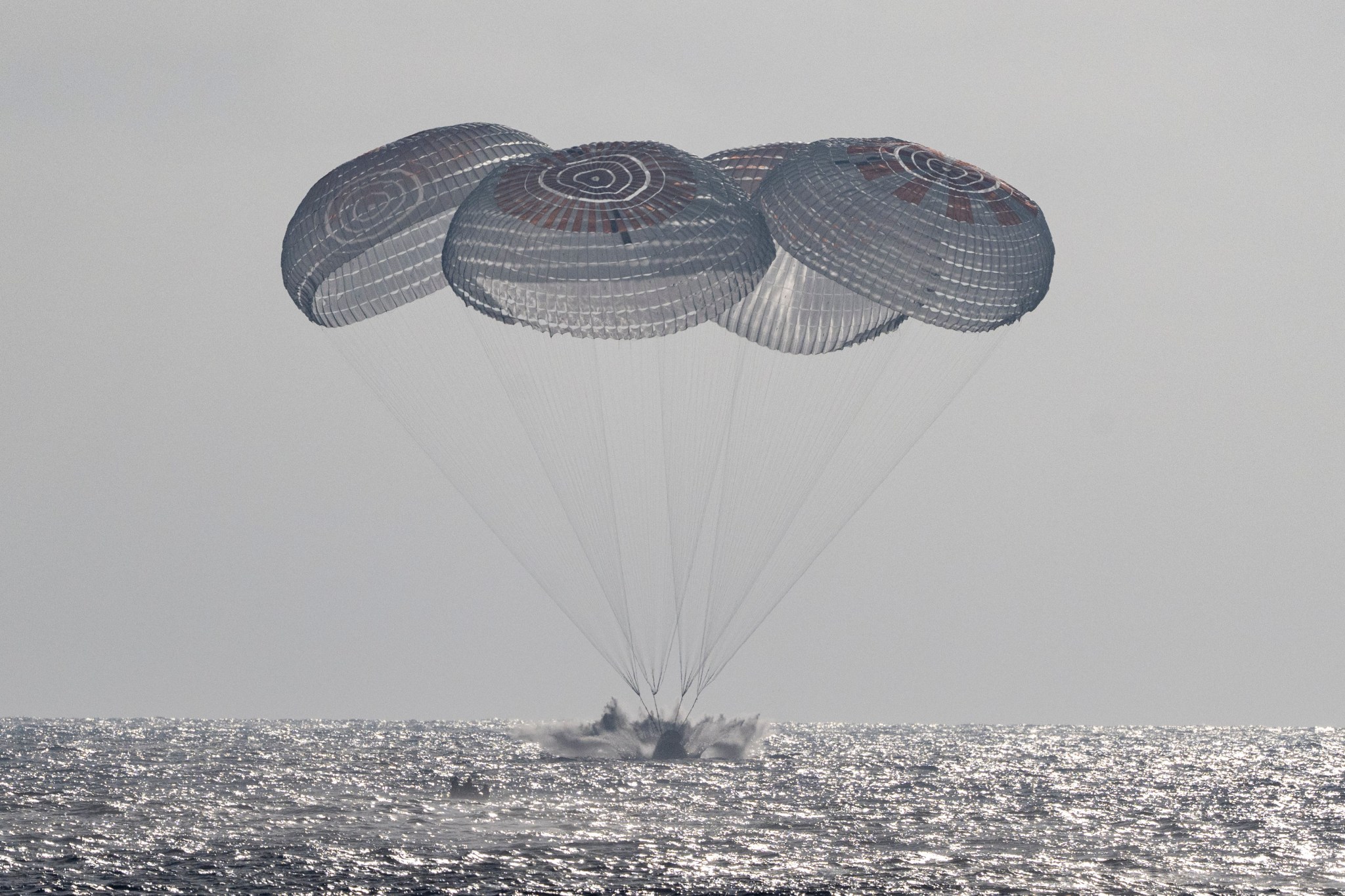
SpaceX just brought Crew-12 home. The capsule hit the Pacific waters off Los Angeles after more than two hundred days docked at the International Space Station. For the casual observer, it is another successful splashdown in a growing list of routine arrivals. For those of us building in the tech and infrastructure space, it is a data point on the timeline of commercializing the final frontier.
We have moved past the era where every launch is a historic, singular event. We are entering the logistics phase. When a crew stays in orbit for seven months, they aren't just looking out the window; they are stress-testing the hardware, the software, and the supply chain that keeps humans alive in a vacuum. This mission represents the transition from government-led exploration to a subcontracted utility model.
The Founder Perspective on Reliability
If you are building products, you know that consistency is harder than innovation. Launching a rocket is impressive, but doing it twelve times in a row for a client as demanding as NASA is a masterclass in operational excellence. SpaceX has turned what used to be a multi-billion dollar national effort into a recurring service. As founders, we should be looking at how they managed to commoditize the hardest problem in engineering.
The crew is now heading to Houston for briefings. They will talk about the science they performed, but the real story for builders is the vehicle. The Dragon capsule is becoming the workhorse of the orbital economy. Every successful return validates the idea that private companies can outpace legacy institutions when the incentives are aligned and the technical debt is kept to a minimum.
Data, Not Just Astronauts
The cargo coming back isn't just people. It is the result of hundreds of experiments that require gravity-free environments. This is where the overlap with AI and bio-tech becomes interesting. We are seeing a surge in orbital manufacturing and research that requires a steady loop of transport. If the cost of getting materials back to Earth continues to drop, the barrier to entry for space-based research vanishes.
Think about the latency issues we deal with in distributed computing. Now imagine managing that across an atmospheric barrier. The software stack required to manage a seven-month mission without a catastrophic failure is something every CTO should study. It is about redundancy without bloat. It is about systems that can fail gracefully and recover without human intervention.
The Skeptic's Corner
It is easy to get caught up in the hype of "space for everyone," but we have to look at the bottlenecks. We are still relying on splashdowns and sea-based recovery. It is a slow, expensive way to end a journey. While SpaceX has nailed the landing, the throughput is still limited by geography and weather. For space to truly be a builder-first environment, we need to see the "return" part of the cycle become as automated and frequent as a long-haul truck delivery.
We also need to talk about the monopoly. NASA is the primary buyer, and SpaceX is currently the primary seller. In any other industry, that lack of competition would be a red flag for long-term innovation. While Crew-12 is a victory, the ecosystem needs more players to ensure that prices stay down and development stays fast. We don't want a future where one company owns the only toll road to the stars.
Building for the Long Haul
What does this mean for you? If you are working in AI, robotics, or infrastructure, your market is expanding. We are no longer limited to terrestrial use cases. The tech being debriefed in Houston today will eventually filter down to consumer hardware. The sensors, the life support algorithms, and the communication protocols used in Crew-12 are the precursors to the next generation of autonomous systems on Earth.
Don't look at the splashdown as an ending. Look at it as a successful delivery in a long-term logistics contract. The builders who win in the next decade will be the ones who treat space not as a fantasy, but as a standard deployment environment. The hardware is getting there; now we need the builders to fill the void.
The Takeaway
The successful return of Crew-12 proves that private orbital logistics are now a stable utility. For builders, the opportunity lies in the shift from "getting there" to "doing work while there." The infrastructure is ready; the next step is building the applications that justify the trip.
Read the original at NASA Breaking News →