The Privatization of Gravity
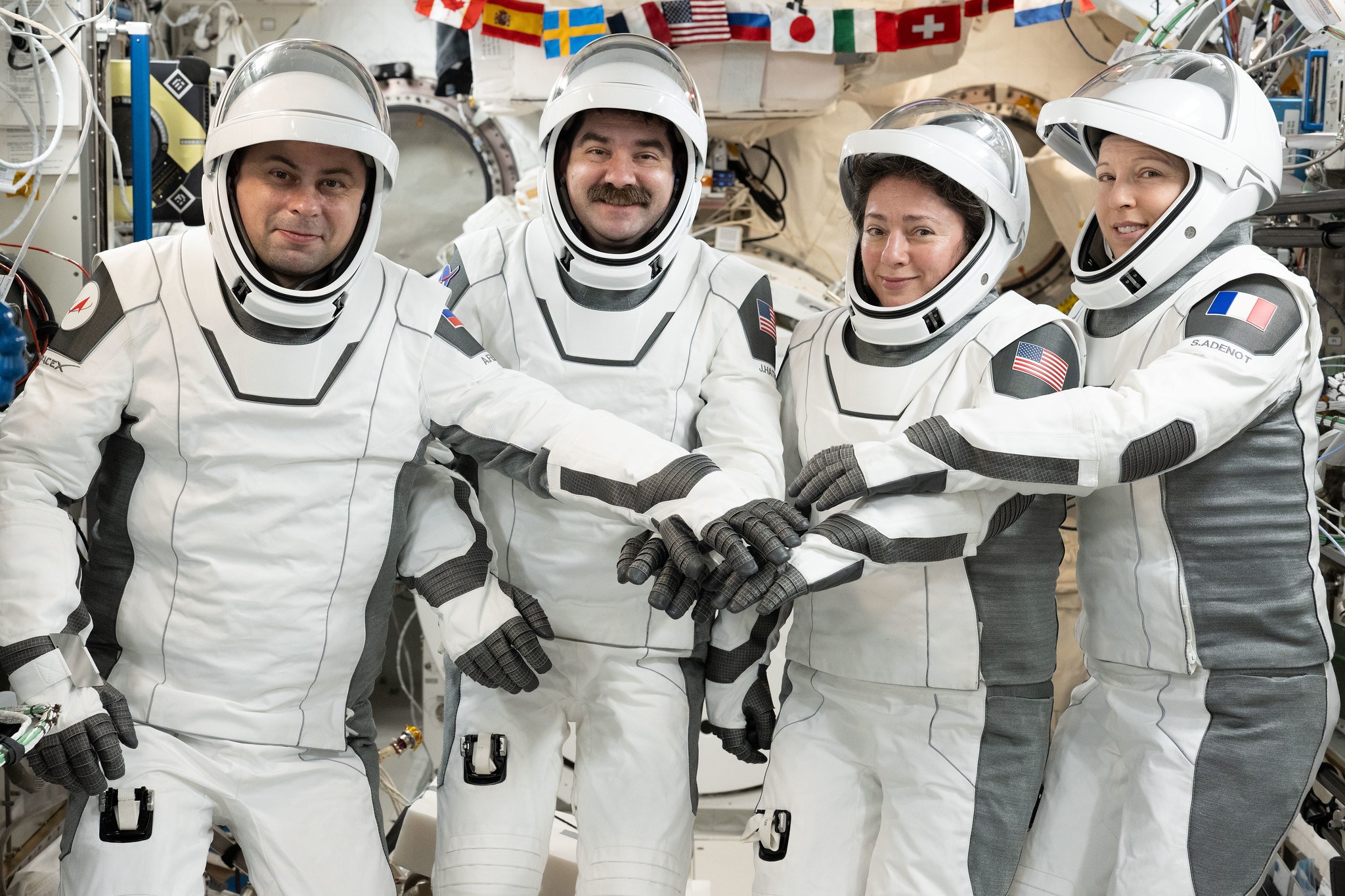
NASA just announced the scheduled return of the SpaceX Crew-12 mission, targeting an undocking from the International Space Station on October 7. On the surface, it is a standard mission update. We see the names: Jessica Meir, Jack Hathaway, Sophie Adenot, and Andrey Fedyaev. We see the technical window: 8:05 a.m. EDT. But if you are building in the tech space, you need to look past the orbital mechanics and see the business model shifting right under our feet.
For decades, space was a sovereign sandbox. If you wanted to get to low Earth orbit, you had to be a government or a massive defense contractor with a cost-plus contract. SpaceX changed that math. Crew-12 is not just a scientific mission; it is a proof of concept for the reliability of private logistics. We are witnessing the normalization of orbital transport, and for founders, this represents the opening of a new infrastructure layer that looks a lot like the early days of cloud computing.
The Reliability Infrastructure
The return of Crew-12 highlights something critical for builders: the importance of predictable delivery. NASA is streaming this live because they want the world to see that the private sector can handle high-stakes human life cycles with the same precision as a government agency. For those of us in the crypto and AI sectors, the parallel is clear. We are moving from the 'experimental' phase of decentralization and automation into the 'infrastructure' phase.
When we talk about 'no earlier than' dates and weather-dependent windows, we are talking about risk management. In the world of startups, we often try to move fast and break things. In space, if you break things, people die and billions of dollars evaporate. SpaceX has managed to merge the iterative, fast-paced development style of a Silicon Valley startup with the rigorous safety standards of aerospace. That is a difficult needle to thread, and it is exactly what we need to see in the AI agent space right now.
Why Logistics Matter to Builders
You might wonder why a software founder should care about a capsule splashing down in the ocean. The answer is supply chain. Every successful mission like Crew-12 lowers the perceived risk for investors and insurance companies. As the risk profile of orbital missions drops, the cost of capital for space-adjacent startups drops as well. This includes satellite-based decentralized physical infrastructure networks (DePIN), orbital data processing, and even edge computing in space.
We are seeing a trend where the hardware is becoming a commodity. The Dragon capsule is becoming a bus. Once the transportation layer is solved, the real value moves to the application layer. What are these astronauts doing up there? They are running experiments in microgravity that could lead to breakthroughs in materials science and pharmaceuticals. As a builder, you should be asking what happens when these capabilities become accessible to a wider range of companies, not just those with NASA-sized budgets.
The International Cooperation Layer
One of the most interesting aspects of the Crew-12 manifest is the mix of agencies: NASA, the ESA, and Roscosmos. Even in a geopolitical climate that is increasingly fractured, the orbital economy remains largely collaborative. This is a lesson for the decentralized world. Open standards and shared risks create a floor for cooperation that politics cannot easily dismantle.
In crypto, we talk a lot about 'unstoppable code.' In space, we have 'unstoppable physics.' If the dock doesn't work, the mission fails. This forced alignment on technical standards is something we should strive for in our own industries. When the stakes are high enough, everyone agrees on the protocol. Crew-12 is a testament to the success of a multi-stakeholder protocol for human survival in a vacuum.
The Skeptic's View
Of course, it isn't all progress and zero-g high-fives. We have to be honest about the bottlenecks. The dependency on a single provider like SpaceX for these specific crew rotations is a central point of failure. While Boeing and others struggle to get their systems operational, the market currently has a heavy tilt toward one dominant player. For builders, this is a reminder that being the 'only game in town' is a massive advantage, but it also creates systemic fragility.
If we want a truly robust orbital economy, we need more than one private taxi service. We need competition. We need different architectures. This is why I always advocate for multi-chain approaches and open-source AI models. Monocultures are dangerous, whether they are in a server rack or on a launchpad at Merritt Island.
The Takeaway for the Founder Community
The return of Crew-12 is a signal that the 'utility' phase of space is here. We are moving past the era of 'can we do it?' and into the era of 'how efficiently can we do it?' This is the point where the real money is made and the real impact is felt. It is the transition from a research project to a platform.
As you watch the splashdown, don't just look at the parachutes. Look at the orchestration required to move humans across the most hostile environment known to man and bring them back to a specific coordinate on a rotating planet. That is the ultimate DevOps challenge. If they can manage that level of complexity with private enterprise, what is stopping you from solving the coordination problems in your own niche?
The orbital economy is no longer a futuristic dream. It is a live-streamed, scheduled event with a predictable cadence. The infrastructure is ready. The question is what the builder community is going to launch on top of it.
Read the original at NASA Breaking News →