The Engineering Seat at the Table
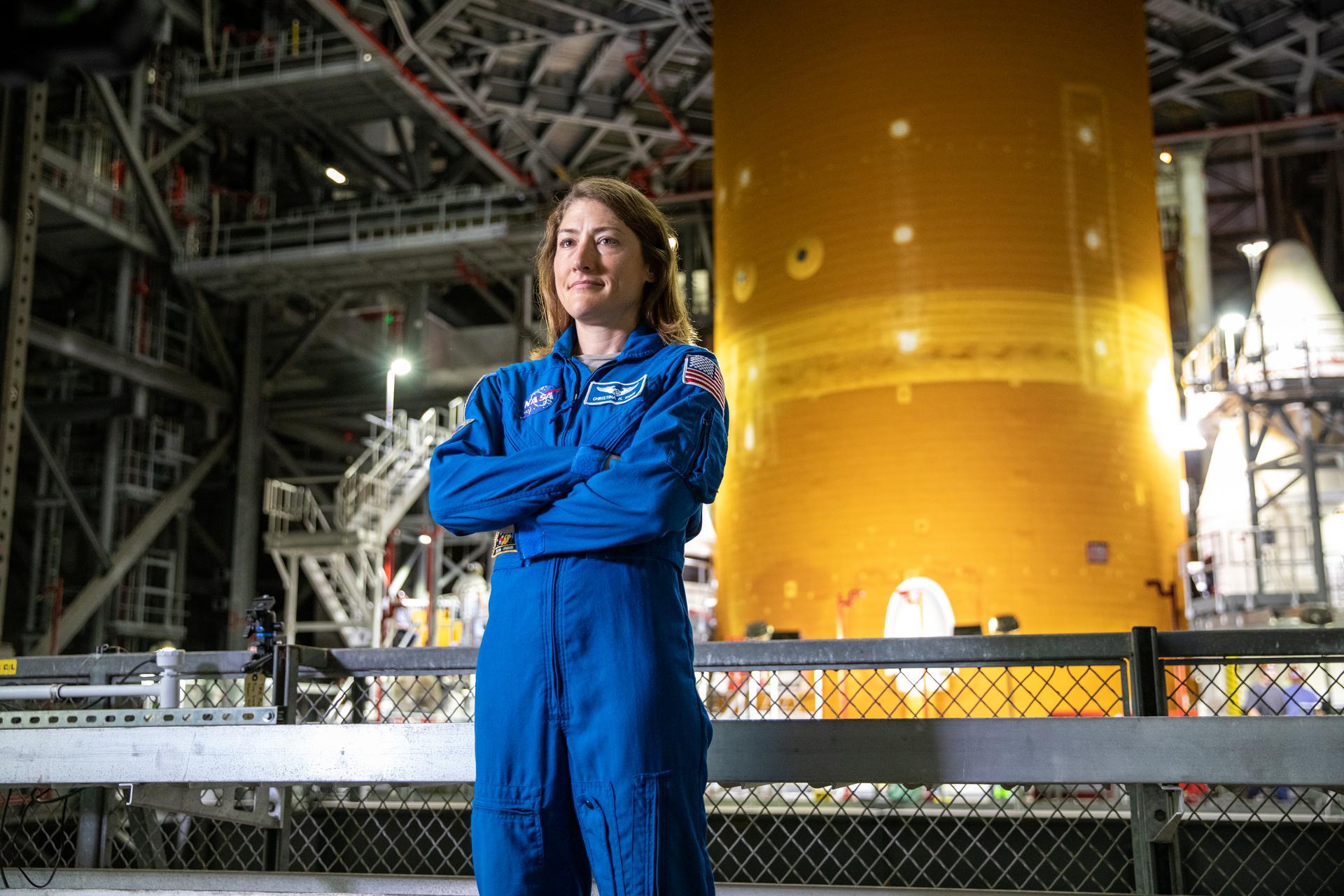
NASA just announced that Christina Koch, the record-breaking astronaut, will be stepping into the role of acting deputy chief engineer. She is taking over for Katherine Van Hooser, a veteran with over three decades of service at the agency. On the surface, it looks like a standard personnel swap at a government agency. But if you look at the timing and the trajectory of where space technology is heading, this move matters more than a simple title change.
Koch isn't just a pilot; she is an electrical engineer who spent 328 days on the International Space Station. That is the longest single spaceflight for a woman. When you spend nearly a year living inside a machine that is keeping you alive in a vacuum, you develop a relationship with hardware that most office-bound engineers will never understand. For builders in the crypto and AI space, there is a lesson here about operational reality versus theoretical design.
Bridging the Gap Between Design and Deployment
The role of a deputy chief engineer at an organization like NASA isn't just about checking math. It is about oversight. It is about making sure the technical standards for the entire agency—from deep space probes to terrestrial research—actually hold up. Van Hooser, the outgoing deputy, spent 35 years building the foundations of how NASA operates. She is a legacy builder who saw the agency through the transition from the Shuttle era into the commercial space race.
Koch represents the next phase. She is someone who has actually broken the hardware she is now tasked with overseeing. In the startup world, we talk a lot about 'dogfooding'—using your own product. Koch has dogfooded NASA's tech in the most extreme environment possible. Bringing that perspective into the upper echelons of management is a signal that NASA wants its leadership to be grounded in the harsh reality of execution, not just the comfort of a laboratory.
What This Means for Technical Founders
As a founder, you often see a divide between the people writing the code and the people managing the roadmap. In crypto, we see this constantly. You have developers who understand the protocol, and you have 'leadership' that understands the marketing. When those two things diverge, the project usually fails. The software becomes bloated, or it fails to address the actual needs of the users because the people at the top have never felt the pain of using the product under stress.
NASA is trying to solve this by putting a practitioner in a position of power. Koch’s background in electrical engineering and her experience with the Artemis program—which aims to put humans back on the lunar surface—suggests that the agency is prioritizing functional reliability. They are moving away from the bureaucratic silo and moving toward a model where the person making the technical decisions has a visceral understanding of what happens when those decisions go wrong.
The Risks of the 'Acting' Title
It is worth noting the 'acting' tag on this new title. In large organizations, 'acting' often serves as a trial run or a placeholder during a transition. However, Koch is also slated to be part of the Artemis II mission, the first crewed flight around the moon in over fifty years. This creates a unique tension. Can you be the deputy chief engineer while also training for the most significant mission of the decade?
This is a challenge many founders face: the struggle between being the visionary 'face' of the company and the technical lead who actually keeps the lights on. If Koch can balance the two, she becomes a prototype for a new kind of technical executive—one who is active in the field while simultaneously directing the high-level strategy. If she can't, it might just be a temporary PR move to keep a high-profile astronaut engaged between missions.
The Takeaway for the Builder Community
We are currently in a cycle where 'experience' is being redefined. In AI, we are seeing 20-year-olds with no management history running billion-dollar labs because they have the 'feel' for the weights and biases. In crypto, we see anonymous devs managing hundreds of millions in TVL because they understand the game theory better than any MBA. NASA, a legacy institution, is essentially doing the same thing here.
They are betting that Koch's hands-on experience in the most extreme 'production environment' imaginable is more valuable than decades of middle-management tenure. For those of us building in the private sector, the message is clear: the era of the detached executive is ending. The people who will lead the next decade of technical infrastructure are the ones who have lived in the trenches, or in this case, in low earth orbit.
Real innovation happens when the person signing the checks understands the friction of the person writing the code.
As Koch takes over this weekend, the engineering community at NASA will likely feel a shift. Van Hooser’s departure is the end of a long, distinguished chapter of institutional knowledge. Koch’s arrival is the beginning of a more agile, operator-focused era. Whether you are building rockets or decentralized protocols, the goal is the same: build things that don't break when the stakes are highest.
Read the original at NASA Breaking News →