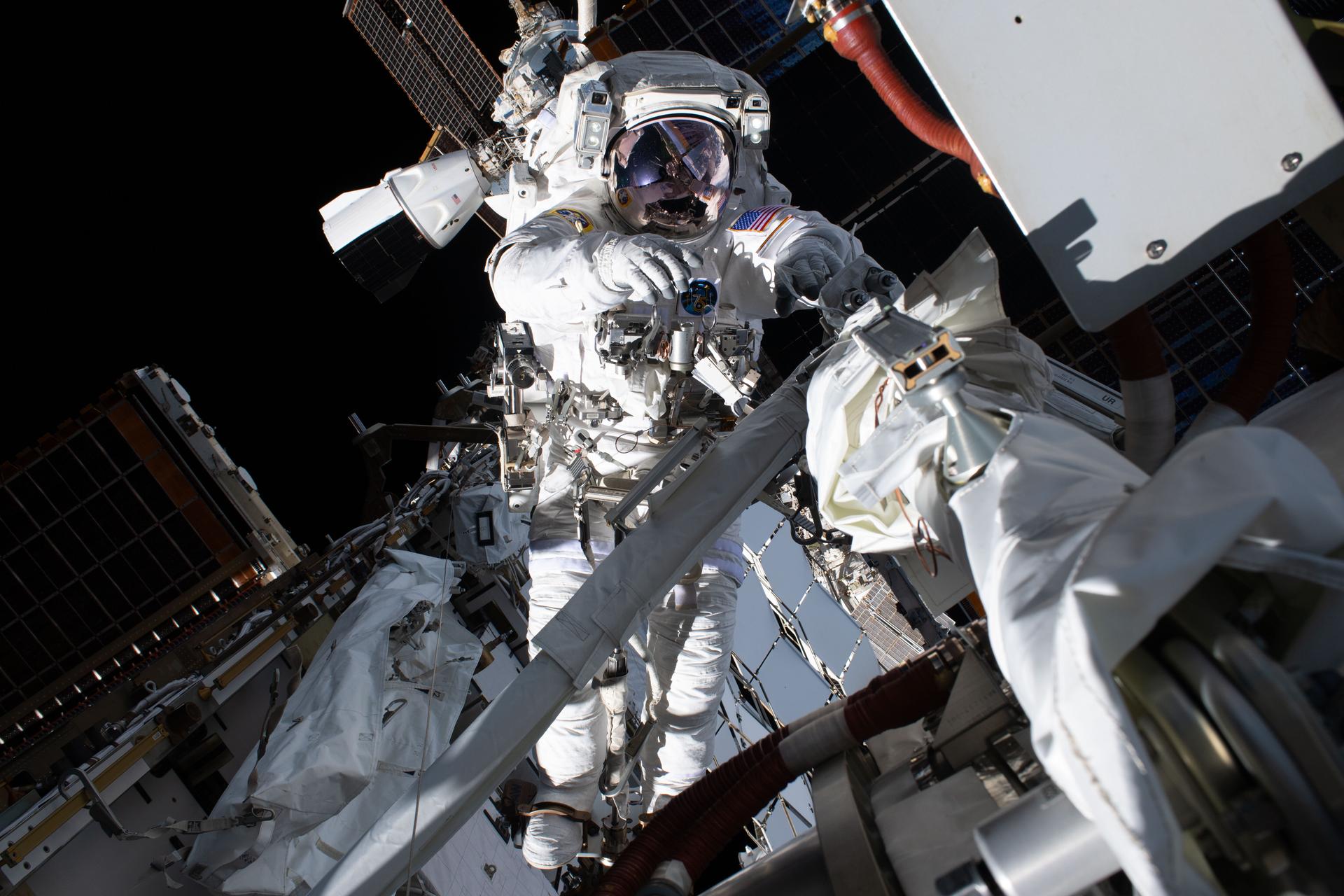
NASA is getting ready to send astronauts outside the International Space Station for the 100th and 101st times. On the surface, this looks like a routine maintenance update. They are holding a press conference at the Johnson Space Center to walk through the technical specs of installing new solar arrays and beefing up the station's power capacity. But if you are building in the crypto or AI space, you should be looking at this with a different lens. This isn't just about hardware; it is about the reality of maintaining legacy systems while the rest of the world moves toward decentralized, modular futures.
The Debt of Legacy Systems
The International Space Station is the ultimate legacy project. It is a massive, multi-decade collaboration that relies on technology designed before most modern developers were born. These upcoming spacewalks, focused on solar array installation and power augmentation, are essentially a high-stakes patch. NASA is trying to squeeze more performance out of an aging frame to keep up with the increasing demands of modern research and the eventual integration of private modules.
For founders, there is a lesson here in technical debt. When you build something this big and this centralized, the cost of maintenance eventually starts to rival the cost of innovation. Every time an astronaut steps out into the vacuum to turn a wrench, it is a reminder that monolithic structures are incredibly expensive to keep alive. The ISS is a marvel, but it is also a warning about what happens when you don't build for easy, automated iteration from day one.
Energy Scarcity and the Scaling Problem
The core of these two spacewalks is power. The station needs more juice. In the tech world, we talk about scaling in terms of server nodes or GPU clusters. In space, scaling is limited by the literal surface area you can dedicate to capturing photons. These new solar arrays are designed to augment the existing system because the original panels have degraded over time.
This mirrors the current struggle in the AI sector. We are reaching a point where the bottleneck for progress isn't just code or data—it is energy. Whether you are running a massive LLM or maintaining a permanent human presence in low Earth orbit, you eventually hit a wall where your old power infrastructure can't sustain your new ambitions. NASA’s solution is a physical upgrade, but for the builders watching from the ground, the takeaway should be about efficiency. If your protocol or your model requires a linear increase in energy to achieve a marginal increase in utility, you are building on a shaky foundation.
The Convergence of AI and Orbital Infrastructure
We are currently seeing a massive shift in how we think about space operations. Historically, these spacewalks have been purely human endeavors—high-risk, high-reward manual labor. However, we are approaching an era where AI-driven robotics will likely handle the bulk of this maintenance. The fact that we are still relying on humans for the 100th and 101st walks shows how far we still have to go in autonomous systems.
For AI founders, the opportunity isn't just in generative art or chat interfaces. The real frontier is in high-reliability autonomous systems that can operate in environments where latency is high and failure is not an option. NASA is laying the groundwork for how we manage complex systems in real-time, and the data coming out of these power upgrades will eventually inform how we build automated habitats on the Moon or Mars.
What This Means for Builders
If you are in the middle of a seed round or heads-down on a new protocol, space news might feel like a distraction. It isn't. The ISS is the most complex "node" ever built. Watching how NASA manages these upgrades gives us a blueprint for lifecycle management. Here are a few things to consider:
- Modular over Monolithic: The reason these upgrades are possible is that the ISS was designed with some level of modularity, even if it is cumbersome. Build your software so that the "solar panels" can be swapped out without crashing the whole system.
- Energy is the Ultimate Constraint: Whether it is Proof of Work or training a 1T parameter model, energy costs will always catch up to you. Efficiency isn't a feature; it is a survival requirement.
- Human-in-the-Loop Risks: These spacewalks are dangerous and expensive. In your own projects, identify where you are still relying on "manual spacewalks"—tasks that require human intervention to fix system errors—and prioritize automating them.
The goal of any great builder should be to create systems that don't require 100 manual interventions just to stay powered on.
The Skeptic's View on Big Government Tech
I’ve always been a bit skeptical of the massive price tags associated with these government programs. Don't get me wrong, NASA does incredible work, but the speed of innovation in the private sector is starting to make these long-lead-time missions look like relics. We are seeing companies like SpaceX and various AI startups move at a pace that government agencies simply can't match due to bureaucracy and risk aversion.
The upcoming press conference will likely be full of technical jargon and celebratory tones. But as a founder, you should be looking for the gaps. Where is the inefficiency? Why can't these arrays be deployed remotely? Why is the power system still the primary bottleneck after two decades? These gaps are where the next billion-dollar companies will be built.
Looking Forward
As NASA previews these missions, they are essentially showing us a snapshot of the past and the future at the same time. They are using 20th-century methods to prepare for 21st-century needs. It is a transition period. For those of us building in crypto and AI, we are in a similar spot. We are using the legacy internet and traditional compute models to build the next layer of human civilization.
The takeaway here is simple: respect the legacy, but don't become it. NASA has to fix what they have because they don't have a choice. You do. When you build your next project, think about how it will look by the time it reaches its 100th update. Will it require a dangerous manual intervention, or will it be smart enough to heal itself?
Read the original at NASA Breaking News →