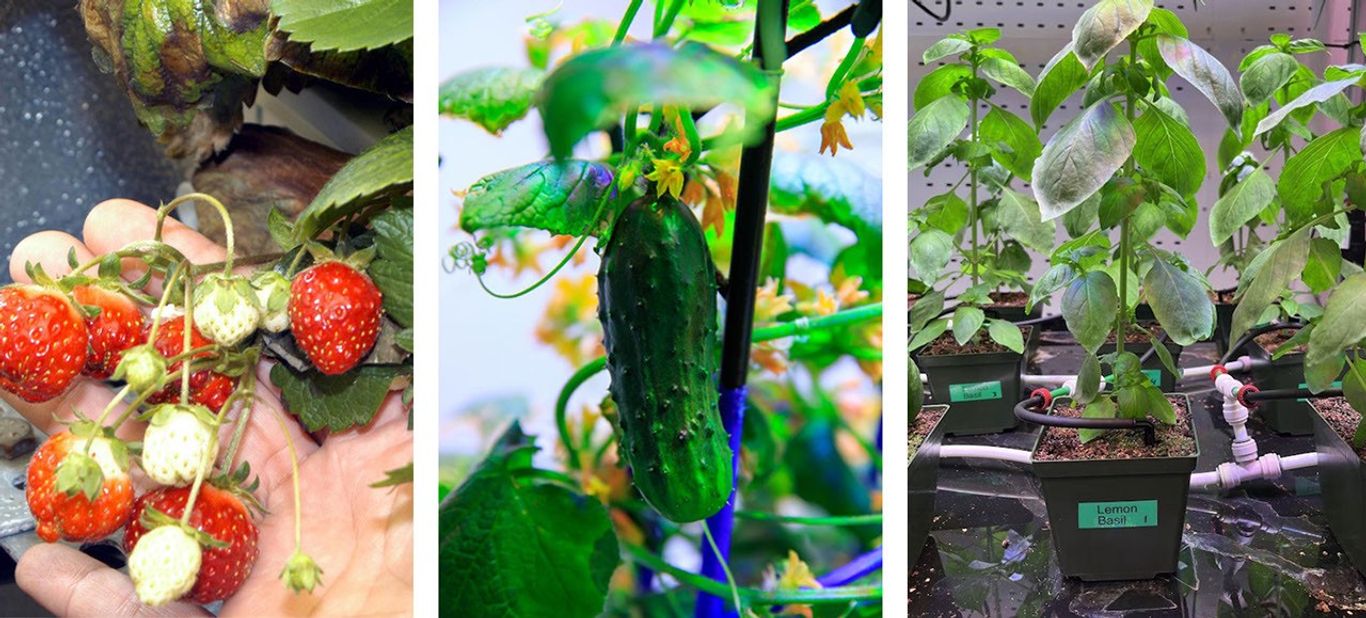
When we talk about the future of tech, we usually focus on high-speed compute, generative models, or blockchain throughput. But there is a more fundamental stack that we often ignore because it is solved for us every day on Earth: the food supply chain. NASA is currently looking at how to move past the classic astronaut squeeze-tube and into actual, living agriculture for long-term missions to the Moon and Mars.
The Logistics of Living Off-Grid
For decades, space travel has been a sprint. You pack everything you need, you fly the mission, and you come home. But as we look at the Artemis missions and eventually Mars, the math stops working. The weight and volume required to ship enough pre-packaged meals for a multi-year journey is a non-starter. If we want to be a multi-planetary species, we have to become space farmers.
NASA researchers are currently vetting a list of crop candidates that can thrive in a controlled environment far from Earth. This isn't just about calories; it is about the psychology of eating and the biological necessity of micronutrients that degrade in stored food over time. They are looking at variety, specifically focusing on things like strawberries, tomatoes, and leafy greens.
Why Strawberries Matter for Builders
It sounds like a trivial detail, but the selection of crops is a massive engineering hurdle. You can't just throw seeds in a pot. In a zero-G or low-G environment, water management is a nightmare. In a closed-loop system, you have to account for every milliliter of moisture the plant releases into the air. If you don't manage the transpiration, you end up with mold, humidity spikes, and equipment failure.
The recent focus on strawberries is interesting because they are high-value from a nutritional and psychological standpoint, but they are difficult to grow. They require specific light cycles and pollination methods. NASA is testing how these plants handle the stressors of deep space, and more importantly, how they fit into a modular growing system that astronauts can actually maintain without being full-time botanists.
The Hardware Stack: Hydroponics and LED Logic
The current approach involves advanced hydroponic and aeroponic systems. Soil is heavy, messy, and potentially carries pathogens you don't want in a pressurized tin can. By using nutrient-filmed water or mist, NASA can reduce the weight of the growth medium while maximizing the surface area for the roots.
This is where the "builder" perspective comes in. The lighting systems are being tuned to specific wavelengths to trigger faster growth cycles. It is basically overclocking biology. By manipulating the red and blue spectrums of LED arrays, researchers can tell the plant to grow more leaves or produce more fruit. It is a programmable hardware interface for nature.
The Psychological Layer
We often treat astronauts like machines, but the data shows that food variety is a major factor in mission success. Fatigue from eating the same brown paste every day leads to lower caloric intake and decreased cognitive performance. Fresh food provides a sensory link to Earth that is vital for long-duration mental health. The act of tending to a garden, even a small hydroponic one, has shown to be one of the most effective ways to mitigate the isolation of deep space.
Efficiency Over Aesthetics
NASA isn't looking for the prettiest garden; they are looking for the highest yield-per-watt. Every bit of power used to grow a tomato is power taken away from life support or propulsion. The engineering challenge is to create a self-sustaining loop where the carbon dioxide exhaled by the crew is scrubbed by the plants, and the oxygen produced by the plants is cycled back to the crew.
This is the ultimate resource management game. In crypto, we talk about tokenomics and burning mechanisms to maintain balance. In space agriculture, it is a literal chemical balance. If one part of the system fails—if the nitrogen levels spike or the light array flickers—the whole mission could be compromised. It is high-stakes systems design.
What This Means for Earth-Side Tech
The R&D happening here isn't just for Mars. The technologies developed to grow food in the harsh, resource-constrained environment of a space station are the same ones needed for vertical farming in urban centers or food production in climate-stressed regions on Earth. We are learning how to decouple food production from the traditional environment, making it a purely technical process rather than a geographical one.
The Takeaway
Logistics wins wars and builds civilizations. We can build the fastest rockets in the world, but if we haven't figured out how to grow a salad in a vacuum, we aren't going anywhere permanently. NASA’s shift toward crop variety shows they are finally thinking about the "Day 1,000" problem, not just the launch day. For founders, the lesson is clear: don't just solve the flashy parts of the problem. Solve the foundational stuff that keeps the system running when you're a million miles from the nearest supply chain.
Read the original at NASA Breaking News →