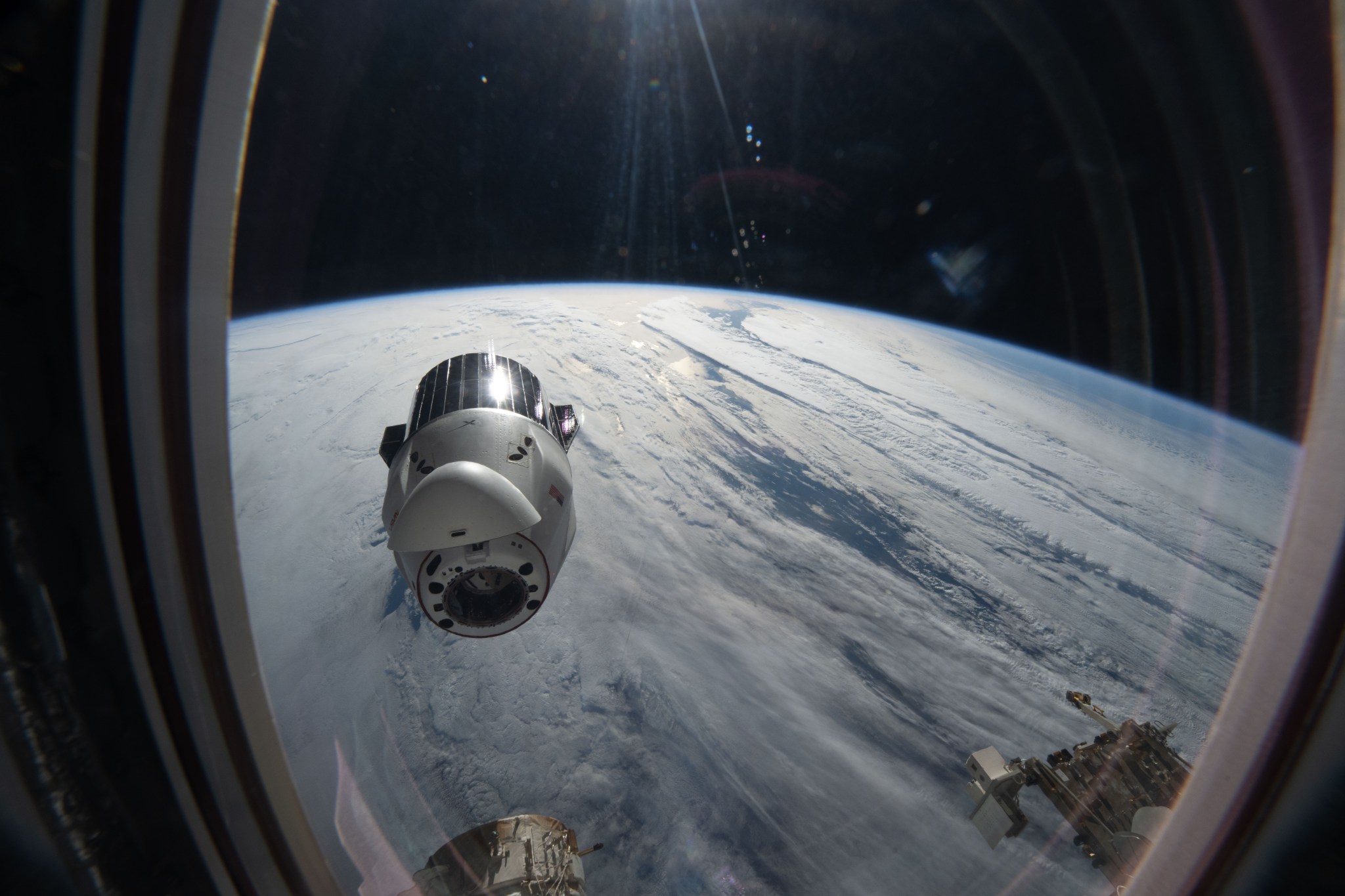
The Routine Beauty of Orbital Logistics
We have reached a point in the private space race where a Dragon spacecraft undocking from the International Space Station (ISS) is treated as a routine calendar event. NASA recently confirmed that the 35th SpaceX resupply mission is preparing to head home, carrying a haul of scientific data and physical hardware back to Earth. For most of the world, this is a footnote. For builders in the crypto and AI sectors, this is a masterclass in infrastructure stability.
The departure is scheduled for no earlier than mid-November, depending on the weather off the coast of Florida. While the headlines focus on the launch, the return is where the real value lies. This isn't just about bringing back empty containers; it is about data egress from one of the most hostile environments known to man. In our world, we talk about decentralized storage and data availability. NASA and SpaceX are doing it with physical mass and gravity.
The Data Egress Problem
In the crypto world, we often obsess over how to get data onto a chain or into a distributed ledger. We rarely talk about the physical constraints of retrieving that data when the network is remote. The Dragon spacecraft acts as a high-bandwidth, physical bridge. It carries samples that have been exposed to microgravity—biological experiments, material science tests, and hardware that needs to be inspected for wear and tear.
If you are building an AI model, your biggest bottleneck is often the quality and cleanliness of your training data. In space research, the "data" is the physical sample itself. The logistics of undocking from the Harmony module's space-facing port at 11:05 a.m. EST is a reminder that even in a digital-first era, physical hardware remains the ultimate source of truth. If the Dragon doesn't splash down safely, years of research are lost. There is no cloud backup for a crystallized protein sample.
Why Founders Should Care About Precision
Every time a Dragon capsule docks or undocks, it follows a rigorous protocol that leaves zero room for error. The software driving these maneuvers is autonomous, but the oversight is human. This hybrid model—AI-driven automation with human fail-safes—is exactly where we are heading with decentralized autonomous organizations (DAOs) and automated trading bots.
We often rush to push code to mainnet with the "move fast and break things" mentality. NASA and SpaceX don't have that luxury. If they break things, they lose a multi-million dollar craft and irreplaceable research. Founders should look at these resupply missions as a blueprint for protocol upgrades. You don't just flip a switch; you verify conditions, wait for the right "weather" (or gas prices), and execute with surgical precision.
The Decentralization of Space
There was a time when only governments could handle this level of complexity. Now, SpaceX handles the heavy lifting, while NASA focuses on the science. This is the ultimate example of outsourcing infrastructure. We see this in the current AI boom, where startups are building on top of massive compute clusters provided by legacy giants, and in crypto, where Layer 2s are offloading the heavy lifting from Layer 1 mainnets.
SpaceX is effectively a service provider for the ISS. They are the infrastructure layer. NASA is the application layer. This separation of concerns allows each entity to specialize. As a builder, you need to ask yourself: are you trying to build the rocket, or are you trying to build the experiment inside the rocket? Most founders get in trouble because they try to do both.
The Technical Reality of the Return
When the Dragon undocks, it doesn't just fall. It performs a series of burns to distance itself from the station. Then, it hits the atmosphere. This is the ultimate stress test. In web3, we talk about "stress testing" a network during a high-traffic mint. In space, a stress test involves 3,000-degree heat and a parachute deployment that has to work perfectly on the first try.
The hardware being returned in this 35th mission includes failed components that need forensic analysis. This is the "post-mortem" that every dev team should be doing after a bug is found. NASA doesn't just throw away broken parts; they bring them back to figure out why they broke. Builders often ignore the technical debt and failed code of the past, but the only way to build a resilient system is to analyze the wreckage of what didn't work.
The Practical Takeaway
What does this mean for you, sitting at your desk building the next big thing? It means that reliability is the only feature that matters in the long run. The reason SpaceX is on its 35th mission is because they proved they can do the boring stuff—like undocking and splashing down—over and over again without fail.
- Infrastructure first: Without the Dragon, the ISS is a stranded laboratory. Build the rails before you try to run the train.
- Data integrity: The value is in the samples, not the ship. Protect your users' data with the same intensity NASA protects these experiments.
- Redundancy: Weather can delay a splashdown. Have a backup plan for your project's launch or major updates.
We should stop looking at space travel as science fiction and start looking at it as a supply chain challenge. Whether you are moving tokens across a bridge or moving hardware from orbit to the ocean, the principles of security and verified delivery remain the same. The Dragon is coming home, and it’s bringing the results of hard work with it. That’s a cycle every founder should respect.
Read the original at NASA Breaking News →