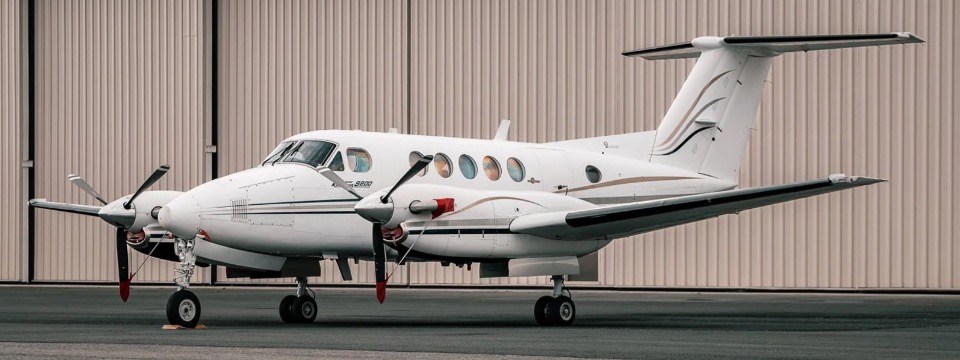
NASA is Flying Low in Texas
NASA is currently sending a Dynamic Aviation A200 aircraft to buzz over the farmlands of Transit, Texas. They aren't looking for aliens or testing new jet engines. They are hunting for gases. Specifically, they are measuring the emissions coming off large-scale animal feeding operations. It is a mission called FarmFlux, and while it sounds like a niche scientific endeavor, it represents a massive shift in how we track environmental data.
For years, agricultural emissions have been the wild west of climate data. We have general estimates, but the actual localized impact of these operations remains understudied and often ignored. By flying low and capturing granular data on particulates and gases, NASA is building a baseline. If you are a builder in the crypto or AI space, you should be paying attention to this. This isn't just about cows and tractors; it is about the future of verifiable physical data.
The Data Gap in the Real World
Most of our environmental data is top-down. We look at satellite imagery or massive atmospheric models. But the gap between a satellite's high-level view and what is actually happening on the ground is where the friction lies. In the world of DePIN (Decentralized Physical Infrastructure Networks), we talk a lot about using sensors to verify the real world. NASA is doing the heavy lifting here because our current ground-level infrastructure for tracking these emissions is practically non-existent.
Farmers are often wary of this kind of oversight, and for good reason. Data can be weaponized. If a government agency has the only copy of the truth regarding your farm's emissions, you are at their mercy. This is where the intersection of blockchain and environmental monitoring becomes interesting. We need systems where this data is transparent, verifiable, and ideally, owned by the people generating the impact rather than just a centralized body flying overhead.
Why Builders Should Care
Building in a vacuum is easy. Building tools that interface with physical reality is hard. The FarmFlux mission highlights three areas where founders and developers can find massive opportunities: data verification, automated reporting, and decentralized hardware.
- Verification of Impact: If you are building a carbon credit platform or an ESG tracking tool, your biggest enemy is fraud. NASA’s flights prove that the industry is moving toward high-resolution, empirical proof. Builders should look at how to integrate these types of high-fidelity data feeds into smart contracts to automate compliance.
- AI Pattern Recognition: NASA is going to collect mountains of raw data from these Texas flights. Turning that noise into actionable insights requires localized AI models that can distinguish between natural cycles and problematic spikes. There is a massive market for specialized AI that handles agricultural telemetry.
- Distributed Sensors: Instead of waiting for a NASA plane to fly over once every few years, the market needs a mesh network of low-cost sensors. The A200 aircraft is a stopgap. The long-term solution is a decentralized network of hardware that provides this data 24/7 without requiring a federal budget to operate.
The Skeptics View on Centralized Data
I’m naturally skeptical when a government agency is the sole arbiter of environmental truth. When data is gathered from a low-flying plane and processed behind closed doors, the results can be manipulated to fit a specific narrative. Whether you’re a founder or a farmer, you want data that is immutable. If the FarmFlux data suggests that certain feeding operations are catastrophic for the atmosphere, that data will be used to drive policy. If that data isn't open-source or cryptographically secured, it's just another tool for centralized control.
We have seen this play out in other sectors. When the data isn't public, the people affected by it have no way to audit the findings. For those of us in the crypto space, the mission is clear: we need to build the infrastructure that makes these periodic NASA flights redundant. We need a way for the ground-level reality to be recorded in a way that no one can fudge the numbers.
The Intersection of AI and Agriculture
We are entering an era where AI will manage our resources. But AI is only as good as the training data. The FarmFlux mission is essentially a massive data-labeling exercise. They are correlating specific ground activities with specific atmospheric results. Once we have enough of this data, we won't need the plane anymore. We will have models that can predict emissions based on herd size, feed type, and local weather patterns with startling accuracy.
Builders should be looking at how to bridge the gap between this research and commercial applications. If you can provide a farmer with an AI tool that predicts their emissions footprint before the regulator shows up, you have a viable business. The goal is to move from reactive compliance to proactive management.
Practical Takeaways for Founders
Don't look at NASA's Texas mission as a government project. Look at it as a roadmap for what the world will demand in five years. We are moving toward a "Proof of Physicality" model for the entire global economy. Every truck, every cow, and every factory will eventually have a digital twin that reports its status to the cloud.
If you are building today, focus on the hardware-to-software bridge. How do you get data from a sensor in a dusty Texas field onto a ledger or into a model without it being tampered with? How do you ensure the privacy of the land owner while still providing the transparency the public demands? These are the hard problems that define the next decade of tech.
The future of environmental tracking isn't a plane flying at five hundred feet; it's a million sensors talking to a decentralized ledger. NASA is just showing us where to look.
The mission in Transit, Texas, ends in November. But the data it produces will fuel policy and tech development for years. If you're a builder, stop looking at the screen for a second and look at the dirt. That’s where the next big data revolution is actually happening.
Read the original at NASA Breaking News →