The Low-Latency Classroom
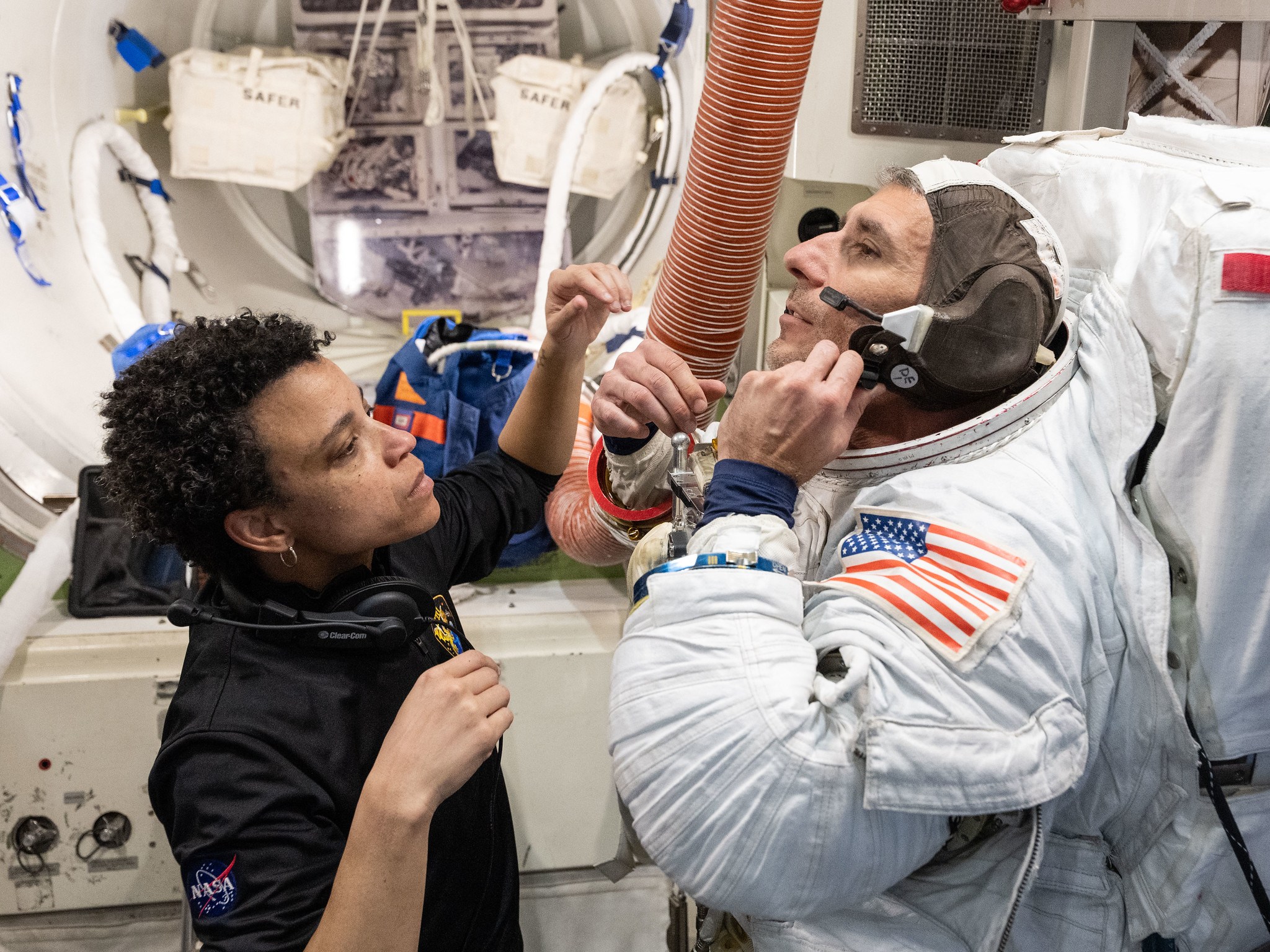
NASA is doing another Earth-to-space downlink. This time, it involves astronauts Jessica Watkins and Luke Delaney answering questions from students at Sally Ride Elementary in Florida. On the surface, it looks like a standard PR win for the agency. But if you’re building in the decentralized compute or AI space, you should be looking at the plumbing of this interaction, not just the smiles on the screen.
We are watching the early iterations of what I call the orbital edge. Right now, these calls are prerecorded or heavily buffered. The students ask a question, it travels through the Deep Space Network, and the response comes back with a lag that reminds us just how far away low-Earth orbit really is. For a founder, the takeaway isn't about the astronauts; it’s about the infrastructure required to make space-based communication feel as immediate as a Zoom call.
Building for the High Ground
When Watkins and Delaney field these questions, they are acting as the ultimate remote workers. They are living in a tin can moving at 17,500 miles per hour, yet we expect them to be accessible to a classroom in Florida. This is the ultimate stress test for data transmission. If you are developing protocols for decentralized physical infrastructure (DePIN), this is your roadmap.
The bottleneck in space isn't just distance; it's the cost of bandwidth and the lack of local processing power. Every time NASA streams to YouTube, they are showing us the demand for better data compression and smarter edge nodes. We talk a lot about AI at the edge on Earth—think smart cameras or autonomous cars. But the real edge is 250 miles up. We need systems that can process student questions, prioritize data packets, and handle encryption without needing a massive server farm on the ground to do the heavy lifting.
The Founder’s Perspective on STEM
NASA frames these events as STEM outreach. I see them as a recruitment drive for the next generation of infrastructure builders. We don't need more people who want to wear the suit; we need people who can solve the latency issues that make the suit a lonely place to be. When these students ask their questions, they are interacting with the first generation of true off-world residents.
From a builder's perspective, this is about presence. If we can't get a 10-year-old in Florida to have a real-time conversation with an astronaut without significant lag, we aren't ready for the commercialization of space. The venture capital flowing into space-tech is betting that we can bridge this gap. They are betting that the International Space Station is just the first of many nodes in a larger, decentralized network.
The real innovation isn't the rocket; it's the ability to stay connected to the ground without a tether.
Skepticism and Scale
I’m always a bit skeptical of these highly choreographed events. Prerecorded questions are safe. They prevent technical glitches and awkward silences. But they also mask the reality of how difficult space communication remains. If we want to build a real orbital economy, we have to move past the "recorded and uploaded" phase. We need live, raw, and unfiltered data streams.
For the crypto crowd, this is where decentralized storage comes in. Imagine a scenario where educational content from the ISS isn't just hosted on a YouTube channel, but is distributed across a global network of nodes, making it censorship-resistant and permanently accessible. We shouldn't rely on a single agency's media wing to preserve the history of our species' expansion into the stars.
The Takeaway for Builders
If you are looking for your next big project, stop looking at your feet. Look at the constraints NASA faces during these downlinks. They deal with packet loss, high latency, and massive power constraints. Those are the exact same problems we face when building decentralized networks on Earth, just magnified by the vacuum of space.
- Focus on Compression: How do we send high-def video with minimal data?
- Edge Processing: Can the ISS handle the AI processing for these calls locally?
- Resilient Protocols: How do we maintain a connection when the station passes behind the horizon?
The Sally Ride Elementary event is a small step, but it’s a clear signal. The demand for space-based interaction is growing. The kids in that classroom won't be satisfied with prerecorded videos when they enter the workforce. They will expect real-time, high-bandwidth connectivity to wherever humans happen to be—even if that's in orbit.
We are building the rails for a world that doesn't end at the atmosphere. Don't get distracted by the spectacle of the astronauts. Focus on the data. That’s where the real value is being created.
Read the original at NASA Breaking News →