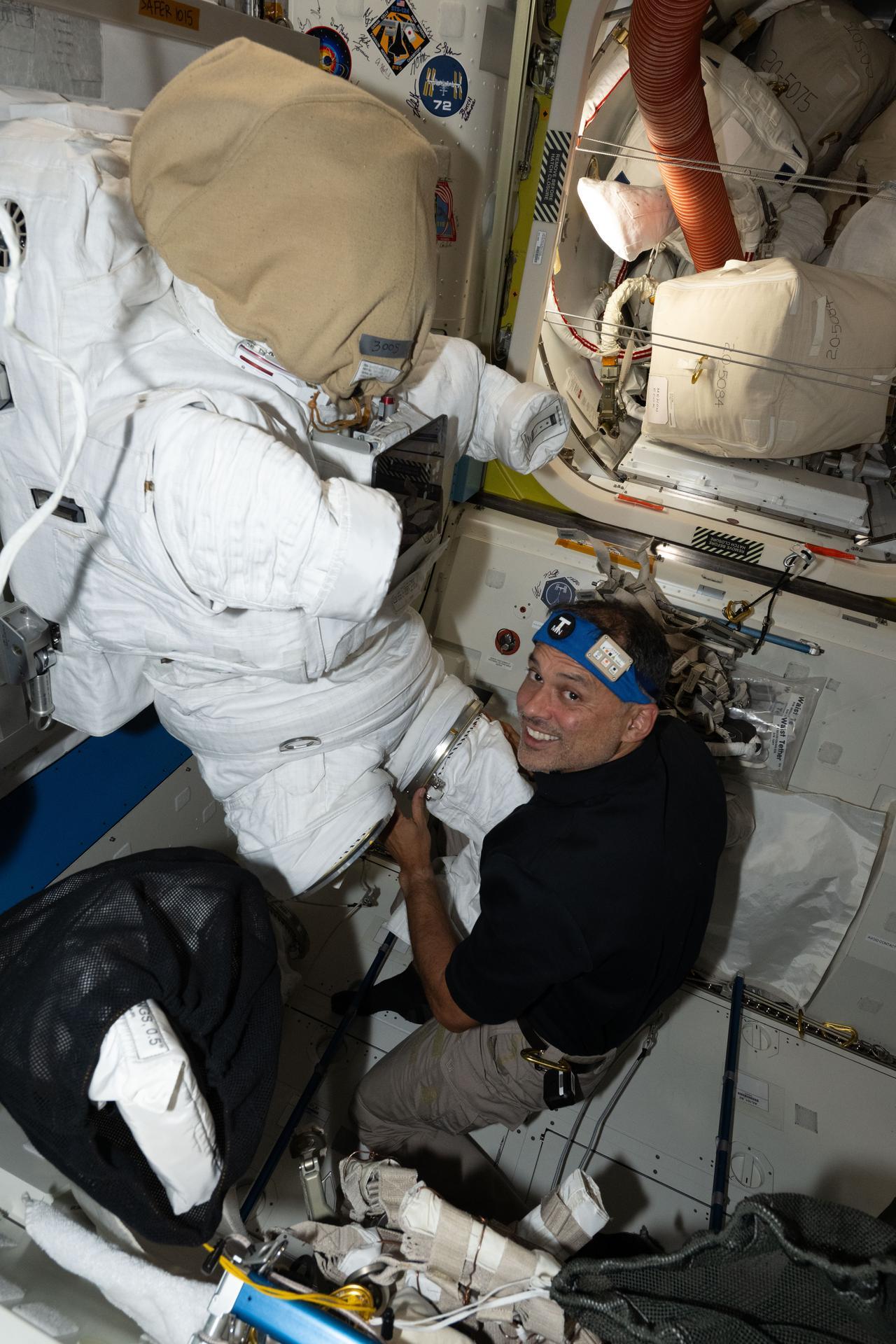
We have a habit in the tech world of looking at massive government agencies like NASA and thinking they are relics of a slower era. But if you look at how they are handling National STEM Day this year, you will see a masterclass in modern attention management. They are not just putting an astronaut behind a podium; they are pairing a veteran of the International Space Station, Anil Menon, with one of the most effective creators in the digital space, Mark Rober.
The Creator Economy Meets Deep Space
For those of us building in AI and crypto, we often talk about the 'onboarding problem.' We build complex systems and then wonder why the average user doesn't care. NASA has faced this for decades. Physics is hard, and space is distant. By bringing in Rober, the founder of ClassCrunchLabs Foundation, NASA is admitting that the medium is just as important as the message. They are shifting from a lecture-based model to a creator-led model.
As a founder, I find this shift fascinating. It is a recognition that technical excellence is no longer enough to win the hearts and minds of the next generation of builders. You need narrative. You need a hook. When NASA connects students directly to the ISS for a live call, they are utilizing the 'proof of work' that actually resonates with a kid growing up in the age of TikTok: real-time, interactive, and high-stakes communication.
Why Builders Should Care About National STEM Day
You might be wondering what a student call to the space station has to do with your seed round or your smart contract audit. The answer is the talent pipeline. We are currently in a race to build autonomous systems and decentralized infrastructure, but the limiting factor is rarely capital anymore—it is the supply of humans who can actually think through these problems.
When we look at events like this, we should see them as the top of the funnel for the entire engineering ecosystem. The students watching this call today are the ones who will be debugging the AI agents we deploy five years from now. If we don't support the bridge between 'cool YouTube science' and 'hard engineering reality,' the talent gap will only widen.
The Authenticity Factor
What makes this specific event work is the lack of a filter. A live in-flight call from space is inherently unpredictable. It has a raw quality that polished PR campaigns lack. This is a lesson for every founder: transparency is a feature, not a bug. Anil Menon being asked questions in real-time while floating in microgravity is a powerful visual because it is real. In an era of deepfakes and generative filler, 'live' is the ultimate verification tool.
- Real-world science: Moving away from theoretical textbooks to actual orbital applications.
- Interactive engagement: Shifting students from passive consumers to active participants.
- Bridge building: Connecting government resources with private creator platforms to maximize reach.
The Skeptical Take
I have to be honest: one live call doesn't fix a broken education system. We can't just throw a few YouTube stars at the problem and expect every student to suddenly master calculus. There is a risk that these events become 'edutainment'—plenty of entertainment, very little education. The real test is what happens after the call ends. Does the Office of STEM Engagement have the infrastructure to catch the interest these events generate and turn it into actual skills?
For those of us in the private sector, this is where we have to step up. NASA can provide the inspiration, but the industry provides the destination. If we want the next generation to build meaningful things instead of just engagement-bait apps, we have to provide the tools and the mentorship that follow these high-profile events.
A Founder's Perspective on Scaling Education
Scale is the hardest part of any build. NASA is trying to scale inspiration. By leveraging Rober’s foundation, they are tapping into an existing distribution network. This is a classic 'build vs. buy' or 'partner vs. build' scenario. Instead of trying to build a new social media platform or a new way to reach kids, NASA is plugging into where the kids already are. This is a smart move that more legacy organizations should emulate.
The future of technical literacy depends on our ability to make hard problems look like worth-while adventures rather than chores.
We are seeing a convergence of fields. Space exploration, robotics, and digital content creation are no longer separate silos. They are part of a singular push toward a more technically literate society. For a founder, this means your hiring pool is directly tied to the success of these outreach programs.
The Takeaway for the Tech Community
Stop looking at STEM outreach as a 'nice to have' or a corporate social responsibility checkbox. It is a strategic necessity. Whether it is through NASA or decentralized learning platforms, the goal is the same: creating a culture where building is celebrated over consuming.
If you are a builder, take a page out of the NASA playbook. Find ways to make your technical milestones accessible. Use the creators who understand the audience to translate your 'space station' into something a student can understand. We need more than just engineers; we need communicators who can explain why the engineering matters.
NASA’s National STEM Day event is a reminder that the most sophisticated technology in the world is useless if there is no one left who knows how to run it. Let’s hope the call with Menon and Rober sparks more than just a few minutes of curiosity—we need it to spark a decade of disciplined building.
Read the original at NASA Breaking News →