The Early Exit
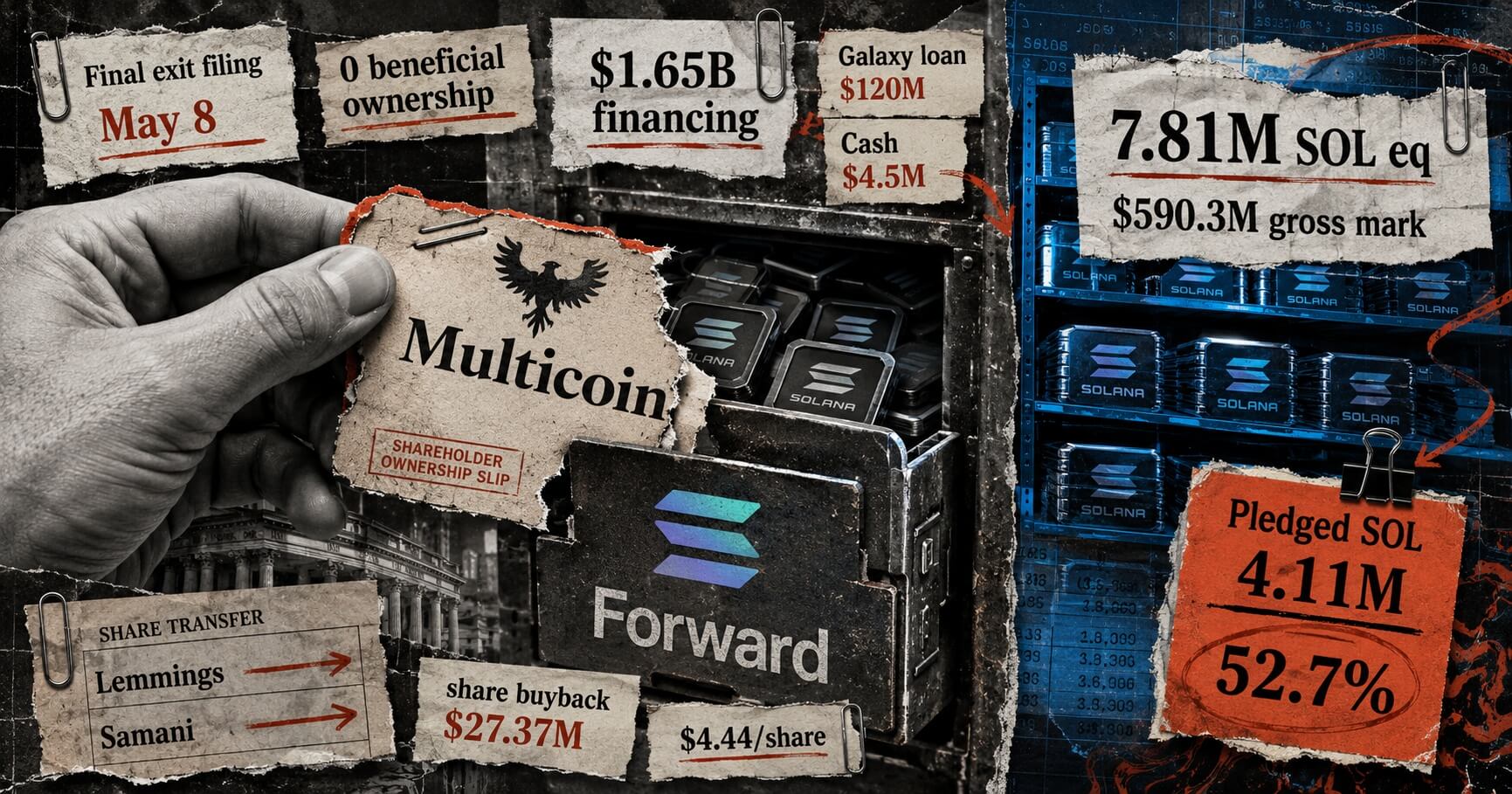
In the crypto venture world, eight months is a lifetime, but for a massive treasury management project, it is a blink of an eye. Multicoin Capital, a firm that has essentially tied its identity to the success of the Solana ecosystem, is walking away from the $1.65 billion treasury company it helped birth. When this entity launched, the narrative was about institutional-grade stability and sophisticated management for the Solana ecosystem. Now, the lead investor is out, and the books look a lot more like a high-stakes leverage play than a boring vault.
For those of us building in this space, this isn't just another headline about a VC exit. It is a lesson in how quickly the internal mechanics of a "billion-dollar" entity can shift. While the total value sounds impressive, a closer look at the financial health of the project reveals a different story. Cash reserves have dwindled to around $4.5 million, which, for an operation of this supposed scale, is remarkably thin. When the cash is low and the leverage is high, the margin for error disappears.
The Debt and the Pledge
The most striking part of this situation isn't the exit itself, but the debt structure left behind. We are looking at approximately $120 million in loans from Galaxy. To secure this kind of capital, the entity has had to pledge a massive portion of its assets. Over 52% of the reported SOL equivalents are currently pledged. In plain terms, more than half of what the company says it owns is actually serving as collateral for its debts.
From a founder's perspective, this is a red flag on risk management. There is a fine line between using your assets to generate growth and becoming a hostage to your creditors. When a major backer like Multicoin leaves while the debt-to-equity ratio is this skewed, it suggests they may have seen a ceiling to the project's viability or simply didn't want the reputational risk of a potential liquidation event if the market turns south.
Why Founders Should Care
If you are building a protocol or a DAO, you are likely thinking about treasury management. You want your native tokens to work for you. However, this situation shows the danger of over-financialization. When you turn your treasury into a complex series of loans and hedges, you stop being a builder and start being a hedge fund. And as we have seen time and again, when builders try to play hedge fund manager, the results are rarely pretty.
- Liquidity is King: Having a billion dollars on paper means nothing if you only have $4 million in the bank and a massive debt bill coming due.
- Transparency Matters: The shift in Multicoin's involvement highlights that investors will protect their own downside first. If you are relying on a "big name" to keep your project afloat, you are on shaky ground.
- Leverage Kills: Pledging over 50% of your primary asset is a gamble on perpetual upward price action. If SOL takes a significant dip, the liquidation pressure on that $120 million loan could be catastrophic.
The Narrative vs. The Numbers
We often hear about these massive treasury launches as a sign of ecosystem maturity. But maturity isn't measured by the size of the initial check; it is measured by the sustainability of the operation. This project was supposed to be a cornerstone of Solana's institutional infrastructure. Instead, it looks like a case study in aggressive leverage that couldn't sustain its primary backer's interest.
I have always been skeptical of projects that prioritize financial engineering over actual utility. If your treasury management strategy requires a PhD in derivatives to understand, you are probably taking too much risk. The departure of Multicoin signals that the initial thesis—whatever it was—has likely changed. Whether they are taking profits or cutting losses doesn't really matter. What matters is that the "Solana Treasury Company" is now operating with a fraction of the liquidity it needs and a mountain of debt.
The Long Road Ahead
What happens next? The entity still holds a significant amount of SOL-based assets, but the weight of that Galaxy loan will dictate every move they make. They are no longer in control of their own destiny; the market is. For builders in the Solana ecosystem, this is a reminder to keep your own house in order. Don't assume that because a project has the backing of the biggest VCs in the space, it is fundamentally sound.
Real builders don't need a $1.65 billion treasury to innovate, but they do need to understand how these giants can collapse under their own weight.
The takeaway here is simple: keep your treasury simple and your leverage low. The moment you start pledging your future to pay for your present, you have already lost the game. Multicoin is moving on to the next thing, but the Solana ecosystem is left to deal with the fallout of a highly leveraged experiment that lost its lead scientist.
Takeaway
A billion-dollar treasury is a liability if it is built on debt and thin liquidity. When lead investors exit a project with 50% of its assets pledged as collateral, it is time to stop looking at the valuation and start looking at the exit door.
Read the original at CryptoSlate →