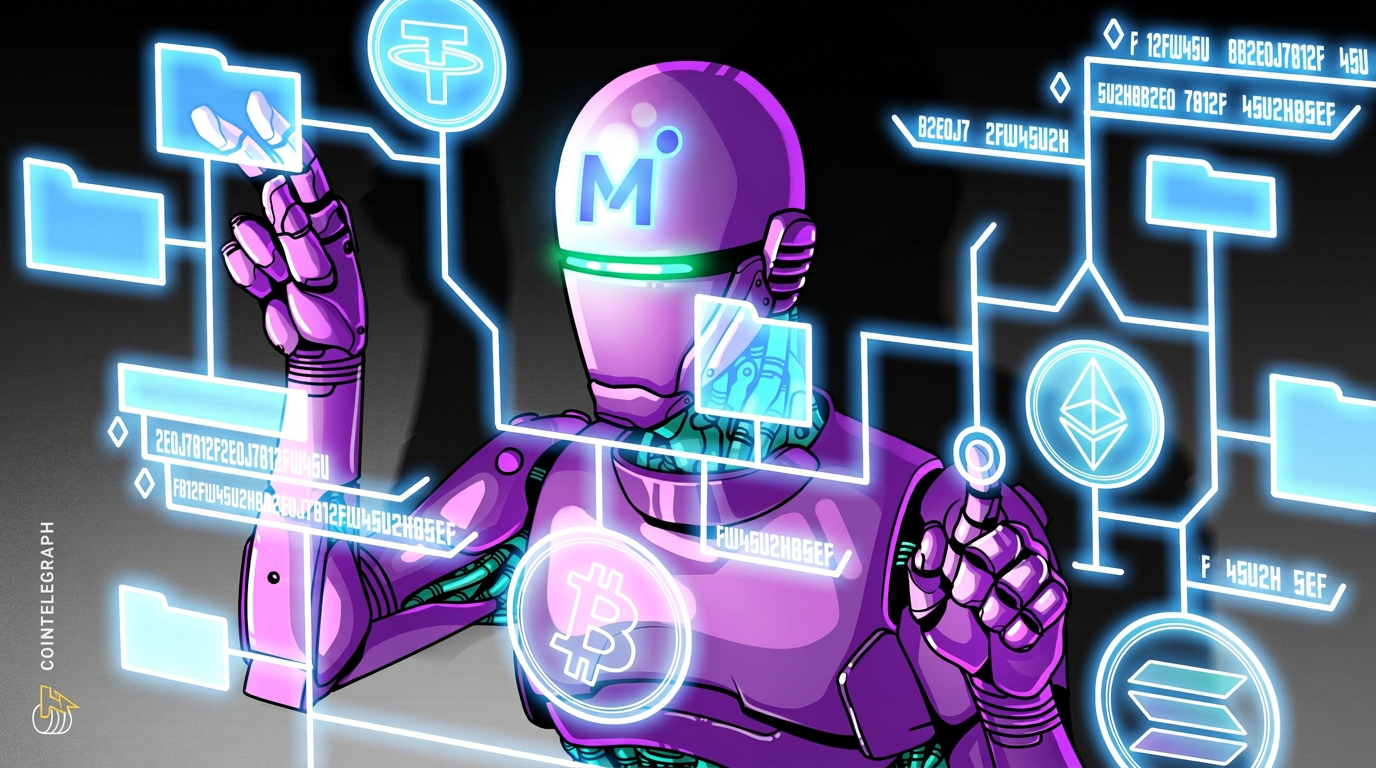
The dream of seeing an AI agent actually do something useful beyond summarizing an email often hits a wall regarding money. We have LLMs that can write code, plan travel, and analyze spreadsheets, but they can't easily buy anything. If you want ChatGPT or Claude to perform a transaction, you usually have to step in, pull out a credit card, and handle the checkout yourself. That is the friction point MoonPay is trying to solve with their new product, PayBox.
What PayBox Actually Is
PayBox is essentially a non-custodial vault designed to live within the ecosystem of popular AI chatbots like ChatGPT and Claude. It allows users to deposit funds and then grant permissions to these AI models to execute financial tasks on their behalf. We aren't just talking about buying a coffee; the integration is built specifically for the crypto world, covering token swaps, cross-chain bridges, and direct purchases.
For a founder, the architectural choice here is the most interesting part. MoonPay is leaning into the non-custodial side of things. You aren't giving your private keys to Sam Altman or Dario Amodei. Instead, you are setting up a secure environment where the AI can propose or initiate a transaction, but the user remains the ultimate gatekeeper of the assets. It is an attempt to solve the agency problem without turning your AI into a potential bank robber.
The Shift to Agentic Commerce
We are moving out of the era of chatbots and into the era of agents. A chatbot talks; an agent acts. For an agent to act in the physical or digital economy, it needs a wallet. Until now, the solutions have been clunky—mostly API workarounds that require a deep technical background to set up. By targeting the major consumer AI platforms, MoonPay is betting that the average user wants their favorite LLM to handle the messy work of DeFi without leaving the chat interface.
Imagine asking an AI to find the best yield on a stablecoin across three different chains and then actually moving the money for you. That is the workflow being enabled here. For builders in the Web3 space, this signals a shift in UI/UX requirements. If your protocol isn't readable or accessible by an AI agent through a vault like PayBox, you are essentially invisible to a growing segment of automated users.
Why the Founder Perspective Matters Here
I have spent a lot of time looking at how AI interacts with sensitive data. The primary concern for any sensible founder is security. When you bridge an LLM—which is essentially a probabilistic text engine—to a financial vault, you are inviting a certain level of unpredictability. MoonPay addresses this by using a vault structure that keeps the user in the loop, but it also raises questions about the definition of authorization.
If we automate too much, we risk losing the friction that prevents bad decisions. In crypto, where transactions are irreversible, a hallucinating AI could theoretically initiate a bridge to a malicious contract. The safeguard in PayBox is the non-custodial nature of the vault, but builders need to be honest about the fact that as we move toward full automation, the margin for error shrinks to almost zero.
Crypto as the Native Language of AI
There is a reason MoonPay didn't launch this for traditional bank accounts first. Legacy banking is too slow for AI. A bank transfer takes days to settle and involves a dozen middle-men. Crypto, on the other hand, is programmable and settles in minutes or seconds. It is the only financial infrastructure that matches the speed of a processor.
By enabling ChatGPT and Claude users to authorize crypto transactions directly, the industry is finally admitting that AI agents are the most likely power users of the next decade. These aren't just tools for humans; they are becoming the primary consumers of blockchain blockspace. If you are building a dApp or a token today, you have to ask yourself: is this easily consumable by a service like PayBox? If the answer is no, you are building for a shrinking market of manual human clickers.
The Risks of Over-Integration
I tend to stay skeptical of anything that makes spending money too easy. The psychological barrier of a checkout screen is a feature, not a bug. It forces a moment of reflection. When we move into a world where an AI says, I found a better deal, should I swap? and you blindly click yes, we are delegating our financial intuition to a machine.
For developers, the challenge is to build interfaces that provide enough transparency so that a user—or an AI agent—knows exactly what is happening under the hood. We cannot rely on the AI to explain the risks to the user, because the AI doesn't always understand the risks itself. The responsibility stays with the developers of the vault and the underlying protocols to ensure that authorization isn't just easy, but informed.
The Hard Reality for Builders
The launch of PayBox is a signal that the infrastructure is finally catching up to the hype. However, don't mistake this for a finished product. This is a first-generation bridge. As a builder, your focus should be on how these agents interact with your smart contracts. We are entering an era of automated liquidity. If an AI can move millions of dollars across chains with a single prompt, the volatility and speed of the markets could increase significantly.
Instead of just trying to get human users to land on your website, you should be looking at how to make your protocol the preferred choice for AI agents. This means cleaner documentation, more robust APIs, and a focus on security that can withstand the high-frequency demands of machine-led commerce.
The Takeaway
MoonPay's PayBox is a pragmatic step toward making AI agents financially autonomous without sacrificing asset custody. It validates the idea that crypto is the preferred payment layer for AI. For founders, the message is clear: the future of Web3 isn't just better UI for humans, but seamless integration for the bots that will soon be managing our portfolios.
Read the original at Cointelegraph →