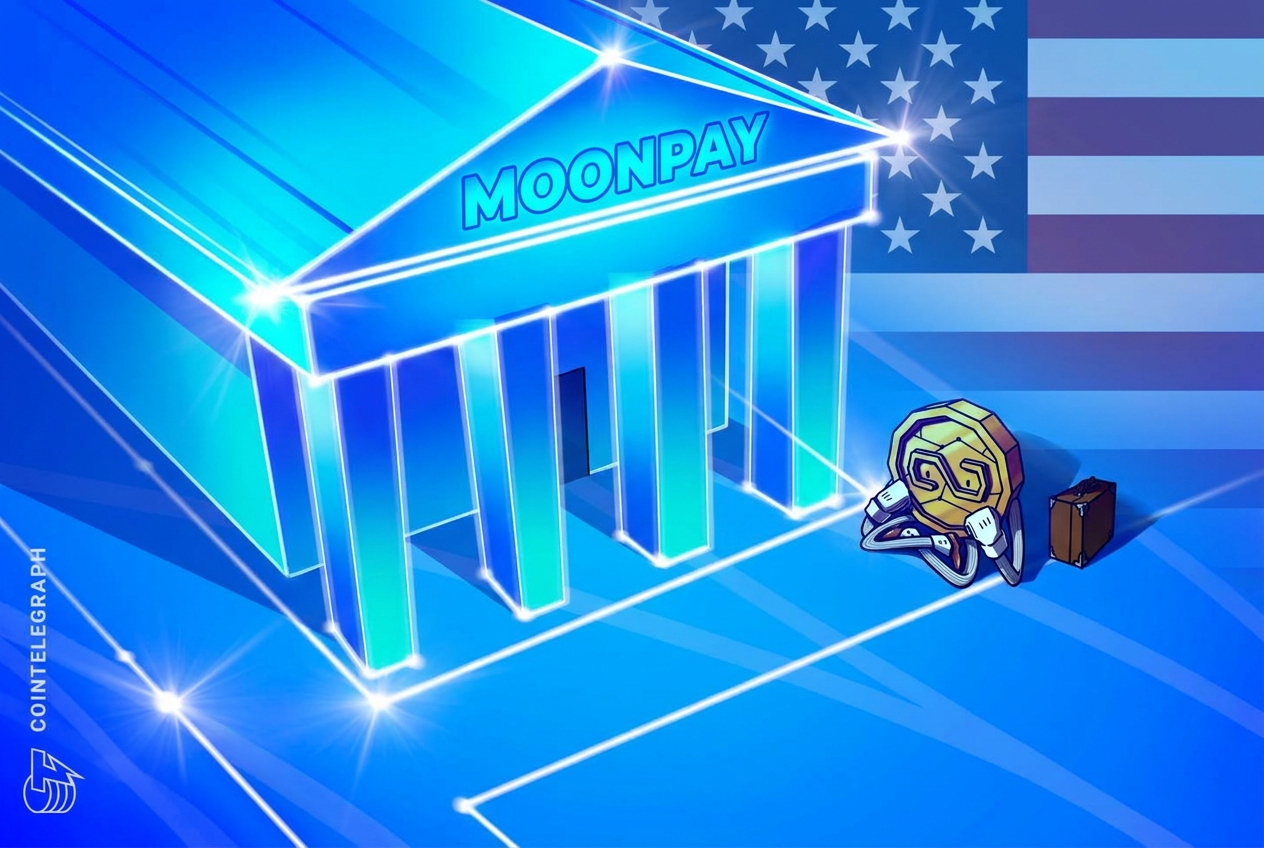
MoonPay is making a move that would have seemed suicidal two years ago. The crypto payments firm is officially applying for a national trust bank charter from the Office of the Comptroller of the Currency. This isn't just a paperwork exercise; it is an attempt to graduate from being a simple fintech middleware provider to a federally regulated financial institution.
If approved, this charter would allow MoonPay to issue and redeem stablecoins, manage reserves, and provide digital asset custody under the same roof as traditional banks. For a company known primarily for its on-ramp widgets, this is a massive pivot toward the base layer of the financial stack. It signals that the era of moving fast and breaking things is over, replaced by an era of asking for permission and building fortresses.
The End of Arbitrage
For a long time, the crypto industry operated on regulatory arbitrage. You found the friendliest state or the quietest offshore jurisdiction, set up shop, and hoped the federal regulators wouldn't notice your growth. MoonPay is doing the exact opposite. By going straight to the OCC, they are choosing the most difficult path possible.
Why would a founder do this? Because the cost of being an outsider is becoming higher than the cost of compliance. Dealing with a patchwork of state-level money transmitter licenses is a nightmare for scaling. A federal charter effectively pre-empts state laws, giving a company a single set of rules to follow. It’s a massive upfront investment in bureaucracy to save a decade of legal headaches later.
What This Means for Stablecoins
The core of this move is about stablecoins. Right now, most stablecoin issuers have to rely on third-party banks to hold their cash reserves. This creates a point of failure. If your banking partner gets spooked by the FDIC and shuts your account, your stablecoin loses its peg or its utility overnight. We saw this with the Silicon Valley Bank collapse and its impact on USDC.
By becoming a bank, MoonPay wants to cut out the middleman. They want to be the vault. If they can issue their own assets and manage the reserves internally under federal supervision, they become one of the most trusted names in the space by default. For builders, this means more options. We have been living in a duopoly of Tether and Circle for too long. Competition at the custody level is healthy for the ecosystem.
Building in a Glass House
There is a catch to this strategy. When you become a national trust bank, the government lives in your server rooms. Every transaction, every KYC check, and every reserve report is scrutinized by federal auditors. For the privacy-focused wing of crypto, this is a nightmare. For the institutional wing, it’s the only way forward.
Builders need to realize that the "shadow banking" era of crypto is ending. If you are building an application that relies on stablecoin liquidity, you need to look at the pedigree of the issuer. A charter like the one MoonPay is seeking provides a level of insurance and predictability that a random offshore entity can’t match. It transforms a stablecoin from a speculative instrument into a legitimate boring utility.
The Founder's Perspective
I look at this move and see a founder who is tired of playing defense. Every time a bridge hacks or a bank fails, crypto companies have to spend months explaining to their users why their money is still there. Having an OCC charter is the ultimate "shut up" button for skeptics. It says that the United States government has vetted your math and your management.
However, this level of regulation is expensive. It requires a massive legal team, compliance officers who used to work at the Fed, and a culture that prioritizes safety over speed. Small startups can't do this. This is MoonPay pulling up the ladder behind them. They are setting a standard that only the top 1% of the industry can afford to meet.
- Federal Oversight: Moving from state licenses to a national charter simplifies scaling but increases scrutiny.
- Direct Custody: Managing reserves internally removes third-party bank risk.
- Stablecoin Utility: Federal backing makes digital assets more palatable for traditional institutional integration.
The Takeaway for Builders
If you are building in the DeFi or payments space, keep a close eye on this application. If MoonPay succeeds, they will likely become the preferred infrastructure for any U.S.-based app that needs stablecoin rails. You should be asking yourself: are you building on top of "cowboy" infrastructure or "fortress" infrastructure?
The market is bifurcating. There will be the offshore, permissionless world and the onshore, chartered world. MoonPay is placing a multi-million dollar bet that the onshore world is where the real volume will eventually live. As a founder, you don't necessarily need to get your own bank charter, but you do need to decide which side of that line your product resides on.
The move toward federal charters isn't just about compliance; it's about survival in an environment where traditional banking partners are increasingly unreliable.
We are seeing the professionalization of the on-ramp. It’s no longer about just getting a credit card to buy some Bitcoin. It’s about creating a regulated, audited pipeline for the world's capital to move into digital formats. If MoonPay pulls this off, they aren't just a crypto company anymore—they are a bank that happens to use a blockchain.
Read the original at Cointelegraph →