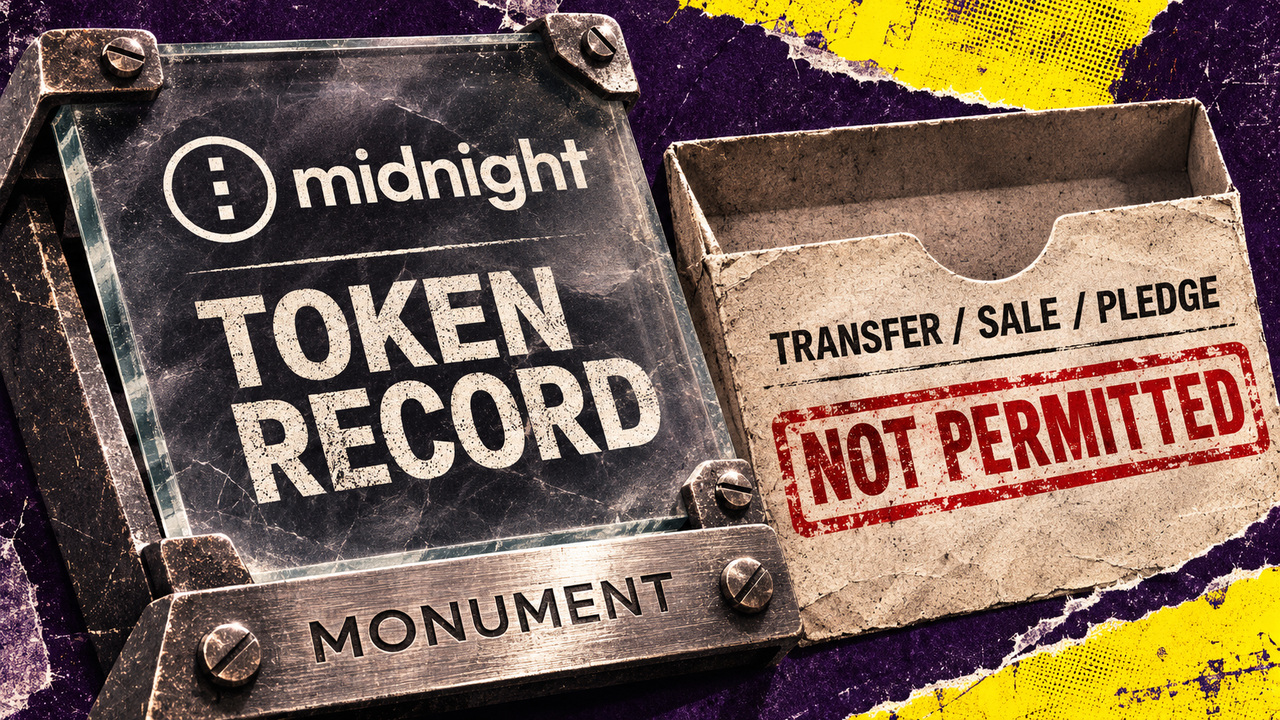
We keep hearing that the institutions are coming. For years, the rallying cry for blockchain builders has been about the arrival of the big banks. The theory is simple: once the old guard puts their assets on-chain, crypto becomes legitimate. But now that it's actually happening, the reality looks a lot more like a walled garden than a revolution.
The Midnight Experiment
Monument Bank recently made waves by putting £250 million on Midnight, a privacy-focused sidechain developed by Input Output Global. They are calling it a Tokenised Saver. On the surface, it sounds like a massive win for the ecosystem. A licensed UK bank is moving substantial capital onto a blockchain. But if you look under the hood, this isn't the kind of decentralized finance that most founders are building toward.
Midnight is designed to handle sensitive data, which makes it a natural fit for banking regulations. It uses zero-knowledge proofs to allow for identity verification without exposing everything to the public ledger. For a bank, this is the holy grail. They get the efficiency of a distributed ledger without violating privacy laws or exposing their clients' net worth to every bot on Etherscan.
Control vs. Freedom
The catch here is in the fine print of how these tokens actually function. The Tokenised Saver mirrors a traditional bank deposit, but that's where the similarities to crypto assets end. These tokens carry no independent rights. You cannot transfer them to a friend. You cannot use them as collateral on a third-party lending protocol like Aave or Morpho. You can't even move them to a non-custodial wallet without the bank's explicit permissioning layer.
For builders, this is a bit of a reality check. We talk about composability as the superpower of blockchain—the ability for one app to plug into another seamlessly. But Monument’s implementation specifically breaks that chain. The bank is essentially using Midnight as a high-tech internal database. They get the backend benefits of blockchain, like instant settlement and automated auditing, while keeping the user locked inside their proprietary ecosystem.
The Regulatory Irony
There is a specific irony in the way these bank-led projects are structured. The marketing suggests a move toward the future of finance, but the legal structure is anchored firmly in the past. Because Monument is a regulated UK bank, they are bound by strict rules regarding capital and liquidity. They cannot allow tokens representing deposits to float freely on the open market because that would effectively turn those tokens into a new form of unregulated currency or a shadow banking product.
This is the wall that every founder eventually hits. You can build the most elegant smart contract in the world, but if you want to touch "real" money, you have to play by the rules of the people who currently hold it. Monument isn't hiding these rules, but they aren't exactly shouting them from the rooftops either. They are protecting their license, which is their most valuable asset.
What This Means for Founders
If you are a developer looking at this and thinking it's a signal to build apps for bank tokens, be careful. The "Tokenised Saver" isn't a building block; it's a closed loop. If a token cannot be transferred or used as collateral, it has zero utility outside of the issuing institution. It is, for all intents and purposes, a digital receipt.
However, there is a silver lining. The fact that a bank is willing to put £250 million on a sidechain proves that the technology is ready for prime time. The scalability and privacy concerns that once kept institutions away are being solved. The hurdle is no longer the code; it's the compliance.
- Banks want the efficiency of ZK-proofs without the volatility of open markets.
- Institutional DeFi will likely remain permissioned and non-composable for the foreseeable future.
- The real opportunity for builders is in creating the middleware that helps these banks talk to each other, rather than trying to pull their assets into the public DeFi space.
The Middleware Opportunity
Instead of trying to fight the bank's need for control, the smart move for founders is to build the plumbing that makes these restricted tokens more useful within their own lanes. If Monument and five other banks all have tokens on Midnight, there will be a massive need for secure, private bridges and settlement layers that respect their regulatory constraints.
We are entering an era of "Institutional Silos." These are blockchains that look like crypto but behave like private intranets. It might not be the cypherpunk dream of a world without banks, but it is the bridge to mass adoption. The question is whether builders want to spend their time building the bridges or trying to tear down the silos.
The bank is essentially using Midnight as a high-tech internal database. They get the backend benefits of blockchain while keeping the user locked inside.
We need to stop pretending that every institutional announcement is a win for decentralization. This is a win for bank efficiency. It's a win for the Midnight network's stress-testing. But for the end user, it's just another way for a bank to manage their books. The real innovation will happen when a bank finally figures out how to allow for limited composability without losing their license. Until then, stay skeptical of the headlines.
Read the original at CryptoSlate →