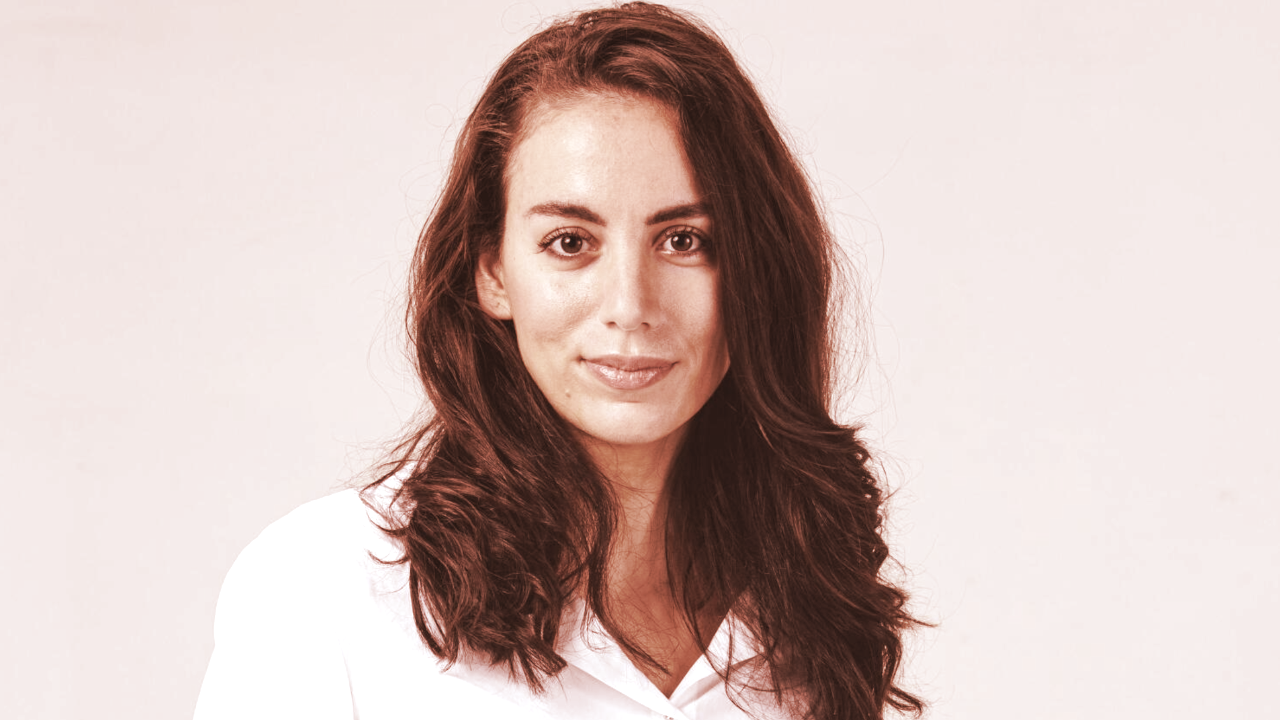
When Mira Murati left her post as Chief Technology Officer at OpenAI, the industry collectively held its breath. She was the architect behind the scaling of GPT-4 and the public face of the most powerful closed-source shop in the world. Now, we finally see her first move outside those walls, and it is a pivot that should make every builder take note. Her new project, Inkling, has launched its first AI model, and the biggest headline isn't its parameter count—it is the fact that it is fully open-source.
The Great Philosophical Shift
For years, Murati was instrumental in maintaining the velvet rope around San Francisco's most guarded weights. OpenAI started with the word open in its name but quickly became the poster child for proprietary tech. Now, liberated from the boardrooms and the Microsoft partnership, Murati is leaning into the open-weights movement. This is more than just a product launch; it is a statement of intent. It suggests that the people who actually built the leading closed models realize that the future of innovation doesn't happen behind an API key.
Inkling is not trying to be a GPT-4 killer out of the gate. If you look at the raw benchmarks, it isn't unseating the top-tier Chinese models like DeepSeek or Qwen that have dominated the open-source leaderboard recently. But that is missing the point. For Western developers, Inkling represents a shift back toward domestic, high-quality open-source infrastructure that isn't tethered to the whims of a trillion-dollar cloud provider or the regulatory entanglements of overseas development.
Why Builders Should Care
As a founder, I look at the current AI landscape and see a massive bottleneck. We have spent the last two years building on borrowed ground. If you build your startup on Top-Tier Closed Model X, you are essentially a tenant. They can change the pricing, nerf the weights, or change the safety filters overnight, and your product breaks. Open-source models like Inkling give us the keys to the house. You can fine-tune, you can self-host, and most importantly, you own the stack.
Inkling’s entry is significant because of the pedigree behind it. Murati knows where the bodies are buried in large language model development. She knows what worked at GPT-4 and, perhaps more importantly, what didn't. By releasing an open-source model, she is providing a foundation that is likely optimized for the kind of reliability and safety transparency that corporate-backed labs usually hide behind proprietary layers.
The Performance Gap
Let's be honest about the numbers. We often see a lot of hype every time a new model drops. Inkling is a solid performer, but it’s entered a crowded room. Currently, the most efficient open-weight models are coming out of China. Those models are incredibly fast and remarkably cheap to run. However, there is a recurring concern among Western enterprises regarding data sovereignty and the long-term stability of using those weights in a production environment.
Inkling fills a vacuum. It provides a Western-developed alternative that prioritizes the open-source ethos. For a developer sitting in a garage or a CTO at a mid-market firm, having a model with this level of institutional knowledge baked into it—without the closed-source baggage—is a massive win. It’s about having a tool that you can actually trust for the long haul.
- Ownership: You aren't just hitting an endpoint; you are running the engine.
- Transparency: Open weights mean researchers can actually see how the model reaches its conclusions.
- Customization: Vertical-specific fine-tuning is much more effective when you have full access to the base model.
The Reality Check
We shouldn't get carried away by the celebrity status of the founder. In the AI world, your previous title doesn't make your weights more accurate. Inkling has work to do. The first release is a foundation, not a finished skyscraper. To truly win over the community, they need to prove they can iterate faster than the giants they left behind. Open source is a grind. It requires a different kind of community management and a willingness to accept that people will use your tool in ways you didn't intend—and that’s a good thing.
The skepticism comes from how many times we’ve seen high-profile exits result in products that look a lot like their predecessors but with less funding. To avoid that trap, Inkling needs to double down on the developer experience. It’s not just about the tokens; it’s about the documentation, the ease of implementation, and the ecosystem of tools built around it.
The Bottom Line for Founders
If you are planning your roadmap for the next eighteen months, you can no longer ignore the open-source movement. The gap between closed and open models is narrowing to the point of irrelevance for most business applications. You don't need a massive closed model to do 90% of what customers actually pay for. You need a reliable, controllable, and cost-effective model.
Murati’s pivot to open weights is a signal that the era of the "closed garden" might be peaking. When the very people who built the walls start handing out sledgehammers, you should pay attention. Inkling isn’t the finished product yet, but it is a very clear sign of where the power is shifting.
The future of AI isn't going to be a single oracle in the cloud; it's going to be a million specialized engines running on local hardware.
My takeaway is simple: keep an eye on Inkling, but start practicing your open-source implementation now. The days of being a simple API wrapper are numbered. The real value is moving to the people who can take these open weights and build something specific, defensible, and independent.
Read the original at Decrypt →