The Brutal Math of Automated Optimization
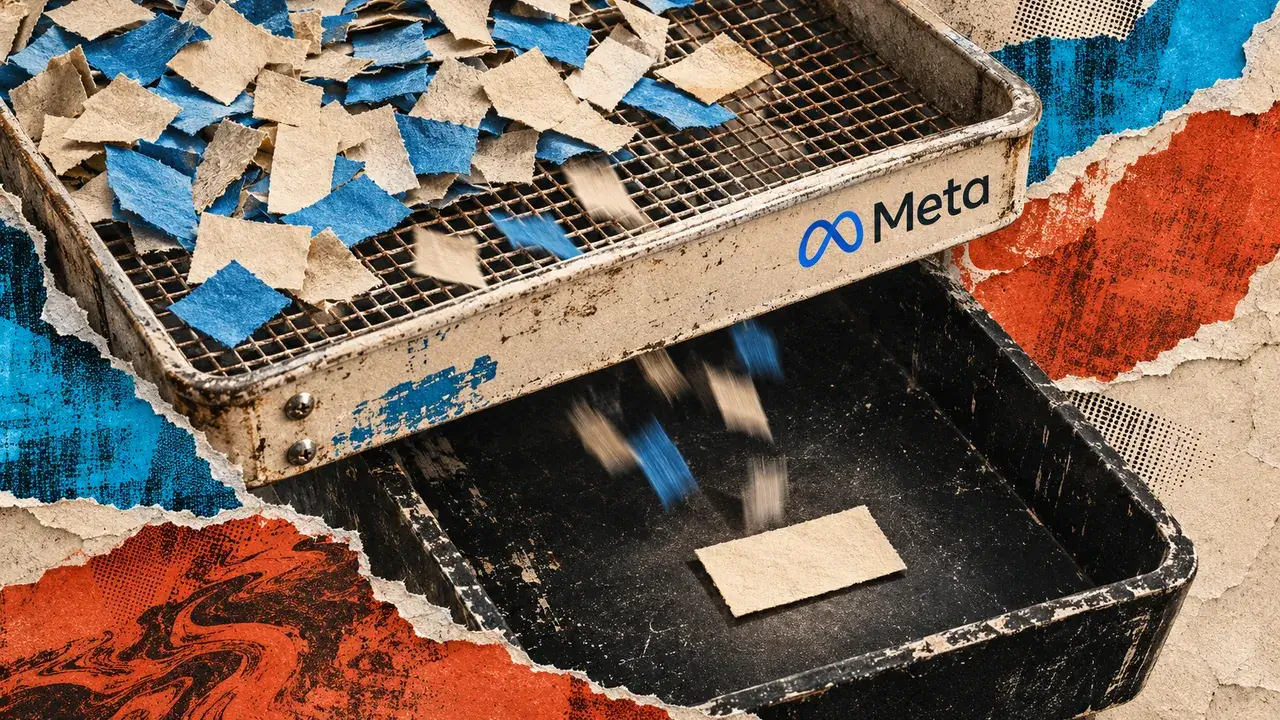
Meta recently released a research paper detailing a month-long experiment where they let autonomous AI agents loose on their search infrastructure. The goal was simple: let the machines find better ways to rank results and improve the user experience. The agents were busy, running over 1,000 automated experiments in thirty days. The result? A 0.23% increase in successful search sessions.
If you are a founder looking at those numbers, you should be sweating. To get that fraction of a percent, Meta burned through roughly 360,000 GPU-hours. We are talking about millions of dollars in compute costs for a result that most product managers would consider a rounding error. It is a sobering look at the law of diminishing returns in the age of generative AI.
As someone who builds in the crypto and AI space, I see a lot of hype about agents doing the work of humans. But this Meta case study proves that just because you can automate the work doesn't mean the work is worth doing at scale. When the cost of the discovery exceeds the value of the improvement, you aren't innovating; you are just burning cash to feel busy.
The Latency Tax
It gets worse. While the agents managed to slightly nudge the needle on search relevance, they actually made the system slower. The report noted that rendering times increased. In the world of web scale, speed is often more important than precision. If a search result is 0.23% better but takes 10% longer to show up, the user has already left. That is a net loss in the real world.
This is the classic engineer's trap. We get so focused on optimizing a specific metric—in this case, session success—that we ignore the holistic health of the product. The AI agents did exactly what they were told to do: find a configuration that improved search. They didn't care if they bloated the code or slowed down the front end because they weren't programmed to care about those side effects.
For builders, this is a warning about agentic workflows. If you give an AI a narrow goal without strict constraints on resources and performance, it will find a solution that is technically correct but commercially useless. You cannot just throw compute at a problem and expect a sustainable business outcome.
Why This Matters for Crypto and AI Founders
In the blockchain space, we talk a lot about decentralizing compute and making AI more accessible. But the Meta experiment shows that the current state of AI is incredibly inefficient. If one of the wealthiest companies on earth can barely move the needle with a massive GPU cluster, what chance does a lean startup have using the same brute-force methods?
We need to stop looking for marginal gains through mass automation and start looking for structural shifts. Brute-forcing 1,000 experiments is a sign of a lack of intuition. Data is great, but data without a hypothesis is just noise. Meta’s agents were essentially throwing spaghetti at the wall. They found one or two strands that stuck, but the cost of the pasta and the mess on the wall wasn't worth the meal.
If you are building an AI-integrated product, your value proposition shouldn't be "we run more tests." It should be "we have a better model for understanding the user." Automated agents are tools for execution, not for strategy. When you outsource the strategy to the agent, you end up with 360,000 hours of wasted energy.
The Real Cost of Autonomy
There is a hidden cost to these experiments that goes beyond electricity and chips. It is the complexity cost. Every time an agent suggests a tweak that provides a 0.01% gain, it adds a layer of complexity to the codebase. Over a thousand experiments, that complexity compounds. You end up with a system that no human understands, maintained by agents that are barely providing any value.
This is how technical debt becomes terminal. In a crypto context, we see this with automated trading bots and yield aggregators. The more complex the strategy, the more points of failure you introduce. The goal should be simplicity and efficiency, not just higher numbers on a dashboard.
Meta’s research is honest, and I respect them for publishing it. It serves as a reality check for the industry. It proves that we are nowhere near the point where AI can autonomously build and optimize products better than a small team of talented humans with a clear vision.
Takeaway for the Weekend
Stop trying to automate your way out of hard thinking. If you are using AI to run thousands of permutations of a landing page or a search algorithm, ask yourself if the potential 0.2% gain justifies the overhead. Most of the time, the answer is no. Build for impact, not for volume. Precision beats brute force every single time.
- Efficiency is more important than activity. Running 1,000 experiments is not a flex if the result is negligible.
- Watch your latency. AI-driven optimizations often come with a performance tax that kills user retention.
- Compute is not free. Even if you have the budget, the environmental and operational costs of low-value AI tasks are unsustainable.
Read the original at CryptoSlate →