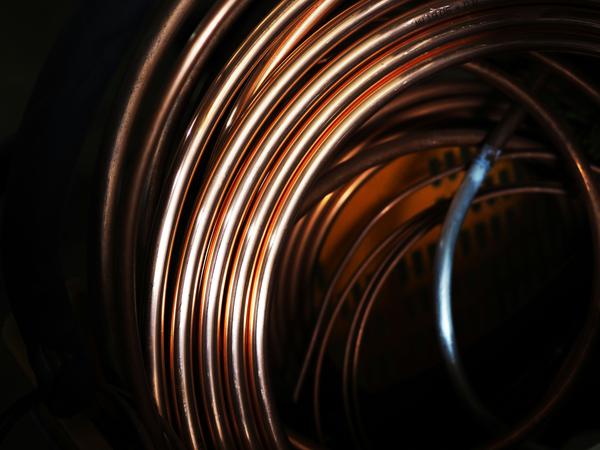
We have spent years hearing about the tokenization of everything. Most of it has been noise. We saw the wave of real estate tokens that got tangled in jurisdictional red tape, and the gold tokens that essentially acted as stablecoins with more volatile backings. But recently, a project called Metals.io put something much less glamorous and much more industrial on the ledger: 25 tonnes of physical copper.
The copper is sitting in a warehouse in Germany. It represents about $366,000 in market value at the time of the issuance. For the average crypto speculator, this is boring. Copper doesn't moon. It doesn't have a cult-like community of developers. It is a base metal used in pipes, wiring, and electric vehicle batteries. But for those of us building in the Real World Asset (RWA) space, this is a significant heartbeat in the maturation of onchain finance.
Why Copper Matters for Builders
Most RWA projects fail because they pick assets that are too complex to verify or too illiquid to matter. Real estate is the classic example. Every house is different, the legal frameworks vary by zip code, and the exit liquidity is slow. Copper, however, is a commodity. It is fungible. One tonne of Grade A copper is effectively the same as any other tonne of Grade A copper.
For builders, this provides a cleaner sandbox for testing the rails of asset-backed tokens. If you can solve the logistics of physical storage, insurance, and periodic auditing for 25 tonnes of industrial metal, you are building a blueprint for the entire supply chain. Metals.io isn't just selling copper; they are testing the plumbing of how physical atoms interact with digital bits.
The German Custody Factor
It is worth noting the location: Germany. In the crypto world, jurisdiction is everything. By housing the physical weight in a major European industrial hub, the project leans on established commercial laws and property rights. This is a subtle but important shift away from the early days of RWA where assets were often held in offshore jurisdictions with shaky legal protections.
If you are building an RWA protocol, the lesson here is simple: your legal stack is just as important as your smart contract stack. If the person holding the keys to the warehouse disappears, the token is worthless. Metals.io is betting that a transparent, German-regulated storage model will provide the trust layer that previous commodity tokens lacked.
The Skeptic's View: Liquidity vs. Novelty
Here is where we need to be honest. Is there actually a demand to trade copper on a blockchain? Institutional investors already have well-oiled machines for trading copper futures and ETFs. They don't necessarily need a decentralized ledger to tell them how much metal is in a warehouse.
The real value proposition isn't for the giants; it is for the composability. If I hold a token backed by physical copper, can I use it as collateral in a lending protocol? Can I swap it for a basket of other industrial metals instantly without calling a broker? That is where the friction currently lives in traditional finance. Metals.io is providing the raw material, but the developer community has to provide the utility. Without a DeFi ecosystem that accepts these tokens as legitimate collateral, it is just a digital receipt for a very heavy pile of metal.
The Verification Problem
One of the biggest hurdles for any founder in this space is the oracle problem. How does the blockchain know the copper is still there? Metals.io has to solve for the "ghost in the warehouse" scenario. This usually involves third-party audits and IoT sensors, but even then, there is a degree of centralization that purists will hate.
As builders, we have to accept that RWA is a hybrid beast. You cannot have 100% decentralization when you are dealing with physical atoms. The goal should be maximum transparency and minimal trust, not zero trust. We need to see how Metals.io handles the recurring proof-of-reserve. If they can automate the verification of that 25 tonnes, they’ve solved 80% of the battle for other industrial commodities.
What This Means for the RWA Roadmap
We are moving out of the "experimental" phase of RWA and into the "utility" phase. We’ve moved past tokenizing luxury cars and wine—which were mostly marketing stunts—and into the boring stuff that actually runs the world's economy. Copper is the lead indicator for global economic health. Putting it onchain allows for more granular, global access to an asset class that was previously gated by high minimums and complex brokerage accounts.
For founders, the opportunity here isn't necessarily to launch a competitor to Metals.io. The opportunity is to build the secondary layers. We need better risk assessment tools for these tokens. We need insurance protocols that specifically cover the physical loss of tokenized assets. We need interfaces that let a manufacturer in Vietnam hedge their copper costs using onchain liquidity from a provider in Brazil.
The breakthrough isn't the tokenization of the metal; it is the potential for that metal to move at the speed of the internet without leaving the warehouse.
Final Takeaway for Founders
Don't get distracted by the $366,000 figure. It’s a small start. Focus on the infrastructure. Metals.io is proving that physical, industrial-grade commodities can be mapped to the ledger with a clear legal path. If you are building in crypto right now, look for the boring assets. Look for the things that have high utility in the real world but high friction in the financial world.
The future of the space isn't in another memecoin. It is in the pipes, the wires, and the warehouses. If we can successfully digitize the movement of physical resources like copper, we change the cost of capital for the entire manufacturing sector. That is a much bigger win than any price pump.
Read the original at CoinDesk →