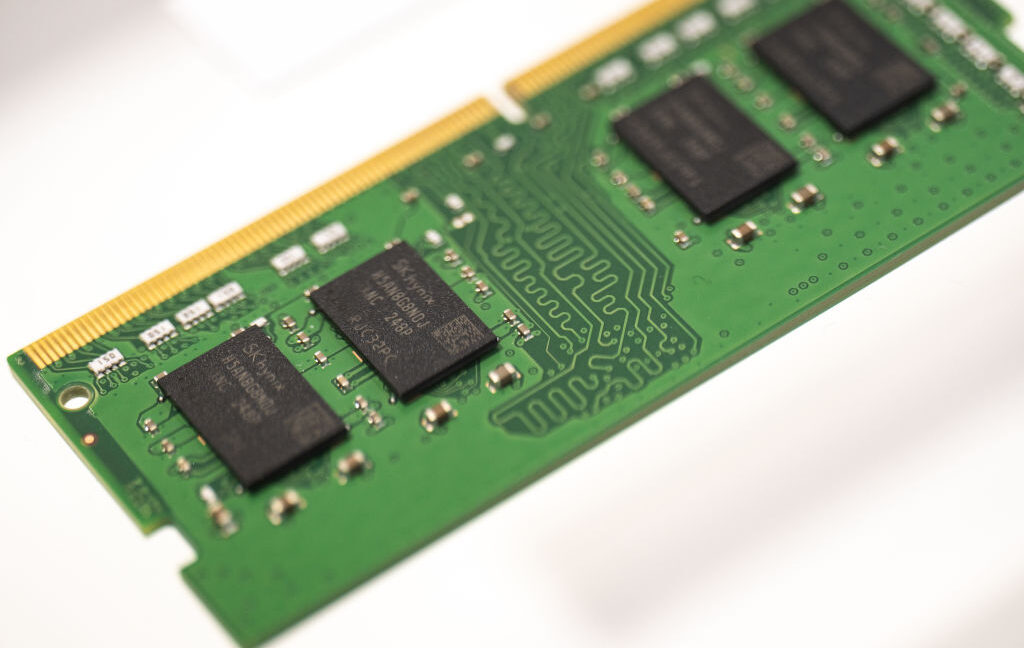
We have reached the point in the AI cycle where the physical reality of hardware is finally catching up to the runaway hype of the software. For the last year, everyone focused on H100s and the latest silicon from Nvidia. But if you talk to the people actually running the fabs, the real bottleneck isn't just the logic gates—it is the memory. Micron's leadership recently confirmed what most infrastructure founders have been dreading: the memory shortage isn't a temporary blip. It is a long-term structural deficit that is likely to last through 2028.
For those of us building in the trenches, this is a wake-up call. We have spent a decade living in an era of digital abundance where RAM was cheap and capacity was assumed. That era is over. When the CEO of a major chipmaker says that 2027 prices are already tracking significantly higher than 2026, he isn't just trying to pump his stock. He is signaling that the industry has lost its ability to oversupply the market.
The High-Bandwidth Memory Trap
The core of the problem is High-Bandwidth Memory, or HBM. If you are building LLMs or complex generative agents, HBM is your lifeblood. It is the specialized memory that sits right next to the processor to ensure the data flow doesn't choke the compute power. The demand for this specific tech is so high that it is cannibalizing the production capacity for standard DDR5 memory used in servers and PCs.
As a builder, you need to understand that this isn't just about "more expensive chips." It is about a fundamental shift in how hardware manufacturers prioritize their floor space. It takes significantly more wafer area and time to produce HBM than it does to produce the standard sticks of RAM we are used to. Manufacturers are chasing the high-margin AI gold rush, leaving the rest of the ecosystem to fight over the scraps of traditional memory production.
What This Means for the Founder Perspective
If you are running a startup today, your burn rate is increasingly tied to these physical supply chains, whether you realize it or not. When AWS or Azure see their underlying hardware costs spike, those costs are passed directly to you. We are seeing a future where "compute-heavy" and "memory-heavy" applications will face a tax that didn't exist two years ago.
- Infrastructure Planning: You can no longer assume that scaling your cloud instance will cost the same next year. Fixed-price contracts for compute and memory are becoming a strategic necessity rather than a luxury.
- Optimization is the New Growth: For years, it was easier to throw more RAM at a problem than to write better code. That strategy is becoming financially irresponsible. The builders who win the next four years will be the ones who can do more with less memory.
- Hardware Resilience: If you are building edge devices or local AI hardware, your margins are under direct threat. The pricing signals for 2027 and 2028 suggest that the hardware floor is rising.
The 2028 Horizon
Why 2028? That is the projected timeline for new fabrication plants to finally come online and reach full yield. Building a modern chip plant isn't like spinning up a new Kubernetes cluster. It takes years of environmental permits, specialized machinery from companies like ASML, and highly trained personnel. We are essentially waiting for the physical world to build more factories to support our digital dreams.
Micron's outlook suggests that the industry is currently booked out. When supply is spoken for two years in advance, the market loses its elasticity. Any minor disruption—a geopolitical flare-up, a logistics bottleneck, or a power grid failure—could send prices even higher. We are operating with zero margin for error in the supply chain.
A Skeptical Look at the "Shortage"
I always take executive warnings with a grain of salt. It is in Micron's interest to keep prices high and keep shareholders happy by projecting sustained demand. However, the math on AI scaling supports their claim. As models get larger and inference demands grow, the ratio of memory to compute must stay balanced. You can have the fastest GPU in the world, but if it's waiting on data from slow or insufficient memory, it's just a very expensive space heater.
The skeptical founder should ask: Is this an artificial scarcity? Probably not. The capital expenditure required to fix this is in the tens of billions. Companies don't leave that kind of money on the table unless the technical hurdles are genuinely massive. The complexity of stacking HBM layers is a yield killer, and that isn't something you solve overnight with a software patch.
Key Takeaways for Builders
Stop treating infrastructure as a commodity that only goes down in price. The trend of the last 30 years has reversed. We are in a period of hardware inflation driven by the AI arms race. If your business model relies on cheap, abundant memory to function, you need to stress-test your margins against a 20-30% increase in infrastructure costs over the next 36 months.
Focus on efficiency. Lean models, better data compression, and smarter memory management aren't just technical curiosities anymore—they are competitive advantages. In a world where RAM is scarce, the leanest code becomes the most profitable.
Read the original at Ars Technica →