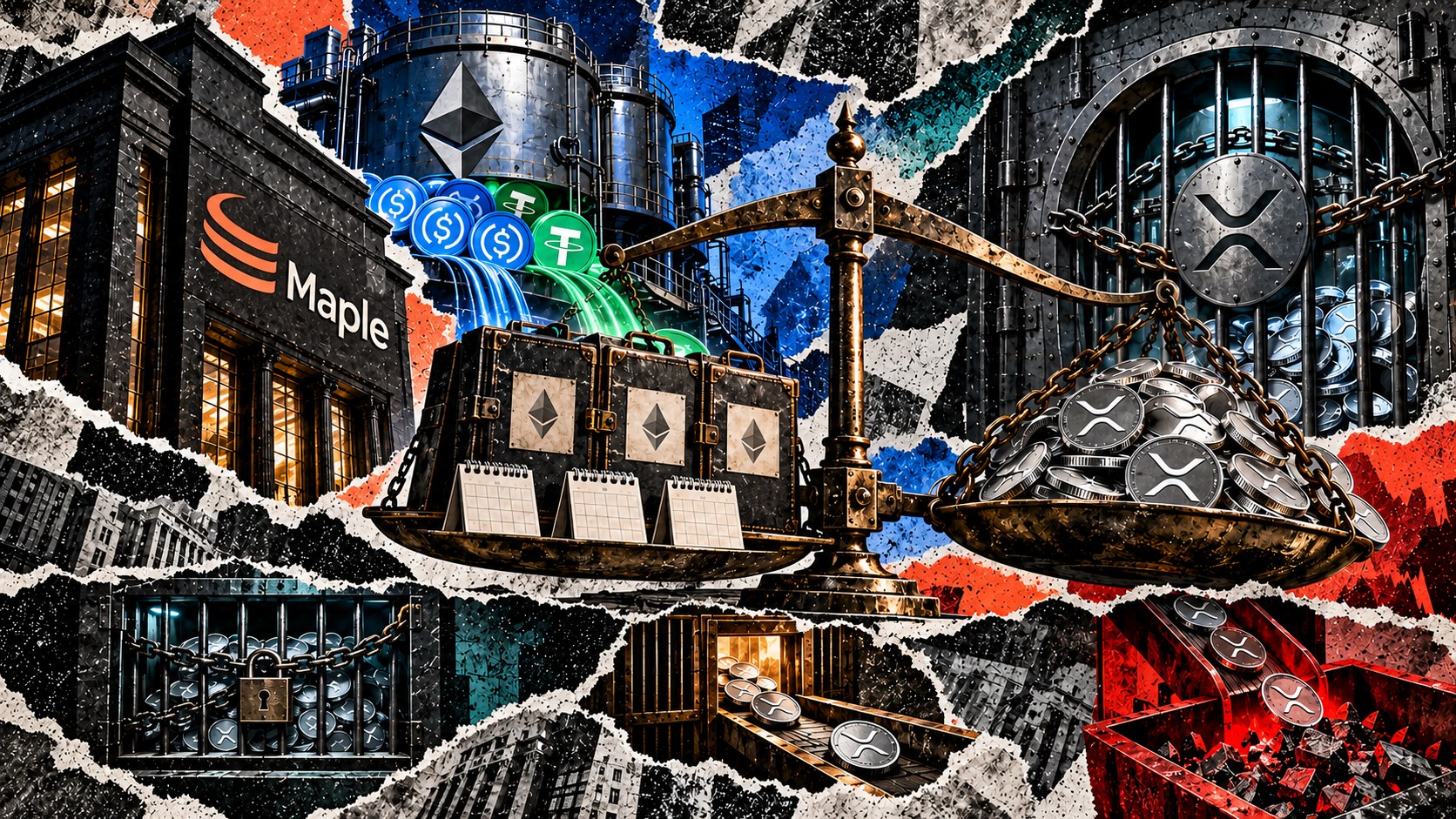
I have spent enough time in the crypto trenches to know that whenever you see a massive concentration of collateral in a single asset, you should start looking for the exit signs. Not because the asset is bad, but because the plumbing of DeFi is often more rigid than the marketing brochures suggest. Right now, Maple Finance is sitting on a mountain of XRP that is keeping the market on edge.
We are looking at roughly $280 million worth of XRP locked up as collateral for stablecoin loans. For the uninitiated, Maple is a private credit platform. It is where institutions go to borrow against their holdings without having to dump their tokens on the open market. But there is a catch that most retail traders miss: the maturity date. As we head into December and January, the clock is ticking on these positions, and the way they settle could send ripples through the entire ecosystem.
The Liquidity Trap
The core of the issue involves about 225 million XRP backing three distinct stablecoin loan positions. In a perfect world, the borrowers pay back the stablecoins, the smart contracts unlock the XRP, and everyone goes home happy. But we do not live in a perfect world. We live in a world of volatile price action and complex liquidations.
For builders, the lesson here is about liquidity depth. If these loans are not rolled over or repaid, that XRP does not just sit there. If a borrower defaults or cannot cover the margin during a price dip, that collateral hits the market. When you have hundreds of millions of dollars in a single asset tied to specific dates, you create a target for short-sellers and a headache for market makers.
Why the Maturity Dates Matter
Maturity dates in private credit are not like a credit card due date. They are hard stops. On Maple, when a loan reaches its end, the collateral is not automatically released back into the wild. There is a process. If the borrower is struggling, those dates become pressure points. The upcoming deadlines in December and January represent a significant chunk of XRP's circulating liquidity that is effectively sidelined.
If you are building a dApp or a trading tool, you need to be tracking these institutional lockups. The industry often focuses on retail flow, but institutional debt cycles are what actually move the needle on volatility. If these positions face liquidation, the slippage on XRP could be aggressive because the market knows exactly where the pressure is coming from.
The Founder's Perspective: Debt is a Double-Edged Sword
I have seen plenty of founders try to leverage their treasury to fund operations. It looks smart on paper. You keep your upside in your native token while using borrowed stablecoins to pay your developers. But this Maple situation shows the downside. You are effectively shorting your own peace of mind. If the market turns, your treasury is not just down; it is gone.
The $280 million figure is a wake-up call for risk management. For Maple, it is a test of their institutional rails. For XRP holders, it is a looming shadow. The lack of guaranteed automatic release upon maturity adds a layer of friction. In crypto, friction usually leads to fear, and fear leads to selling.
What This Means for the Market
- Volatility spikes: Expect increased price swings as we approach the end-of-year maturity dates.
- Counterparty risk: The health of the borrowers matters just as much as the price of XRP.
- Transparency issues: While the collateral is on-chain, the private credit agreements behind them are often opaque, leaving builders to guess at the actual risk.
We often talk about DeFi being the future of finance because it is supposed to be more efficient. But when you look at these massive collateralized positions, it starts to look a lot like the old-world repo markets. It is just debt piled on top of volatile assets. If the underlying asset moves the wrong way, the whole stack starts to wobble.
Building for the Next Cycle
If you are building in the DeFi space, the takeaway is clear: we need better ways to handle large-scale liquidations. The current model of "dump it all on the DEX" or "hope the institutional borrower has the cash" is not sustainable. We need more sophisticated debt instruments that do not create these massive liquidity cliffs.
I am skeptical of any system that relies on huge tranches of a single token maturing at the same time. It creates a perverse incentive for the rest of the market to hunt those liquidations. We saw it with Celsius, we saw it with 3AC, and while Maple is a far more professional outfit, the math of the collateral remains the same.
The biggest risk in crypto isn't the code failing; it is the liquidity drying up exactly when you need it most.
As a founder, you have to ask yourself: is your project exposed to these kinds of institutional overhangs? Even if you do not hold XRP, the liquidation of a quarter-billion dollars in collateral affects the entire sentiment of the market. It pulls liquidity away from other pairs and puts every other lender on high alert.
Final Thoughts for Builders
Do not get distracted by the headline numbers. $280 million is a lot, but the real story is the structure of the debt. Watch the December and January dates closely. If the market stays flat or climbs, these loans might roll over quietly. But if we see a significant dip, those XRP positions become a gravity well for the rest of the market.
Build with the assumption that liquidity is fleeting. Design your protocols to survive these kinds of cliffs. Because in this industry, the only thing more dangerous than a bear market is a debt market that stops moving.
Read the original at CryptoSlate →