The Illusion of Automation
For years, the promise of sidechains like Liquid has been built on the idea of seamless, trustless interoperability. We are told that these systems expand the utility of Bitcoin without compromising the core security of the main chain. However, recent reports concerning SideSwap and the Liquid Network (L-BTC) backing reveal a reality that is far more manual and human-dependent than the marketing materials usually suggest.
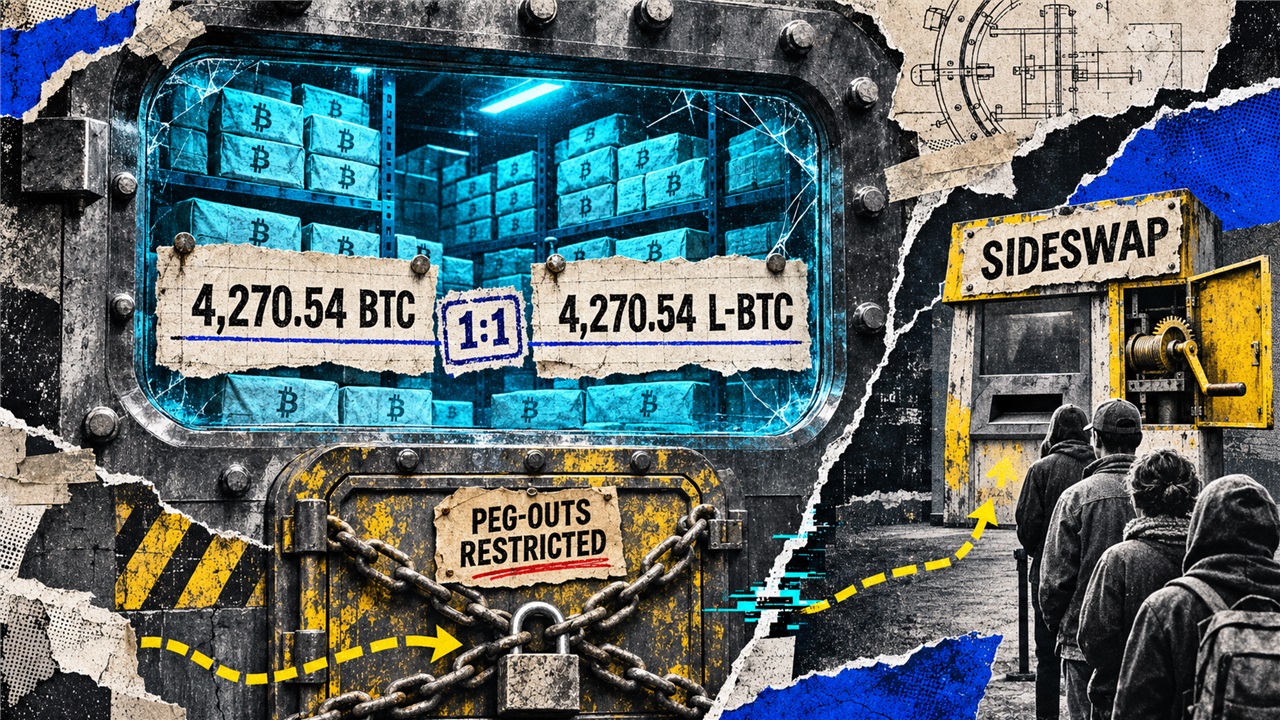
SideSwap recently confirmed that L-BTC is once again backed 1:1 by Bitcoin. On the surface, this sounds like a victory for transparency. But when you look under the hood at how these systems actually function, the technical debt and operational risks become clear. The fact that we are even discussing whether a pegged asset is fully backed in 2024 shows how far we still have to go in building robust financial infrastructure.
The Manual Bottleneck
The most glaring issue identified in recent updates is the reliance on manual wallet refills for customer payouts. While the ledger might show a perfect 1:1 ratio, the actual liquidity available for users to exit the sidechain depends on a specific entity’s ability to manually move funds from cold storage to active wallets. This is a massive red flag for any founder building on top of these protocols.
If a system requires a human to sign a transaction or move funds every time a withdrawal threshold is hit, it isn't a decentralized protocol; it's a managed service. For builders, this creates a hidden layer of counterparty risk. You aren't just trusting the math or the code; you are trusting that a specific team is awake, available, and willing to process refills when the market gets volatile.
Why Founders Should Care
When you build a product on a sidechain, you are inheriting its operational quirks. If your users can't get their Bitcoin back onto the main chain because a manual refill hasn't happened yet, it is your brand that suffers, not the protocol's. The friction of manual intervention is the enemy of scale. As an editor and a founder, I look for systems that fail gracefully or automate their way out of human error. Liquid’s current state suggests a bridge that is still very much under construction.
- Operational Risk: Manual refills introduce delays that can lead to panic during high-volume periods.
- Transparency Gaps: A 1:1 backing is useless if the liquidity is locked in an inaccessible vault during a bank run.
- Developer UX: Building on a manual system means you have to account for "refill lag" in your own application's user experience.
The Decentralization Theater
We often talk about Bitcoin as the ultimate decentralized asset, but the layers we build on top of it frequently re-introduce the very centralization we claim to be escaping. The Liquid federation model already requires trust in a group of functionaries. Adding a manual wallet management layer on top of that just thickens the veil of centralization. It is a form of "decentralization theater" where the underlying tech is clever, but the day-to-day operations are remarkably traditional.
This isn't to say Liquid or SideSwap are failing. They are solving hard problems. But as builders, we have to be honest about the trade-offs. The 1:1 backing restoration is a necessary step, but it shouldn't be the headline. The headline should be that we are still relying on humans to move bits of data to ensure people can access their own money.
Moving Beyond the Peg
The long-term success of Bitcoin layers depends on moving away from these manual checkpoints. We need trustless bridges that operate via smart contracts and automated proofs, not administrative dashboards. If a sidechain wants to compete with the speed of centralized exchanges while claiming the security of Bitcoin, it cannot have a manual bottleneck in its withdrawal process.
The goal of a sidechain isn't just to move Bitcoin off-chain; it's to ensure the exit is as predictable as the entry. If the exit depends on a manual refill, the peg is only as strong as the person holding the keys.
For founders looking at the current landscape, my advice is to audit the operational flow of your chosen layer as much as the code itself. Ask how the liquidity moves. Ask who has to be awake for a transaction to clear. If the answer involves a manual process, you aren't building on a protocol; you're building on a promise.
Final Takeaway for Builders
The restoration of the 1:1 peg for L-BTC is a maintenance update, not a breakthrough. The real work lies in automating the infrastructure so that "manual refills" become a relic of the early sidechain era. Until then, treat these layers as high-risk environments where liquidity is a privilege, not a guarantee. Honest analysis requires us to look past the balance sheet and into the workflow. If the workflow is manual, the system is fragile.
Read the original at CryptoSlate →